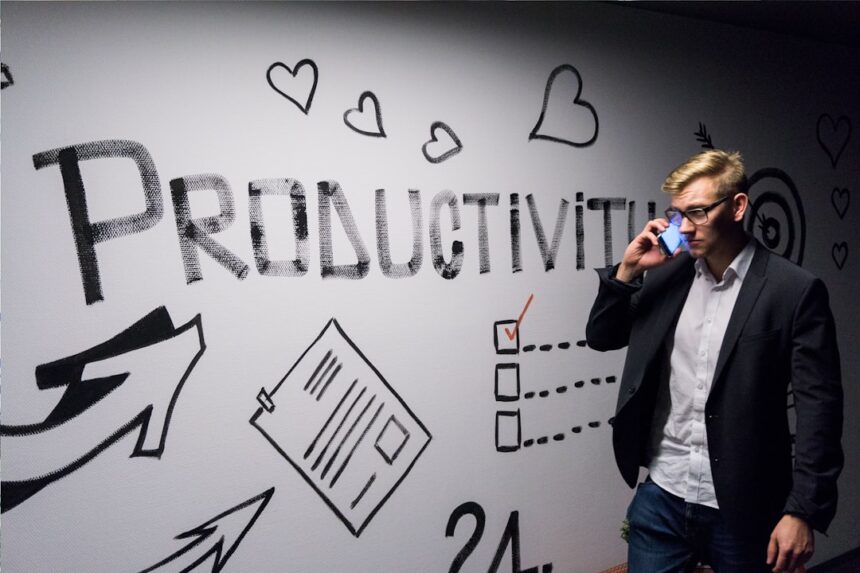
You’re likely encountering this article because you feel the relentless hum of inefficiency in your daily life. Perhaps your to-do list feels like a hydra, sprouting new tasks as quickly as you can lop off the old ones. Or maybe you’re experiencing the nagging sensation that time, that most precious of resources, is slipping through your fingers like sand. This is where the Recognize-Reset-Review (RRR) productivity framework enters the picture, offering a structured approach to regaining control over your work and your life.
The RRR framework is not a magic bullet; it is a deliberate process, a sturdy scaffolding you erect to support your efforts. It’s about understanding where you are, consciously reorienting yourself, and then constructively evaluating your trajectory. Think of it as a pilot before a long flight: they don’t just blast off without checking instruments, adjusting course, or assessing the weather ahead. They meticulously follow a protocol. You, too, can adopt this disciplined approach to navigate the often-turbulent skies of modern productivity.
Before you can effectively manage your time and tasks, you must first have a clear and honest understanding of your current state. This initial phase, “Recognize,” is akin to taking stock of your inventory. It demands introspection and a willingness to confront objective realities, however uncomfortable they may be. Without this foundational clarity, any subsequent attempts at improvement are built on shaky ground. Imagine trying to fix a leaky faucet without identifying the source of the leak; you’d be perpetually mopping the floor.
Identifying Your Current Workflow
The first step within “Recognize” is to meticulously observe and document your current workflow. This isn’t about judgment; it’s about data collection. You need to become an impartial observer of your own professional habits.
Time Tracking
One of the most powerful tools for recognition is time tracking. You might find this tedious initially, but the insights gained are invaluable.
- Manual Logging: This involves directly noting down the time spent on different activities in a notebook or spreadsheet. Be as granular as possible. Did you spend 20 minutes answering emails? 45 minutes in a meeting? 15 minutes “browsing” without a specific purpose?
- Automated Tools: Several applications can automatically track the time you spend on different software and websites. These tools can offer a less intrusive way to gather data and can highlight unconscious diversions.
- Categorization: As you track your time, begin categorizing your activities. Common categories might include: deep work, shallow work, communication, meetings, breaks, distractions, and administrative tasks. This categorization will reveal patterns.
Task Audit
Beyond how you spend your time, you need to understand the nature and volume of the tasks you are undertaking.
- Listing All Tasks: Compile a comprehensive list of all current and recurring tasks. This includes both obvious projects and seemingly minor administrative duties that often accumulate.
- Task Importance and Urgency: For each task, assess its importance and urgency. This can be done using frameworks like the Eisenhower Matrix, which helps to distinguish between what is truly important and what is merely pressing.
- Task Dependencies: Identify any tasks that are dependent on others being completed first. Understanding these dependencies is crucial for effective planning and avoiding bottlenecks.
Recognizing Your Peak and Trough Performance Times
Every individual has natural ebbs and flows in their energy and cognitive capacity. Ignoring these can lead to frustration and suboptimal performance.
Chronotype Assessment
Understanding your chronotype – whether you are an early bird, a night owl, or somewhere in between – is fundamental.
- Morning vs. Evening Productivity: Are you sharpest in the early hours, or do you find your most creative bursts occur later in the day? Aligning demanding tasks with your peak performance times can significantly boost efficiency.
- Energy Levels Throughout the Day: Beyond mornings and evenings, observe your energy levels at other points. Do you experience a post-lunch slump? When does your focus typically wane?
Identifying Distraction Patterns
Distractions are the silent saboteurs of productivity. Recognizing them is the first step to mitigating their impact.
- Common Distractors: Are your primary distractions email notifications, social media, chat applications, or colleagues stopping by your desk? Be honest about the specific triggers.
- Environmental Factors: Consider how your physical environment contributes to distractions. Is your workspace cluttered? Is it noisy? Is there constant foot traffic?
The Reset Review Productivity Framework is an innovative approach designed to enhance personal and professional efficiency by encouraging regular reflection and adjustment of goals. For a deeper understanding of this framework and its practical applications, you can explore a related article that delves into its principles and benefits. Check it out here: Productive Patty.
The Act of Refinement: Reset
Once you have a clear “Recognize” phase, you are equipped to “Reset.” This is the active phase of adjustment, where you deliberately make changes based on your observations. It’s about consciously redirecting your energy and attention, much like a ship altering its course to avoid rough seas. This phase is not about drastic, unsustainable overhauls, but rather about making targeted adjustments that yield significant improvements.
Realigning Priorities
Based on your task audit, you need to re-evaluate and realign your priorities. This means making tough decisions about what truly matters.
In exploring ways to enhance workplace efficiency, the Reset Review Productivity Framework has gained attention for its structured approach to evaluating and improving productivity. For those interested in learning more about effective productivity strategies, a related article can be found at this link, which delves into various techniques that can complement the Reset Review framework. By integrating these insights, individuals and teams can better navigate their productivity challenges and achieve their goals more effectively.
The Eisenhower Matrix in Practice
Apply the principles of the Eisenhower Matrix to your task list.
- Do First (Urgent & Important): These are your immediate crises and critical deadlines.
- Schedule (Important & Not Urgent): These are the tasks that contribute to your long-term goals and require proactive planning. This is where strategic work often resides.
- Delegate (Urgent & Not Important): These are tasks that need doing now but don’t require your specific skills. Can someone else handle them?
- Delete (Not Urgent & Not Important): These are time-wasters that contribute nothing to your objectives. Be ruthless in eliminating them.
Setting Clear Goals
Resetting your priorities necessitates clear, actionable goals.
- SMART Goals: Ensure your goals are Specific, Measurable, Achievable, Relevant, and Time-bound. Vague aspirations are difficult to act upon.
- Breaking Down Large Goals: Large projects can be intimidating. Break them down into smaller, manageable steps that provide a sense of progress as each is completed.
Optimizing Your Environment and Tools
Your workspace and the tools you use have a profound impact on your ability to focus and execute.
Workspace Optimization
Create a physical environment that supports concentration.
- Decluttering: A cluttered desk can lead to a cluttered mind. Implement a system for organizing your physical space.
- Minimizing Visual and Auditory Distractions: Consider noise-canceling headphones, strategically placed plants (for psychological benefits), or even rearranging your desk to face a wall rather than a busy area.
- Ergonomics: Ensure your workspace is ergonomically sound. Discomfort can be a significant source of distraction and reduced productivity.
Streamlining Digital Tools
Your digital environment
FAQs

What is the Recognize Reset Review productivity framework?
The Recognize Reset Review productivity framework is a method designed to help individuals improve their productivity by systematically identifying challenges, resetting their approach, and reviewing outcomes to foster continuous improvement.
How does the Recognize Reset Review framework work?
The framework works in three steps: first, you Recognize obstacles or inefficiencies in your workflow; second, you Reset by adjusting your strategies or mindset to address these issues; and third, you Review the results to understand what worked and what needs further refinement.
Who can benefit from using the Recognize Reset Review framework?
Anyone looking to enhance their productivity, including professionals, students, and teams, can benefit from this framework as it encourages self-awareness, adaptability, and ongoing evaluation of work habits.
Is the Recognize Reset Review framework suitable for team settings?
Yes, the framework can be applied in team environments to collectively identify problems, realign goals or processes, and review team performance, promoting collaboration and shared accountability.
What are the key benefits of implementing the Recognize Reset Review framework?
Key benefits include increased self-awareness of productivity barriers, improved ability to adapt strategies, enhanced focus on continuous improvement, and better overall efficiency in managing tasks and goals.