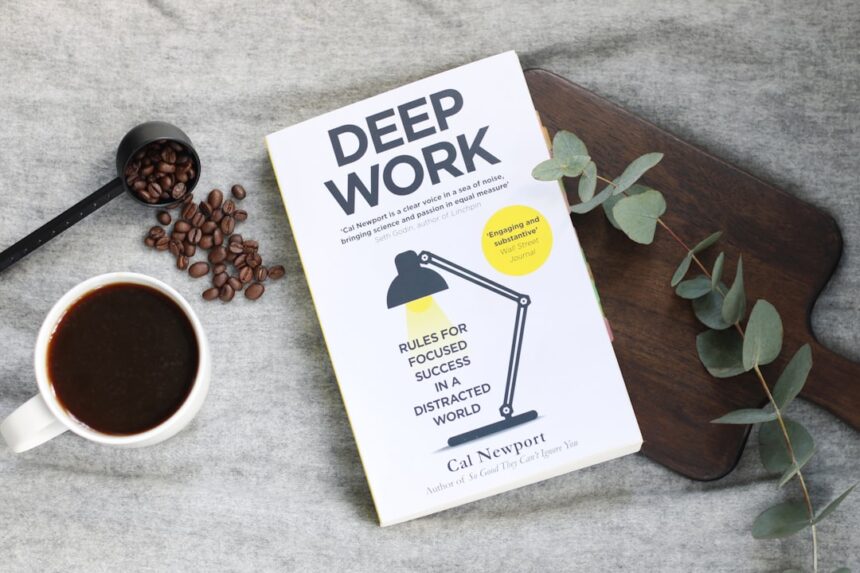
You’re likely familiar with the concept of deep work. It’s that state of focused, uninterrupted concentration that allows you to produce your best cognitive output. But achieving it, especially in our increasingly distracted world, can feel like a Herculean task. You might be drawn to the allure of maximizing deep work, but the sheer effort involved can be off-putting. The “Minimum Protocol” offers a pragmatic, low-friction approach to integrating deep work into your life without demanding a complete overhaul of your routine or an almost monastic devotion. This isn’t about achieving an unattainable ideal; it’s about making tangible progress with manageable steps.
The Minimum Protocol for maximizing deep work is not a set of rigid rules, but rather a guiding philosophy. Its core principle is sustainability. It recognizes that you have existing commitments, energy limitations, and a need for balance. The goal isn’t to eliminate all shallow work or distractions entirely, but to create intentional, consistent pockets of deep work that yield significant returns, while minimizing the mental overhead and resistance associated with implementing drastic changes. You’re not aiming for a perfect, always-on deep work machine. You’re aiming for more and better deep work, achieved through the least amount of fuss.
Defining Your “Minimum”
Before you can minimize anything, you need to define what “minimum” means for you. This isn’t about adopting someone else’s definition, but about a personal assessment of what is achievable and sustainable within your current life.
Assessing Your Current Deep Work Capacity
Take an honest look at your typical day or week. When do you naturally find yourself most focused? Are there specific times, environments, or activities that tend to facilitate concentration? Don’t judge these moments; simply observe them. What is the smallest slice of time where you can realistically carve out focused effort? Is it 25 minutes? 50 minutes? It’s crucial to be realistic here. Overestimating your capacity will lead to frustration and abandonment of the protocol.
Identifying Your Core Deep Work Activities
Not all tasks require deep work. You need to identify the specific activities that benefit most from sustained, focused attention – the ones that drive significant progress on your important projects or develop your critical skills. These are the tasks you’ll prioritize for your deep work sessions.
The Philosophy of Least Resistance
The Minimum Protocol operates on the principle of choosing the path of least resistance to achieving your deep work goals. This means leveraging existing habits, minimizing new tool adoption unless absolutely necessary, and focusing on small, iterative improvements rather than grand, disruptive overhauls.
Leveraging Existing Routines
Can you piggyback deep work onto existing habits? For instance, if you always have a quiet coffee before starting your workday, can that time be designated for focused reading or planning? Or if you have a post-lunch lull, could that be a prime time for a short burst of deep work?
Minimizing New Tool Adoption
The market is saturated with productivity apps and tools, each promising to revolutionize your focus. The Minimum Protocol advises caution. Before downloading another app or subscribing to a new service, ask yourself: can you achieve a similar outcome with a tool you already use and are familiar with? Often, a simple calendar block, a dedicated notebook, or a basic timer can suffice.
In exploring the concept of the Minimum Viable Momentum Protocol for deep work, it’s insightful to consider how structured approaches can enhance productivity and focus. A related article that delves into practical strategies for maintaining momentum in deep work sessions can be found at Productive Patty. This resource provides valuable tips and techniques that complement the principles of the Minimum Viable Momentum Protocol, helping individuals maximize their efficiency and achieve their goals more effectively.
Implementing Your Minimal Deep Work Schedule
The heart of the Minimum Protocol lies in its actionable implementation, which prioritizes simplicity and consistency. You’re not building a complex system; you’re setting up a few key anchors for focused effort.
The “Time Blocking Lite” Approach
Traditional time blocking can feel prescriptive and demanding. The Minimum Protocol suggests a more flexible, “lite” version. Instead of rigidly assigning every minute of your day, you’re primarily blocking out your deep work sessions.
Designating Your Deep Work Slot(s)
Identify one to three predictable slots in your week for deep work. These don’t need to be contiguous. They could be 45 minutes every Tuesday and Thursday morning, or a single two-hour block on Friday afternoon. The key is predictability and consistency. You’re not aiming for an hour every day if that’s not feasible.
Protecting Your Slots
Once you’ve designated a slot, you need a simple, low-friction method to protect it. This might involve:
- Setting a recurring calendar event: This serves as a visual reminder to yourself and can even be shared with trusted colleagues to signal your unavailability.
- Communicating your unavailability: A simple Slack status update or a brief email to your immediate team can suffice. You don’t need elaborate explanations.
The “Batching of Shallow Work” Principle
If you’re not doing deep work, you’re likely doing shallow work – emails, administrative tasks, quick meetings. The Minimum Protocol advocates for batching these activities to create larger, uninterrupted blocks for your deep work.
Consolidating Communication Channels
Instead of checking email every five minutes, designate specific times for email processing. This might be twice a day, for instance, mid-morning and late afternoon. Similarly, consider limiting your social media or news consumption to specific, short intervals.
Grouping Similar Tasks
Can you handle all your administrative tasks in one go? Can you schedule all your quick calls back-to-back? By grouping similar shallow tasks, you reduce the cognitive switching costs associated with moving between different types of work. This frees up more mental energy for your deep work sessions.
Minimizing Distractions with Minimal Effort

Distractions are the natural enemy of deep work. The Minimum Protocol addresses this by implementing low-effort strategies that significantly reduce interruptions without requiring a complete overhaul of your environment.
The “One-Touch” Rule for Notifications
Notifications are a constant barrage of potential distractions. The Minimum Protocol suggests a simple, yet effective, “one-touch” rule.
Configuring Notification Settings
Go through your devices and applications. Turn off all non-essential notifications. For emails, consider only enabling notifications for messages from specific priority contacts. For social media and news apps, disable push notifications entirely. You should aim to be the one initiating the check, not being interrupted by it.
Creating a “Notification Schedule”
If fully disabling notifications feels too extreme or impractical, create designated times to check them. This reinforces the idea that these are not urgent interruptions, but rather tasks to be dealt with at your convenience.
The “Intentional Environment” Setup
You don’t need a custom-built, soundproofed office to achieve deep work. The Minimum Protocol focuses on making small, intentional adjustments to your existing environment.
Physical Space Optimization
Even in a shared space, you can create micro-environments for focus. This might involve:
- Using noise-canceling headphones: These are a powerful tool for blocking out ambient noise without requiring complete silence.
- Positioning yourself strategically: If possible, face away from high-traffic areas or visual distractions.
- Decluttering your immediate workspace: A tidy desk can contribute to a tidier mind. This doesn’t require a minimalist overhaul, just a quick clear-out.
Digital Workspace Sanctuary
Your digital environment is just as important.
- Closing unnecessary tabs and applications: Before starting a deep work session, close any applications or browser tabs that are not directly related to your task.
- Utilizing full-screen modes: When working on a document or code, use the full-screen mode of your application to minimize visual clutter.
The “Micro-Intervention” Strategy for Maintaining Focus
Even with the best intentions and protocols, your focus can waver. The Minimum Protocol incorporates simple, short “micro-interventions” to help you regain your concentration without derailing your session.
The “Five-Minute Reset”
When you feel your mind wandering or your focus slipping, don’t just push through. Implement a brief, intentional reset.
Acknowledging the Drift
The first step is simply noticing that your attention has drifted. Don’t beat yourself up about it; just acknowledge it.
Gentle Re-engagement
Take a few deep breaths. Briefly remind yourself of your current task and its importance. You might even jot down the distracting thought to address later if it feels pressing. Then, consciously return your attention to your work. This is not about a long break, but a brief, mindful recalibration.
The “Task Re-framing” Technique
Sometimes, your focus wanes because the task itself feels overwhelming or unengaging. The Minimum Protocol suggests minimal reframing.
Breaking Down Larger Tasks (Simply)
If a task feels too large, identify the very next physical action you need to take. Focus solely on completing that one action. This makes the task feel more manageable and less daunting. For example, instead of “Write report,” the next action might be “Open document” or “Write the first sentence of the introduction.”
Connecting to Your “Why” (Briefly)
When motivation dips, take a moment to briefly recall why this task is important. What is the bigger picture? This isn’t a long philosophical contemplation, but a quick, visceral reminder of the value of your effort.
In the pursuit of enhancing productivity, the concept of the minimum viable momentum protocol for deep work has gained significant attention. This approach emphasizes the importance of maintaining a steady flow of focused work while minimizing distractions. For those interested in exploring this topic further, a related article can be found on Productive Patty, which delves into effective strategies for achieving deep work and sustaining momentum. You can read more about it here. By implementing these techniques, individuals can unlock their full potential and achieve greater success in their professional endeavors.
Evaluating and Iterating Your Minimal Protocol
| Metrics | Data |
|---|---|
| Number of deep work sessions per week | 5 |
| Duration of each deep work session | 60 minutes |
| Percentage of uninterrupted deep work time | 90% |
| Number of distractions during deep work | 2 per session |
| Percentage of deep work goals achieved | 80% |
The Minimum Protocol is not a static system. It’s designed to be adaptable and to evolve with your needs and circumstances. Regular, low-effort evaluation is key.
The “Weekly Check-in”
Dedicate a short, recurring time each week to reflect on your deep work efforts. This is not about extensive performance reviews, but about gentle course correction.
Tracking Your Deep Work Sessions (Simply)
You don’t need complex analytics. A simple manual log in a notebook or a basic spreadsheet noting the date, duration, and the task worked on can be sufficient. This provides a baseline for identifying what’s working and what’s not.
Identifying Friction Points
Based on your log and your general feeling, what were the recurring obstacles to your deep work? Were there specific times that consistently failed to yield focus? Were certain types of distractions more problematic than usual?
Iterative Adjustments, Not Overhauls
The beauty of the Minimum Protocol is its emphasis on small, manageable changes. When you identify an area for improvement, don’t try to fix everything at once.
Making One Small Change at a Time
If you notice that your mid-afternoon deep work sessions are consistently unproductive, try moving that slot to the morning for a week. If notifications remain a persistent problem, experiment with disabling them for an entire day.
Allowing for Experimentation
The goal is to find what works best for your unique rhythm and challenges. Be willing to experiment with different strategies. What feels like a “minimum” adjustment today might need to be slightly modified next month. The key is continuous, low-resistance iteration.
By embracing the Minimum Protocol, you’re not chasing an elusive ideal of perfect focus. You’re adopting a pragmatic, sustainable approach to integrating deep work into your life. You’re making small, consistent efforts that, over time, will yield significant improvements in your productivity and the quality of your output, all without demanding an unreasonable amount of effort or commitment. It’s about smart work, not necessarily more work.
FAQs
What is the minimum viable momentum protocol for deep work?
The minimum viable momentum protocol for deep work is a set of guidelines and practices designed to help individuals maintain focus and productivity during deep work sessions. It includes strategies for managing distractions, setting specific goals, and creating a conducive work environment.
What are some key components of the minimum viable momentum protocol for deep work?
Key components of the minimum viable momentum protocol for deep work may include time blocking, minimizing interruptions, setting clear objectives, creating a dedicated workspace, and implementing regular breaks to avoid burnout.
How can the minimum viable momentum protocol benefit individuals engaged in deep work?
The minimum viable momentum protocol can benefit individuals engaged in deep work by providing a structured approach to managing their time and energy, reducing distractions, and enhancing their ability to concentrate on complex tasks for extended periods.
Are there any specific tools or resources recommended for implementing the minimum viable momentum protocol for deep work?
While specific tools and resources may vary depending on individual preferences, common recommendations for implementing the minimum viable momentum protocol for deep work may include time management apps, noise-cancelling headphones, ergonomic workstations, and productivity journals.
What are some potential challenges associated with implementing the minimum viable momentum protocol for deep work?
Potential challenges associated with implementing the minimum viable momentum protocol for deep work may include resistance to change, difficulty in maintaining consistency, external distractions, and the need to adapt the protocol to individual work styles and preferences.