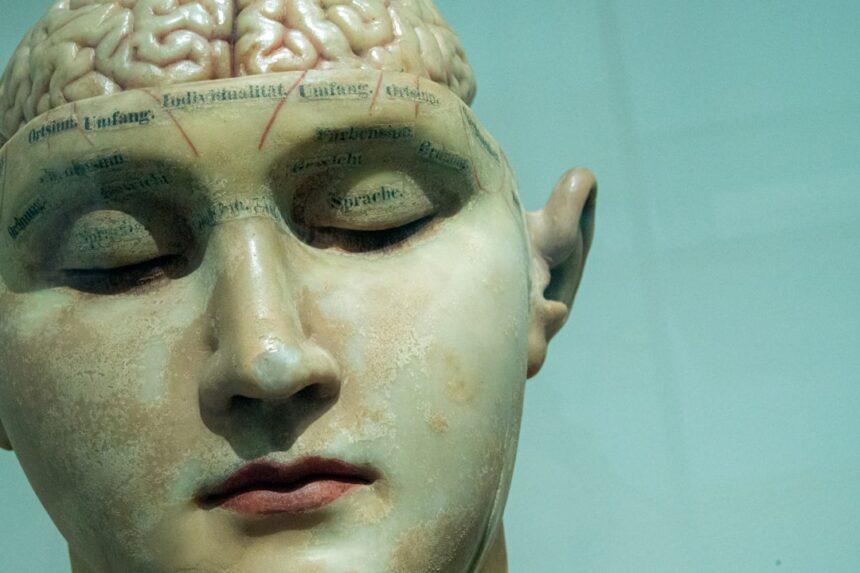
Your brain, a marvel of biological engineering, is fundamentally wired to perceive the world through comparison. You don’t simply see a color; you see that color against another color. You don’t just hear a sound; you hear it in relation to silence or a different tone. This inherent reliance on contrast is not a mere aesthetic preference; it is the very engine that drives your comprehension, allowing you to parse information, establish context, and ultimately assign meaning to the vast flux of sensory input you encounter. Without contrast, the world would be a homogenous, undifferentiated blur, rendering understanding an impossible feat.
Your visual and auditory systems are exquisitely designed to capitalize on differences. Consider the simplest acts of perception. When you look at a dark object against a light background, your brain registers the demarcation. The contrast in luminance allows you to define the object’s edges, its shape, and its separation from its surroundings. This principle extends far beyond simple silhouettes. Subtle shifts in hue, saturation, and texture all contribute to a richer, more nuanced visual experience, and it’s the contrast between these elements that makes them discernible.
Visual Acuity and the Power of Difference
Imagine trying to read text on a page where the ink color is almost identical to the paper color. Your effort would be immense, and your ability to decipher the words severely hampered. This illustrates a core concept: your visual acuity is directly linked to the presence of contrast.
Edge Detection: The Foundation of Form Recognition
The initial stages of visual processing involve identifying edges. These are perceived as abrupt changes in brightness or color. Your brain’s ability to detect these contrasts is so rapid and efficient that you rarely consciously consider it. However, without this fundamental process, you wouldn’t be able to distinguish one object from another, let alone recognize complex forms. Think about a line drawing versus a photorealistic image. The line drawing relies heavily on stark contrasts to define its subject, while the photorealistic image uses a more intricate interplay of subtle contrasts to achieve its depth and detail.
Color Perception: More Than Just Hues
The way you perceive color is not an absolute measurement of a wavelength of light, but rather a relational experience. A grey square will appear different depending on the color of the background it is placed against. This phenomenon, known as simultaneous contrast, demonstrates that your brain actively interprets colors in relation to their surroundings. This interplay is crucial for distinguishing objects, identifying ripeness in fruit, or discerning the nuances of a painted masterpiece. The greater the contrast in color, the more readily you can differentiate objects.
Auditory Clarity: The Silence Between the Notes
Just as your eyes rely on differences in light, your ears depend on variations in sound intensity and frequency to make sense of spoken language and music. The absence of sound, or silence, is as important as the presence of sound in auditory perception.
Speech Intelligibility: The Crucial Gaps
When someone speaks, the intelligibility of their words hinges on the contrast between the spoken sounds and the pauses between them. If speech were delivered as a continuous, unvarying drone, it would be impossible to parse individual words. The subtle variations in pitch, volume, and rhythm create the necessary distinctions for your brain to segment and interpret the auditory stream. Your ability to follow a conversation in a noisy environment often relies on your brain’s capacity to amplify the contrast between the speaker’s voice and the surrounding cacophony.
Musical Harmony and Melody: The Rhythmic and Tonal Play
In music, contrast is paramount. The juxtaposition of loud and soft passages (dynamic contrast), contrasting tempos (rhythmic contrast), and the interplay of different pitches (melodic and harmonic contrast) all contribute to the emotional impact and structural coherence of a piece. A sustained single note, however pleasant, lacks the engaging quality of a melody built on variations in pitch and rhythm. The contrasts create tension, release, and a sense of progression that draws you in.
Understanding how our brains process information is crucial for effective learning and communication. One interesting aspect is the concept of contrast, which helps us derive meaning from various stimuli. For a deeper exploration of this topic, you can read a related article that discusses the importance of contrast in cognitive processes and how it enhances our understanding of the world around us. Check it out here: Productive Patty.
The Narrative Engine: How Contrast Drives Storytelling and Understanding
Beyond basic perception, the principle of contrast is a powerful tool for conveying meaning in narratives, arguments, and even abstract concepts. It provides the framework for comparison, highlighting the significance of individual elements by placing them in opposition to others.
Character Development: The Shadow and Light
In literature and film, characters are rarely presented in isolation. Their personalities, motivations, and growth are often illuminated through contrasts with other characters or with their own past selves.
The Foil: Illuminating Traits Through Opposition
A classic literary device is the “foil” character – a character who, by contrast, highlights the distinctive qualities of another character. A moral hero might be contrasted with a morally ambiguous companion, making the hero’s virtue shine more brightly. Conversely, a villain’s cruelty might be emphasized by their interactions with a sympathetic victim. This is not about simple good versus evil; it’s about how the presence of one illuminates the absence of certain qualities in another.
Internal Conflict: The Battles Within
Even within a single character, internal conflict arises from contrasting desires, beliefs, or instincts. A character torn between duty and desire, for instance, experiences a powerful internal contrast that drives their actions and reveals their inner turmoil. This internal struggle is what makes characters relatable and their journeys compelling. You understand their dilemma because you can recognize the opposing forces at play.
The Power of the Opposition: Argument and Persuasion
In persuasive discourse, setting up clear oppositions is a fundamental rhetorical strategy. By presenting contrasting viewpoints or scenarios, you can effectively highlight the merits of your own position.
Establishing a Problem and Solution: The “Before” and “After”
Many arguments are structured around an implied or explicit contrast between a negative state (the problem) and a desired state (the solution). You are presented with the undesirable consequences of a current situation, and then offered a different path that promises improvement. The starkness of this contrast is what compels action or adoption of a new perspective. Think about advertising that focuses on a problem you didn’t realize you had, and then presents their product as the perfect contrast to that problem.
Highlighting Nuance: The Spectrum of Opinion
Sometimes, the most effective arguments acknowledge the complexities of an issue by exploring the contrasting shades of opinion. Instead of presenting a black and white dichotomy, you might explore a spectrum, and by contrasting different points on that spectrum, you can reveal the subtle distinctions and guide your audience towards a particular understanding. This demonstrates a more sophisticated engagement with the topic than a simple binary opposition.
Abstract Concepts: Clarifying Meaning Through Juxtaposition
The abstract realms of philosophy, ethics, and even mathematics rely heavily on contrast to define and elucidate complex ideas. Without the ability to differentiate concepts, abstract thought would be severely limited.
Defining Morality: The Yin and Yang of Ethics
Moral frameworks are often built upon contrasting principles. The distinction between right and wrong, good and evil, virtue and vice are all fundamental oppositions that structure ethical reasoning.
Justice and Injustice: The Scales of Fairness
The concept of justice is inherently defined by its opposite, injustice. You understand what justice is by understanding what injustice is not. The contrast highlights the principles of fairness, equality, and due process that constitute justice. This isn’t about simplifying morality into two boxes; it’s about using the contrast to define the ideal and to identify when that ideal is violated.
Freedom and Constraint: The Boundaries of Choice
The notion of freedom is often understood through its contrast with constraint and oppression. The experience of personal liberty is made more salient by the knowledge of what it’s like to be denied that liberty. This contrast helps you appreciate the value of freedom and to identify situations where it is diminished.
Scientific Principles: Unpacking the Unknown
In science, defining a new phenomenon or theory often involves contrasting it with existing, established knowledge. This clarifies its novelty and its place within the broader scientific landscape.
Theory vs. Hypothesis: The Steps of Inquiry
The scientific method itself relies on contrast. A hypothesis is a proposed explanation, while a theory is a well-substantiated explanation supported by a vast body of evidence. The contrast between a tentative idea and a robust, verified explanation is crucial for understanding the progression of scientific knowledge.
Observable vs. Unobservable: The Limits of Measurement
Science often grapples with the contrast between what can be directly observed and measured versus what must be inferred or theorized. This distinction helps scientists define the boundaries of their empirical investigations and the scope of their theoretical models. Understanding this contrast is vital for understanding the limitations and the power of scientific inquiry.
The Visual Language of Design: Contrast as an Intentional Tool
In the realm of design – whether graphic, product, or architectural – contrast is not an accidental byproduct of perception but a deliberate and powerful tool wielded by creators to achieve specific effects.
Graphic Design: Guiding the Eye and Conveying Information
Graphic designers masterfully employ contrast to create visual hierarchy, communicate messages effectively, and evoke specific emotions.
Typography: The Dance of Fonts and Sizes
The choice of fonts, their sizes, weights, and spacing all contribute to contrast. A bold headline against lighter body text immediately draws your attention. The contrast between different font styles can differentiate sections of text, emphasize key information, and create visual interest. Without this contrast, a page of text would be monotonous and difficult to navigate.
Color Palettes: Creating Emphasis and Mood
Color contrast is perhaps the most visceral aspect of visual design. The juxtaposition of complementary colors creates vibrancy and draws the eye. Contrasting warm and cool tones can evoke different moods and direct attention to specific elements. The strategic use of color contrast allows designers to guide your experience and highlight what is most important.
User Interface (UI) Design: Enhancing Usability
In the digital world, contrast is not just about aesthetics; it’s about functionality and usability. Clear contrast ensures that users can easily interact with digital products.
Button and Link States: Signifying Interaction
The visual cues that indicate whether a button is active, inactive, or hovered over rely on subtle changes in color, shading, or outline. This contrast between states informs you about the interactive elements of an interface, making it intuitive to use. Without these contrasting visual cues, you would be left guessing which elements are clickable.
Contrast Ratios: Ensuring Accessibility
A critical aspect of UI design is ensuring sufficient contrast between text and its background to make it readable for everyone, including individuals with visual impairments. This is not a matter of taste but of essential accessibility, demonstrating how vital contrast is for ensuring that information is universally understood.
Understanding how our brains process information can be fascinating, especially when we consider the role of contrast in deriving meaning. Research suggests that our cognitive functions rely heavily on comparing different stimuli to make sense of the world around us. For a deeper exploration of this concept, you might find this article on the importance of contrast in cognitive processing particularly enlightening. It delves into how our perceptions are shaped by the differences we observe, enhancing our understanding of various subjects. You can read more about it in this insightful piece here.
The Subtle Art of Everyday Understanding: Contrast in Social Interactions and Personal Growth
| Reasons Why Your Brain Needs Contrast for Meaning |
|---|
| 1. Contrast helps the brain distinguish between different elements and make sense of information. |
| 2. It enhances the perception of depth and dimension, allowing the brain to understand spatial relationships. |
| 3. Contrast creates emphasis and highlights important details, guiding the brain’s attention. |
| 4. It improves readability and legibility, making it easier for the brain to process and comprehend text and visuals. |
| 5. Contrast stimulates cognitive processes and enhances memory retention by creating distinct associations. |
Your ability to navigate the complexities of human interaction and to foster personal growth is also deeply intertwined with your capacity to recognize and interpret contrast.
Social Cues: Reading Between the Lines
Social communication is a rich tapestry woven with subtle cues, many of which are understood through contrast.
Verbal and Non-Verbal Discrepancies: Detecting Sarcasm and Deception
When someone’s words contradict their body language or tone of voice, this contrast is a key indicator that they might be being sarcastic, untruthful, or experiencing internal conflict. Your brain quickly registers this discrepancy, prompting you to interpret their communication more deeply. The contrast is what alerts you to the potential for a hidden meaning.
Cultural Differences: Navigating Different Norms
Interacting with individuals from different cultural backgrounds inevitably involves encountering contrasting social norms, customs, and values. Recognizing and understanding these differences through contrast is essential for effective cross-cultural communication and for building bridges of understanding. What might be considered polite in one culture could be seen as rudeness in another, and it is through observing these contrasts that you learn to adapt.
Personal Development: The Mirror of Self-Reflection
Your journey of personal growth is often spurred by confronting and understanding contrasts within yourself and in your experiences.
Strengths and Weaknesses: The Landscape of Self-Awareness
Identifying your strengths and weaknesses involves a process of self-assessment that relies on contrast. You compare your performance in different areas, your reactions to various situations, and your abilities relative to others. This awareness of your own contrasting attributes is the bedrock of self-improvement.
Comfort Zones and Challenges: The Engine of Evolution
Stepping outside your comfort zone is inherently an act of embracing contrast. You move from the familiar and predictable to the new and potentially challenging. This deliberate exposure to contrast is what fosters learning, resilience, and personal evolution. Without the contrast between the known and the unknown, stagnation often follows.
In conclusion, your brain’s reliance on contrast is not a secondary characteristic; it is a fundamental mechanism that underpins your ability to perceive, understand, and engage with the world. From the most basic sensory input to the most complex abstract ideas and interpersonal dynamics, contrast is the silent architect of meaning, allowing you to distinguish, to compare, and ultimately, to comprehend. It is the engine of your perception, the bedrock of narrative, the foundation of design, and the catalyst for growth.
FAQs
What is contrast in the context of the brain’s need for meaning?
Contrast refers to the differences or variations in stimuli, such as colors, shapes, or concepts, that the brain uses to create meaning and understanding.
How does the brain process contrast to derive meaning?
The brain processes contrast by comparing and contrasting different stimuli to identify patterns, relationships, and differences, which helps in creating meaning and understanding.
Why is contrast important for the brain’s function?
Contrast is important for the brain’s function because it helps in distinguishing and categorizing different stimuli, which is essential for creating meaning, understanding, and making decisions.
What are some examples of contrast in everyday life that the brain uses for meaning?
Examples of contrast in everyday life include the difference between light and dark, loud and quiet, hot and cold, big and small, and other variations that the brain uses to derive meaning and understanding.
How can individuals enhance their brain’s ability to derive meaning through contrast?
Individuals can enhance their brain’s ability to derive meaning through contrast by exposing themselves to diverse experiences, stimuli, and perspectives, which can help in developing a broader understanding and interpretation of the world around them.