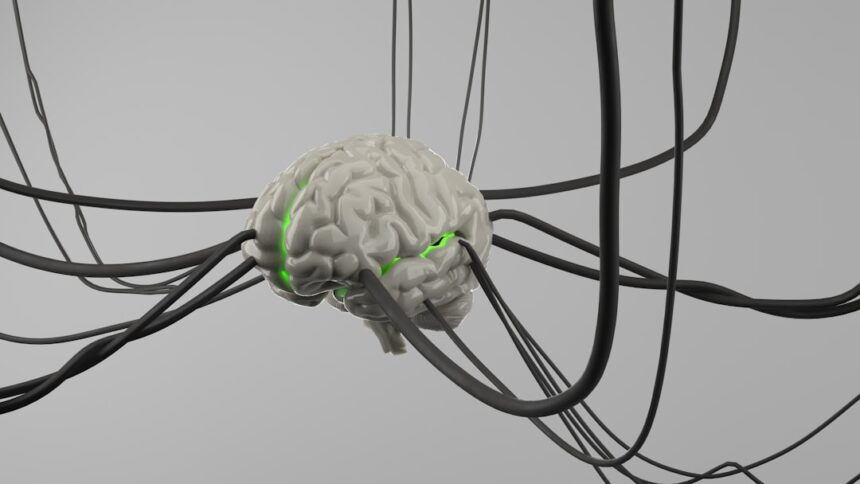
Unlock Your Flow State: 10-Second Neural Switch
You’ve experienced it before. That moment when time seems to warp, distractions fade, and you’re operating at peak performance. You’re fully immersed in an activity, energized, and the process of doing feels effortless. This is the flow state, a peak performance zone that many aspire to, but few understand how to consistently access. This article explores the science behind this coveted psychological state and offers a practical method, the “10-Second Neural Switch,” to help you tap into it more readily.
The concept of flow, or optimal experience, was pioneered by psychologist Mihaly Csikszentmihalyi. He described it as a state in which people are so involved in an activity that nothing else seems to matter; the experience is so enjoyable that people will continue to do it even at great cost, for the sheer sake of doing it. This isn’t some mystical phenomenon reserved for elite athletes or prodigies. It’s a measurable neurological and psychological state that can be cultivated.
The Neurological Underpinnings
When you enter a flow state, your brain chemistry shifts. This isn’t about a sudden, dramatic alteration, but a subtle recalibration of neural activity. Your prefrontal cortex, responsible for higher-level cognitive functions like critical judgment, self-awareness, and conscious decision-making, experiences a temporary downregulation. This phenomenon is known as transient hypofrontality.
Transient Hypofrontality and Its Impact
Why is this downregulation of the prefrontal cortex so significant? Consider what the prefrontal cortex does: it’s the seat of your inner critic, the part of you that worries about what others think, analyzes every potential misstep, and second-guesses your actions. When this region quiets down, the usual mental chatter ceases. This silence allows for faster, more intuitive processing. Your brain can dedicate more resources to the task at hand, freeing you from the constraints of self-consciousness and overthinking. This is why tasks that might normally feel challenging can become almost automatic once you’re in flow – your brain is operating efficiently, unburdened by unnecessary analytical friction.
Neurochemical Facilitators of Flow
Beyond reduced prefrontal activity, several neurochemicals contribute to the flow experience:
- Dopamine: Often associated with pleasure and reward, dopamine is released when you anticipate or experience a positive outcome. In flow, it enhances focus and motivation, making the activity itself rewarding. It helps you stay engaged and persistent, even when facing challenges.
- Norepinephrine: This is where the “switch” truly begins. Norepinephrine, a stress hormone, is also a powerful attentional enhancer. It sharpens focus, increases alertness, and primes your brain for rapid information processing. In conjunction with dopamine, it creates a potent cocktail for intense concentration.
- Endorphins: These are your body’s natural painkillers and mood elevators. They contribute to the feeling of well-being and even mild euphoria often associated with extended periods of flow. They help mitigate any physical discomfort or fatigue that might arise during prolonged engagement.
- Anandamide: This endocannabinoid is known for its role in reducing anxiety and increasing feelings of happiness. It contributes to the diminished sense of self and the feeling of being “in the zone” by dampening the brain’s worry centers.
- Serotonin: While less directly linked to the acute onset of flow compared to the others, serotonin plays a crucial role in mood regulation and overall mental well-being. Its presence contributes to the sustained positive affect experienced during and after a flow state.
The Psychological Triggers of Flow
While the neurological shifts are fundamental, they are often initiated and sustained by specific psychological conditions. Understanding these triggers is crucial for intentionally cultivating flow.
The Balance of Challenge and Skill
Perhaps the most critical factor is the delicate balance between the demands of the task and your perceived abilities. If a task is too easy, you’ll experience boredom. If it’s too difficult, you’ll feel anxiety. Flow resides in the sweet spot where the challenge is just beyond your current comfort zone, compelling you to stretch and grow, but not so far that it’s overwhelming.
Navigating the Boredom-Anxiety Spectrum
Recognizing where a task falls on this spectrum is the first step. If you find yourself frequently bored, you need to increase the complexity or demand of your activities. This might involve setting more ambitious goals, learning a new skill to apply to the task, or breaking down a large task into smaller, more challenging sub-tasks. Conversely, if you consistently feel anxiety, the task is likely too complex. You might need to simplify the requirements, acquire more skills, or seek guidance and support. The goal is to incrementally adjust the challenge to match your developing skill set, keeping you perpetually on the edge of your capabilities.
Clear Goals and Immediate Feedback
To enter flow, you need to know what you’re aiming for. Clear, well-defined goals provide direction and purpose. Without them, your efforts can become scattered and unfocused. Equally important is immediate feedback. You need to understand, in real-time, how you are progressing towards your goal. This feedback allows for continuous adjustment and keeps you engaged with the task’s unfolding.
The Importance of Measurable Objectives
When setting goals, aim for specificity. Instead of “write a report,” aim for “complete the introduction and first section of the report, focusing on a clear thesis statement and supporting evidence.” Measurable objectives allow you to see your progress concretely. Each completed section or achieved metric provides a sense of accomplishment and reinforces your commitment.
Real-time Progress Indicators
Feedback can come in many forms. For a musician, it’s the sound of the instrument. For a programmer, it’s the compiler output. For a writer, it’s the flow of words on the page. Identifying and creating opportunities for immediate feedback in your chosen activities is paramount. If feedback is not inherent, consider building it in. This might involve using progress trackers, checklists, or even simply pausing periodically to evaluate your output.
Intense Focus and Concentration
Flow state requires a profound level of concentration. Distractions fragment your attention, making it impossible to achieve deep immersion. This intense focus is not about struggling to concentrate, but rather about being so absorbed that distractions become irrelevant.
Minimizing External Distractions
The first line of defense against fragmented focus is to actively minimize external distractions. This involves creating an environment conducive to concentration. Turn off notifications on your phone and computer. Close unnecessary tabs on your browser. Let others know you need uninterrupted time. Even small interruptions can pull you out of a deep state of immersion, requiring significant mental effort to re-engage.
Harnessing Internal Distractions
Internal distractions – wandering thoughts, worries, self-doubt – are often more insidious. The “10-Second Neural Switch” technique directly addresses these internal interruptions. By learning to deliberately shift your neural state, you can train your brain to disengage from these disruptive thought patterns and re-center on the task at hand.
The concept of the ten-second neural switch for achieving an instant flow state is fascinating and has garnered attention in various productivity circles. For those interested in exploring this topic further, a related article that delves into techniques for enhancing focus and creativity can be found at Productive Patty. This resource offers valuable insights and practical tips that complement the idea of quickly entering a flow state, making it a worthwhile read for anyone looking to boost their productivity.
The 10-Second Neural Switch: A Practical Approach
The “10-Second Neural Switch” isn’t a magic spell; it’s a practical, consciously applied technique designed to leverage the neurological and psychological principles of flow. It’s about deliberately initiating the transient hypofrontality and attentional enhancement that characterize the flow state.
The Core Mechanism: Deliberate Focus Shift
At its heart, the 10-Second Neural Switch is about a rapid, intentional redirection of your mental focus. It’s about actively choosing what your brain will attend to for a brief, concentrated period. This isn’t about forcefully suppressing thoughts, but about deliberately guiding your attention towards the task and the sensory input associated with it.
Step 1: Identify Your Anchor for Focus
The first step involves choosing a specific, tangible element within your current activity that can serve as an anchor for your attention. This anchor should be something you can actively engage with through your senses. For a writer, it might be the feel of the keyboard, the rhythm of your typing, or the visual of the cursor on the screen. For a musician, it’s the sound of the instrument, the movement of your fingers on the frets, or the vibration of the strings. For someone engaged in physical labor, it could be the sensation of the tool in your hands, the texture of the material you’re working with, or the precise movement of your body.
Step 2: Engage Your Sensory Input (The “Switch”)
Once you’ve identified your anchor, dedicate exactly 10 seconds to intensely focusing only on that sensory input. This isn’t a passive observation; it’s an active immersion.
- Visual: Really look at the anchor. Notice its color, texture, shape, and how it interacts with light.
- Auditory: Listen to the sounds associated with the anchor. Is there a subtle hum, a click, a rustle? What are the nuances of the sound?
- Tactile: Feel the anchor. What is its temperature? Is it smooth, rough, hard, soft? Pay attention to the pressure and texture.
- Kinesthetic: Feel the movement associated with the anchor. The subtle tension in your muscles, the flow of your breath, the precise articulation of your joints.
The key here is the intentionality and duration. It’s a brief, but extremely concentrated period of sensory engagement. You are deliberately shutting out everything else, including your internal monologue.
Step 3: Re-engage with the Task with Renewed Clarity
After those 10 seconds, you gently broaden your attention back to the task, but with a difference. The brief period of intense, sensory-focused attention has helped to quiet the prefrontal cortex’s internal chatter. Your mind is less burdened by distractions and self-consciousness. You will likely find a greater sense of presence and a clearer focus on the immediate next step of your activity.
Integrating the 10-Second Switch into Your Workflow

The power of the 10-Second Neural Switch lies in its adaptability and the ease with which it can be integrated into existing routines. It’s not a separate activity you need to schedule; it’s a tool you can use on demand.
Pre-Task Activation
Before you begin a task that requires focus and immersion, use the 10-Second Neural Switch. This will prime your brain for optimal engagement. Choose an anchor related to the task itself, or even a simple aspect of your immediate environment.
Example: Preparing to Write
Let’s say you’re about to sit down to write. You might take 10 seconds to:
- Feel the weight and texture of your pen.
- Observe the grain of the wood on your desk.
- Listen to the ambient sounds of the room and consciously allow them to fade into the background.
This brief sensory reset can significantly reduce the initial friction of starting a focus-intensive task.
The concept of a ten second neural switch for achieving an instant flow state has garnered significant attention in recent discussions about productivity and mental performance. For those interested in exploring this topic further, a related article can be found on the Productive Patty website, which delves into various techniques that enhance focus and creativity. You can read more about these strategies by visiting Productive Patty, where you will discover valuable insights that complement the idea of quickly accessing a flow state.
Mid-Task Re-Center
When you find yourself starting to drift, experiencing a distraction, or battling mental fatigue, the 10-Second Neural Switch is your go-to intervention. Rather than fighting the distraction or getting frustrated, consciously and briefly redirect your attention.
Addressing Procrastination and Distractibility
If you notice your mind wandering to social media notifications, your to-do list, or an unrelated worry, pause. Take 10 seconds to intensely focus on the sensory anchor of your current task. This interruption of the distracting thought pattern, combined with the re-engagement with the task’s sensory reality, can effectively pull you back.
The Power of a Sensory Break
Think of it as a micro-meditation, but specifically targeted at task relevance. Instead of passively accepting a wandering mind, you are actively redirecting it through a concrete sensory experience. This is far more efficient than trying to suppress or ignore distracting thoughts, which often intensifies them.
Post-Task Transition
While primarily a tool for entering flow, the 10-Second Neural Switch can also be used to transition out of a deeply focused state more smoothly, or to reflect on the experience.
Acknowledging and Appreciating the State
After a period of deep work or a successful flow experience, take a moment to acknowledge it. You might use the 10-Second Switch again, this time focusing on the positive physical sensations that accompany a job well done. This can reinforce the positive association with the activity and the flow state itself.
Developing the Habit of Flow
Like any skill, cultivating the ability to enter flow is a process that requires practice and consistency. The 10-Second Neural Switch is a powerful tool, but its effectiveness grows with regular application.
Regular Practice and Experimentation
Don’t expect this technique to yield mastery overnight. Commit to using the 10-Second Neural Switch at least a few times a day for a week. Observe when it feels most effective. Experiment with different anchors for different activities. You’ll begin to notice patterns and discover what works best for your individual neurology and the specific demands of your life.
Tracking Your Flow Experiences
Consider keeping a brief journal or making notes about when you use the 10-Second Switch and the subsequent impact on your focus and performance. Did you notice a difference? How long did the focused state last? This meta-awareness of your own mental states will accelerate your learning process.
Finding Your Optimal Anchors
The most effective anchors are usually those that are directly relevant to the task at hand and offer rich sensory detail. However, sometimes a completely novel sensory focus can be effective in truly jarring you out of a rut. Be open to discovering unexpected anchors that work for you.
Overcoming Resistance and Sticking With It
There will be days when you feel resistant, when the idea of even initiating a 10-second focus shift feels overwhelming. This is normal. Acknowledge the resistance without judgment and gently apply the technique anyway. Often, the act of engaging in the practice itself can begin to shift your mental state.
Recognizing the “Flow Plateau”
You might find that initially, the 10-second switch feels impactful, but then you hit a plateau. This is often because you’re relying on the same anchors or not being deliberate enough in your practice. Re-evaluate your anchors, experiment with more novel sensory inputs, and ensure you are truly dedicating the full 10 seconds to focused sensory engagement.
The Long-Term Benefits of Cultivated Flow
By consistently applying the 10-Second Neural Switch, you are actively training your brain to enter states of deep focus more readily. This not only enhances your productivity and performance but also contributes to a greater sense of satisfaction and fulfillment in your work and activities. You are not just learning to do tasks better; you are learning to experience them more fully.
FAQs
What is the ten second neural switch for instant flow state?
The ten second neural switch for instant flow state is a technique that aims to help individuals enter a state of flow, characterized by complete absorption and enjoyment in an activity, within ten seconds by using specific neural pathways in the brain.
How does the ten second neural switch work?
The ten second neural switch involves a series of mental and physical actions, such as deep breathing, positive visualization, and engaging in a quick physical movement, to activate the brain’s flow state neural pathways and shift the individual’s focus and mindset.
What are the potential benefits of using the ten second neural switch?
The potential benefits of using the ten second neural switch include improved focus, enhanced performance, increased creativity, reduced stress, and a heightened sense of enjoyment and fulfillment in various activities.
Are there any scientific studies supporting the effectiveness of the ten second neural switch?
While there is limited scientific research specifically on the ten second neural switch technique, studies on related practices such as mindfulness, deep breathing, and positive visualization suggest that these methods can positively impact cognitive function, emotional well-being, and performance.
How can individuals learn and practice the ten second neural switch for instant flow state?
Individuals can learn and practice the ten second neural switch by seeking guidance from experts in flow psychology, mindfulness, and performance coaching, as well as by incorporating the technique into their daily routines and activities to develop proficiency over time.