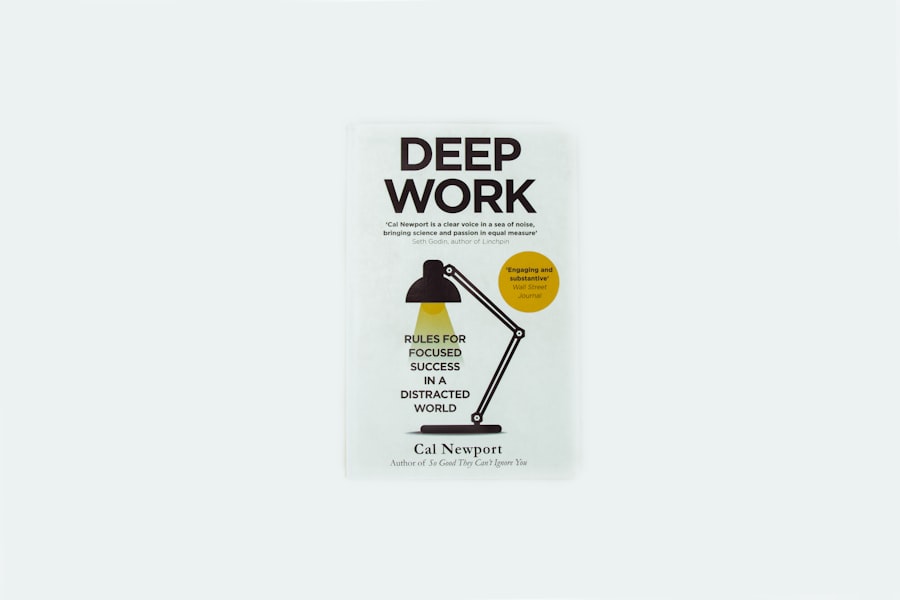
You have a precious resource, a wellspring of focused attention that allows you to accomplish your most important work. This state, what Cal Newport describes as “deep work,” is the bedrock of significant achievement, innovation, and mastery. Yet, in your daily life, this valuable commodity is under constant siege. Your attention is a battleground, and you are the general, tasked with defending your productive hours against a relentless barrage of distractions. This article is your tactical manual, designed to equip you with the strategies and discipline needed to guard your deep work and reclaim your most valuable hours.
Before you can effectively defend your deep work, you must first understand what it is you are defending against. The threats are multifaceted and often insidious, masquerading as essential or, at best, minor interruptions. Recognizing these threats is the first step in developing effective countermeasures.
The Constant Connectivity Compulsion
You live in a world of perpetual notification. Your smartphone, your computer, your smart watch – they all beckon with the promise of instant connection, news, and social interaction. This constant stream of pings, buzzes, and pop-ups fragments your attention, pulling you away from sustained focus. You may find yourself habitually checking your email, social media, or news feeds, even when there’s no urgent reason to do so. This is not merely an inconvenience; it’s a rewiring of your brain, conditioning you for shallow engagement rather than deep concentration.
Email and Instant Messaging Overload
The assumption that immediate responses are always necessary is a significant contributor to this problem. You might feel obliged to reply to every email or message instantly, even if it’s not time-sensitive. This creates a reactive workflow, where you are constantly responding to external demands rather than proactively driving your own agenda. The illusion of productivity from clearing your inbox can be a dangerous distraction from the real, impactful work that requires sustained effort.
The Siren Song of Social Media
Social media platforms are meticulously designed to capture and hold your attention. Their algorithms are optimized for engagement, feeding you a continuous stream of updates, opinions, and ephemeral content. While these platforms can have their place, their pervasive nature can easily derail your focus, drawing you into endless scrolls and superficial interactions that drain your cognitive energy without yielding meaningful results.
The Cult of Busyness
There’s a cultural narrative that equates busyness with importance and productivity. You might feel pressure to appear swamped, to be always “on” and available. This often leads to a preference for superficially engaging tasks that provide an immediate sense of accomplishment, such as answering emails, attending low-value meetings, or multitasking inefficiently, over the demanding yet ultimately more rewarding work of deep focus.
Superficial Productivity Traps
You may fall into the trap of believing that constant activity equals progress. This can manifest as attending every meeting, even those where your presence isn’t strictly necessary, or juggling multiple tasks simultaneously without sufficient depth. The quantity of your output might appear high, but you may find yourself questioning the quality and long-term impact of your efforts.
The Illusion of Multitasking
The human brain is not designed for true multitasking, but rather for rapid task switching. Each switch incurs a cognitive cost, reducing your efficiency and increasing the likelihood of errors. You might believe you are managing multiple projects effectively, but in reality, you are likely sacrificing depth and quality for the sake of perceived speed.
Uninvited Guests in Your Workspace
Beyond the digital realm, your physical environment can also be a significant source of disruption. Whether you work in an open-plan office or a home environment with competing demands, external interruptions can shatter your concentration and make deep work feel like an impossible dream.
The Open-Plan Office Paradox
The intended benefits of open-plan offices – collaboration and communication – often give way to a constant hum of conversations, impromptu meetings, and ambient noise. While some level of interaction is necessary, the lack of personal space and soundproofing can make sustained individual focus a significant challenge.
Homefront Disruptions
If you work from home, you face a different set of challenges. Family members, roommates, household chores, and the general allure of the domestic sphere can all vie for your attention, making it difficult to establish clear boundaries and signal to others that you require uninterrupted time.
To enhance your ability to protect your deep work hours, you might find it beneficial to explore related strategies and insights in the article available at Productive Patty. This resource offers practical tips on managing distractions and optimizing your focus, which can significantly contribute to maintaining the integrity of your dedicated work time. By implementing these techniques, you can create a more conducive environment for deep work, ultimately leading to greater productivity and satisfaction in your tasks.
Building Your Defensive Fortifications
Now that you understand the threats, it’s time to construct your defenses. This is not about eliminating all interaction or entertainment, but about creating intentional structures and habits that protect your deep work sessions.
Implementing Time Blocking and Scheduled Deep Work
One of the most effective strategies for guarding your deep work is to proactively schedule it. Treat these periods as sacred appointments that cannot be easily broken.
The Power of Dedicated Blocks
Identify specific blocks of time in your day or week that are exclusively dedicated to deep work. These might be early mornings before others are awake, late evenings after the household has settled, or even specific hours during the workday that you consciously shield from interruptions. Committing to these blocks with the same seriousness as client meetings or critical project deadlines is crucial.
Setting Clear Objectives for Each Block
Simply blocking out time isn’t enough. Before each deep work session, define a clear, achievable objective. What specific problem will you solve? What output will you create? Having a well-defined goal provides direction and a sense of purpose, making it easier to resist distractions and stay on task.
Cultivating a Distraction-Free Environment
Your physical and digital environment plays a pivotal role in your ability to concentrate. You need to actively curate these spaces to minimize opportunities for distraction.
Digital Decluttering and Notification Management
Take control of your digital devices. Turn off non-essential notifications on your phone and computer. Consider using website blockers or focus apps that temporarily restrict access to distracting sites during your deep work periods. Regularly review and unsubscribe from email lists that you no longer find valuable. The goal is to create a digital ecosystem that serves your focus, not undermines it.
Physical Boundaries and Signals
In your physical workspace, create clear boundaries. If you have an office, close the door. If you work in a shared space, use headphones and perhaps a visual cue, like a sign, to indicate that you are focused and not to be interrupted unless it’s an emergency. Communicate your need for uninterrupted time to colleagues and family members.
Developing a Mindset of Intentionality
Ultimately, guarding your deep work is a battle of will and intention. You need to cultivate a proactive and mindful approach to your work and your time.
Resisting the Urge for Constant Connectivity
Recognize the psychological pull of constant connectivity and actively work to override it. When the urge to check your phone or email arises during a deep work session, acknowledge it, but then consciously redirect your attention back to your task. This practice strengthens your attentional muscles.
Embracing Solitude and Reflection
Deep work often thrives in solitude. Learn to be comfortable with spending extended periods alone with your thoughts and your work. This solitude is not a sign of isolation, but a necessary component for deep cognitive engagement. Embrace opportunities for reflection, where you can process information and formulate new ideas without external interference.
Navigating the Social Landscape
You don’t work in a vacuum. Your interactions with others can either support or sabotage your deep work efforts. Learning to navigate this social landscape is essential.
Communicating Your Deep Work Needs
You have the right to protect your focused time, and open communication is key to achieving this.
Setting Expectations with Colleagues
Clearly communicate your deep work schedule and your availability outside of those times. Let your colleagues know when you are available for discussions and when you need uninterrupted time to focus on specific tasks. This proactive communication can prevent misunderstandings and reduce impromptu interruptions.
The Art of the Polite Refusal
You don’t have to say “yes” to every request. Learn to politely decline invitations or requests that would disrupt your deep work. Offer alternative times or suggest ways they can find information themselves without requiring your direct involvement during your focused periods.
Managing Meetings for Maximum Effectiveness
Meetings are often notorious time sinks. You need to approach them strategically to protect your broader objectives.
Pre-Meeting Preparation and Purpose
Before agreeing to a meeting, ensure you understand its purpose and your role. If the meeting lacks a clear agenda or objective, it might be an opportunity to suggest a more efficient communication method, like an email exchange.
Concise and Focused Meeting Execution
When you must attend a meeting, strive for conciseness and focus. Encourage the facilitator to stick to the agenda and to conclude within the allotted time. If your presence isn’t essential for the entire duration, consider attending only the relevant portions.
The Role of Rituals and Habits
Consistency is paramount when it comes to defending your deep work. Establishing reliable rituals and habits can automate the process, making it easier to enter and maintain a state of flow.
Morning Routines for Peak Performance
The way you start your day can significantly influence your ability to focus.
The Power of the Unplugged Morning
Consider a morning routine that prioritizes quiet focus before the digital world fully takes hold. This could involve reading, journaling, meditation, or reviewing your deep work objectives for the day, all without the immediate pull of email or social media.
Preparing Your Mind for Deep Work
Your morning routine can also include mental preparation. This might involve reviewing your goals, visualizing successful completion of tasks, or engaging in a brief period of mindfulness to clear your head and set a focused intention.
Evening Wind-Downs for Restful Recovery
Just as important as your deep work sessions is your ability to recover and recharge.
Disconnecting from Work Before Sleep
Establish a clear boundary between your work and personal life, especially as the day winds down. Avoid checking emails or engaging in work-related tasks in the hours leading up to bedtime. This allows your mind to disengage and prepare for restorative sleep, which is crucial for cognitive function.
Preparing for the Next Day’s Deep Work
Your evening routine can also involve light preparation for the next day’s deep work. This might include briefly reviewing your schedule or noting down any critical tasks you need to prioritize, allowing your subconscious mind to begin working on them overnight.
To enhance your productivity and safeguard your deep work hours, it’s essential to establish boundaries and create an environment conducive to focus. One effective strategy is to minimize distractions by setting specific times for checking emails and social media. Additionally, you might find it helpful to explore techniques for optimizing your work environment. For further insights on this topic, check out this informative article on how to protect your deep work hours at Productive Patty. By implementing these strategies, you can significantly improve your concentration and overall output.
Continuous Evaluation and Adaptation
| Strategy | Effectiveness |
|---|---|
| Set specific deep work hours | High |
| Communicate boundaries to colleagues | Medium |
| Use a do not disturb sign | Low |
| Turn off notifications | High |
| Find a quiet workspace | High |
The landscape of distractions is always evolving, and your defenses must adapt accordingly. You are not aiming for a static solution, but for a dynamic and ongoing process of refinement.
Regular Review of Your Deep Work Strategy
Periodically, take stock of what’s working and what’s not. Are your scheduled deep work blocks being consistently respected? Are you still falling prey to certain digital distractions?
Identifying New Distraction Patterns
Be observant of emerging distraction patterns. New apps, social trends, or shifts in your work environment can introduce novel threats to your focus. Remain vigilant and ready to adjust your strategies.
Adjusting Your Time Blocking and Environment
Based on your review, don’t hesitate to adjust your time blocking schedules, your notification settings, or your environmental controls. If a particular strategy is no longer effective, be willing to experiment with new approaches.
Seeking Feedback and Accountability
Sharing your goals and challenges with trusted individuals can provide valuable external perspective and motivation.
Partnering with an Accountability Buddy
Find a colleague or friend who also values deep work and agree to hold each other accountable. Regular check-ins can help you stay on track and identify areas where you might be struggling.
Soliciting Constructive Criticism
Be open to feedback from others about your work habits. They might observe distraction patterns that you are unaware of or offer insights into more efficient ways of managing your time and attention.
Guarding your deep work is an ongoing commitment. It requires discipline, self-awareness, and a willingness to adapt. By understanding the threats, building robust defenses, navigating your social landscape, cultivating effective rituals, and continuously evaluating your approach, you can reclaim your most productive hours and unlock your true potential for significant achievement. Your attention is your most valuable asset; treat it with the seriousness it deserves.
FAQs
What are deep work hours?
Deep work hours refer to dedicated periods of time where an individual focuses on cognitively demanding tasks without any distractions. This allows for intense concentration and high-quality work output.
Why is it important to protect deep work hours?
Protecting deep work hours is important because it allows individuals to achieve a state of flow, leading to increased productivity, creativity, and the ability to produce high-quality work. Distractions can disrupt this state and hinder the ability to focus deeply on tasks.
How can one protect their deep work hours?
To protect deep work hours, individuals can establish a designated time and space for deep work, communicate their need for uninterrupted focus to colleagues or family members, utilize tools such as noise-cancelling headphones, and set boundaries around their availability during these hours.
What are some common distractions to avoid during deep work hours?
Common distractions to avoid during deep work hours include social media, email notifications, phone calls, meetings, and interruptions from colleagues or family members. It’s important to minimize these distractions to maintain deep focus.
What are the benefits of protecting deep work hours?
Protecting deep work hours can lead to increased productivity, improved quality of work, enhanced creativity, and a greater sense of accomplishment. It also allows individuals to make significant progress on complex tasks and projects.