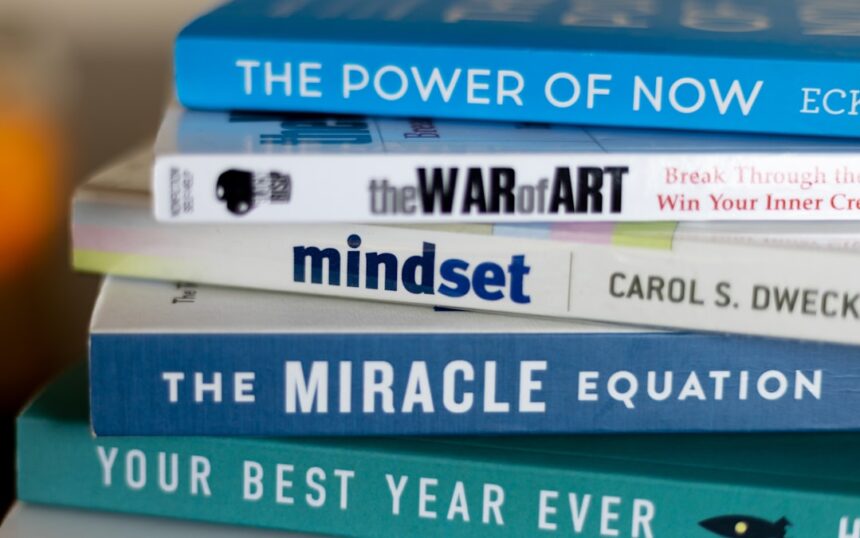
In today’s fast-paced world, the quest for productivity has become a central theme in both personal and professional realms. You may find yourself constantly juggling tasks, deadlines, and responsibilities, all while striving to maintain a semblance of balance in your life. Productivity books have emerged as invaluable resources, offering insights, strategies, and frameworks that can help you navigate the complexities of modern living.
These books not only provide practical advice but also inspire you to rethink your approach to work and life. As you delve into the world of productivity literature, you will discover a plethora of methodologies and philosophies designed to enhance your efficiency and effectiveness. From understanding the psychology behind your habits to mastering time management techniques, these books serve as guides on your journey toward achieving your goals.
Key Takeaways
- Productivity books offer valuable insights and strategies for improving efficiency and achieving goals.
- “The Power of Habit” emphasizes the impact of habits on personal and professional success, and provides a framework for changing them.
- “Getting Things Done” introduces a system for organizing tasks and reducing stress, promoting a more productive mindset.
- “Deep Work” advocates for focused, undistracted work as a key to achieving high levels of productivity and success.
- “Essentialism” encourages readers to prioritize and focus on what truly matters, leading to greater productivity and fulfillment.
The Power of Habit: Why We Do What We Do in Life and Business by Charles Duhigg
In “The Power of Habit,” Charles Duhigg explores the science behind habits and how they shape our lives. You may be surprised to learn that habits account for a significant portion of your daily actions, often operating on autopilot. Duhigg introduces the concept of the habit loop, which consists of a cue, routine, and reward.
By understanding this loop, you can begin to identify the habits that serve you well and those that hinder your progress. This awareness is the first step toward making meaningful changes in your life. Duhigg’s insights extend beyond personal habits; he also examines how organizations can harness the power of habits to drive success.
By creating a culture that fosters positive habits among employees, businesses can enhance productivity and innovation. As you read this book, you will find practical strategies for reshaping your own habits and influencing those around you. The lessons learned from “The Power of Habit” can be transformative, enabling you to break free from unproductive patterns and cultivate a more fulfilling life.
Getting Things Done: The Art of Stress-Free Productivity by David Allen

David Allen’s “Getting Things Done” (GTD) presents a comprehensive system for managing tasks and projects with ease. If you often feel overwhelmed by your to-do list or struggle to keep track of your commitments, this book offers a refreshing perspective on productivity. Allen emphasizes the importance of capturing all your tasks in a reliable system, allowing you to free your mind from the clutter of unfinished business.
By implementing his five-step process—capture, clarify, organize, reflect, and engage—you can create a streamlined workflow that reduces stress and enhances focus. One of the key takeaways from GTD is the idea of “next actions.” Instead of getting bogged down by the enormity of a project, Allen encourages you to break it down into actionable steps. This approach not only makes daunting tasks more manageable but also provides a clear path forward.
As you adopt the GTD methodology, you’ll likely find that your productivity increases significantly, allowing you to accomplish more while feeling less overwhelmed.
Deep Work: Rules for Focused Success in a Distracted World by Cal Newport
| Metrics | Data |
|---|---|
| Book Title | Deep Work: Rules for Focused Success in a Distracted World |
| Author | Cal Newport |
| Pages | 304 |
| Publication Date | January 5, 2016 |
| Genre | Self-help, Productivity |
In “Deep Work,” Cal Newport argues that the ability to focus without distraction is becoming increasingly rare yet essential in our information-saturated society. You may find yourself constantly bombarded by notifications, emails, and social media updates, making it challenging to engage in deep, meaningful work. Newport defines deep work as professional activities performed in a state of distraction-free concentration that push your cognitive capabilities to their limit.
He posits that cultivating this skill is crucial for achieving high levels of productivity and success. Newport provides practical strategies for integrating deep work into your routine. He advocates for scheduling dedicated blocks of time for focused work and minimizing distractions during these periods.
By creating rituals around your deep work sessions—such as setting specific goals or establishing a conducive environment—you can train your mind to enter a state of flow more easily. As you embrace the principles outlined in “Deep Work,” you’ll likely notice an increase in both the quality and quantity of your output.
Essentialism: The Disciplined Pursuit of Less by Greg McKeown
Greg McKeown’s “Essentialism” challenges the notion that we must do more to achieve more. Instead, he advocates for a disciplined approach to focusing on what truly matters in your life and work. You may often feel pressured to say yes to every opportunity or request that comes your way, leading to a scattered focus and diminished effectiveness.
McKeown encourages you to adopt an essentialist mindset—one that prioritizes quality over quantity and allows you to invest your time and energy in pursuits that align with your core values. The book emphasizes the importance of saying no to non-essential tasks and commitments. By doing so, you create space for what truly matters, enabling you to excel in those areas.
McKeown provides practical tools for identifying your priorities and making intentional choices about how you spend your time. As you embrace essentialism, you’ll likely find that your productivity improves as you concentrate on fewer tasks with greater impact.
Atomic Habits: An Easy & Proven Way to Build Good Habits & Break Bad Ones by James Clear
James Clear’s “Atomic Habits” delves into the mechanics of habit formation and offers actionable strategies for building good habits while breaking bad ones. You may have experienced frustration when trying to change behaviors or establish new routines; Clear’s approach demystifies this process by focusing on small, incremental changes. He argues that tiny adjustments can lead to significant transformations over time—a concept he refers to as the aggregation of marginal gains.
Clear introduces the four laws of behavior change: make it obvious, make it attractive, make it easy, and make it satisfying. By applying these principles, you can design an environment that supports positive habits while discouraging negative ones. For instance, if you’re trying to develop a reading habit, placing books in visible locations can serve as a cue to read more often.
As you implement these strategies from “Atomic Habits,” you’ll likely find that lasting change becomes more attainable.
The 4-Hour Workweek: Escape 9-5, Live Anywhere, and Join the New Rich by Timothy Ferriss
Timothy Ferriss’s “The 4-Hour Workweek” presents a radical rethinking of traditional work paradigms. If you’ve ever dreamed of escaping the confines of a 9-to-5 job or achieving financial independence while enjoying life on your terms, this book offers a blueprint for doing just that. Ferriss introduces concepts such as automation and delegation, encouraging you to leverage technology and resources to maximize efficiency and minimize unnecessary work.
One of the key principles Ferriss advocates is the idea of lifestyle design—creating a life that aligns with your passions and values rather than conforming to societal expectations. He challenges readers to question their assumptions about work and success, urging them to pursue experiences over possessions. As you explore the ideas presented in “The 4-Hour Workweek,” you’ll be inspired to rethink your own relationship with work and consider how you can create a more fulfilling life.
Smarter Faster Better: The Transformative Power of Real Productivity by Charles Duhigg
In “Smarter Faster Better,” Charles Duhigg returns with another exploration of productivity, this time focusing on the psychology behind effective decision-making and motivation. You may often find yourself struggling with procrastination or indecision; Duhigg’s insights can help you understand how to overcome these challenges. He emphasizes the importance of setting clear goals and fostering a sense of agency—believing that you have control over your choices.
Duhigg also highlights the role of mental models in enhancing productivity. By developing frameworks for thinking about problems and decisions, you can improve your ability to navigate complex situations effectively. The book is filled with real-world examples from various fields, illustrating how individuals and organizations have applied these principles to achieve remarkable results.
As you absorb Duhigg’s lessons from “Smarter Faster Better,” you’ll likely find yourself equipped with new tools for enhancing your productivity.
The One Thing: The Surprisingly Simple Truth Behind Extraordinary Results by Gary Keller and Jay Papasan
In “The One Thing,” Gary Keller and Jay Papasan advocate for focusing on what truly matters in order to achieve extraordinary results. You may often feel pulled in multiple directions by competing priorities; this book encourages you to identify the one thing that will make everything else easier or unnecessary. By honing in on this singular focus, you can channel your energy toward achieving significant outcomes rather than getting lost in a sea of tasks.
The authors provide practical strategies for identifying your one thing across various areas of life—be it personal goals, career aspirations, or relationships. They emphasize the importance of time blocking—dedicating specific periods solely to working on your one thing without distractions. As you implement these principles from “The One Thing,” you’ll likely discover that simplifying your focus leads to greater clarity and enhanced productivity.
Stephen R. Covey’s “The 7 Habits of Highly Effective People” has become a classic in the realm of personal development and productivity literature. Covey presents a holistic approach to effectiveness that encompasses both personal and interpersonal dimensions.
You may find that adopting these seven habits can lead not only to increased productivity but also to deeper fulfillment in various aspects of your life. The habits range from being proactive and setting clear goals to seeking win-win solutions in relationships and continuously improving yourself. Covey emphasizes the importance of aligning your actions with your values—a principle that resonates deeply with those seeking meaningful change.
As you explore each habit in detail, you’ll likely find practical insights that empower you to take charge of your life and cultivate lasting effectiveness.
Conclusion and Action Steps for Boosting Productivity
As you reflect on the wealth of knowledge contained within these productivity books, it’s essential to consider how you can apply these insights in your own life. Start by identifying which concepts resonate most with you; whether it’s habit formation from “Atomic Habits,” focus techniques from “Deep Work,” or prioritization strategies from “Essentialism,” choose one or two ideas to implement immediately. Create an action plan outlining specific steps you’ll take based on what you’ve learned.
This could involve setting aside dedicated time for deep work sessions or establishing a habit-tracking system inspired by Clear’s methodologies. Remember that productivity is not just about doing more; it’s about doing what matters most effectively. By integrating these principles into your daily routine, you’ll likely find yourself on a path toward greater productivity and fulfillment.
Embrace the journey as an opportunity for growth and transformation—after all, each small step taken today can lead to significant progress tomorrow.
If you’re on a quest to boost your productivity, diving into some of the best productivity books ever written is a great start. These books offer a wealth of strategies and insights to help you manage your time more effectively and achieve your goals. For those interested in exploring more about productivity, you might find this