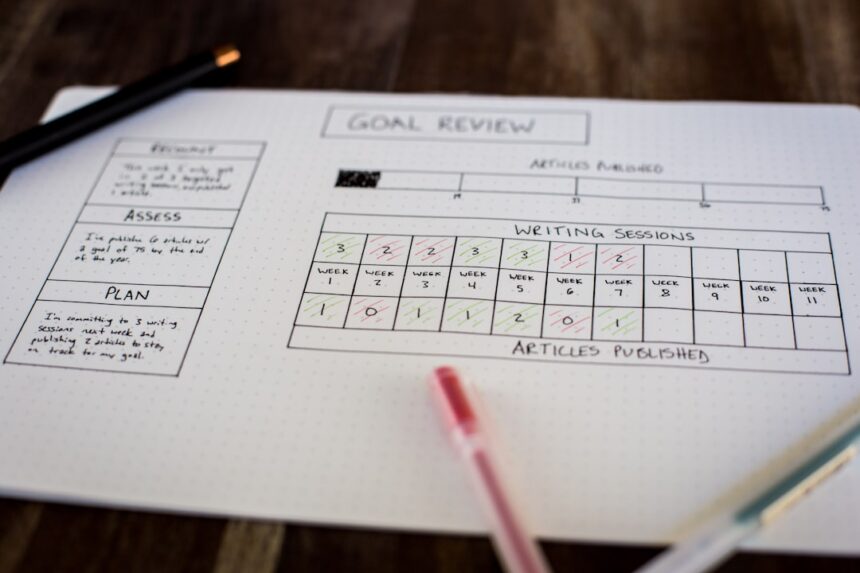
You, as an individual navigating the complexities of modern existence, are constantly bombarded with demands on your time, attention, and energy. The sheer volume of information, tasks, and aspirations can easily lead to a sense of overwhelm, diminished output, and ultimately, burnout. This article introduces “Adaptable Productivity: A System for Life,” a conceptual framework and practical methodology designed to empower you to achieve sustained high performance while maintaining well-being. It is not a rigid prescription but a dynamic system you configure and evolve to suit your unique circumstances, much like a skilled sailor adjusts their sails to prevailing winds rather than attempting to outmuscle a storm.
At its heart, Adaptable Productivity emphasizes fluidity and responsiveness over rigid adherence to predefined schedules or singular methodologies. You recognize that your ideal state of productivity varies day-to-day, even hour-to-hour, influenced by internal factors like your energy levels and external factors like unexpected events. Discover the [best productivity system](https://youtu.be/yTq5OM-YhRs) to enhance your daily workflow and achieve more.
Embracing Non-Linearity
Traditional productivity models often present a linear path: plan, execute, achieve. However, you know from experience that life is rarely so straightforward. Adaptable Productivity acknowledges this inherent non-linearity. Your progress may resemble a winding river, sometimes flowing swiftly, sometimes eddying, but always moving forward.
- Cycles of Focus and Diffusion: You understand that intense focus periods must be balanced with periods of diffusion, allowing your subconscious to process information and generate novel ideas. This isn’t procrastination; it’s a vital part of the creative and problem-solving process.
- The Permeable Boundary: Your professional and personal lives are not hermetically sealed compartments. Adaptable Productivity advocates for acknowledging this permeability and strategically managing its impact, rather than futilely attempting to erect impenetrable walls.
Prioritizing Self-Awareness
Before you can effectively adapt, you must first understand the landscape of your internal world. Self-awareness is the compass guiding your adaptability.
- Energy Audits: You regularly assess your mental, emotional, and physical energy levels throughout the day. This involves recognizing individual “peak” and “trough” periods for different types of work. Creative tasks might flourish in the morning for you, while administrative duties are best handled during a post-lunch dip.
- Identifying Procrastination Triggers: You meticulously observe the patterns preceding procrastination. Is it a fear of failure? A lack of clarity? An overwhelming task? Understanding these triggers empowers you to implement targeted countermeasures.
- Understanding Your Cognitive Biases: You acknowledge your inherent cognitive biases, such as confirmation bias or the planning fallacy. This allows you to approach planning and decision-making with a more critical and realistic perspective, mitigating their negative impact on your productivity.
If you’re looking for a productivity system that can adapt and scale with your life, you might find valuable insights in this related article. It discusses various strategies to enhance your efficiency while accommodating the changes that come with different life stages. For more information, you can read the full article here: Productivity System that Scales with Your Life.
Building Your Adaptable Toolkit
Adaptable Productivity doesn’t dictate a specific set of tools or apps; rather, it encourages you to build a personalized toolkit that supports your adaptive workflow. Think of yourself as a craftsman selecting the right instruments for a particular project.
Flexible Planning Methodologies
Rigid long-term plans can quickly become outdated. Adaptable Productivity favors dynamic planning that can pivot as circumstances change.
- Rolling Horizons: You plan in flexible “rolls” – perhaps a weekly sprint with daily minor adjustments, and a quarterly thematic focus. This allows for both forward momentum and responsiveness to new information.
- Contingency Buffers: You build in intentional buffers for unexpected events or tasks. Just as a project manager adds contingency time, you add “white space” to your schedule for unforeseen demands. This prevents a single disruption from derailing your entire day.
- Strategic De-commitment: You recognize that saying “no” and strategically de-committing from less crucial obligations is a powerful form of productivity. This isn’t about avoidance; it’s about safeguarding your most valuable resource: your focused attention.
Task Management Systems
Your task management system should be a living entity, not a static list. It must evolve with your needs and priorities.
- Context-Based Organization: You organize tasks not just by project, but also by context. For example, “at computer,” “on phone,” “in transit.” This allows you to leverage pockets of time efficiently.
- Priority Matrix Adaptation: While you may use a system like the Eisenhower Matrix, you understand that the urgency and importance of tasks can shift. You regularly reassess and re-prioritize your backlog, allowing tasks to move between quadrants as their significance changes.
- “Parking Lot” for Ideas: You maintain a “parking lot” or “idea backlog” for non-urgent but potentially valuable thoughts and tasks. This allows you to capture ideas without interrupting your current focus, knowing they are safely stored for later review.
Communication and Collaboration Frameworks
Effective communication is not merely about transmitting information; it’s about facilitating understanding and coordinated action, especially when adapting to changing circumstances.
- Asynchronous Communication Protocols: You leverage asynchronous tools (email, collaborative documents) for non-urgent communication, respecting others’ focus time and allowing for thoughtful responses.
- Synchronous Communication Best Practices: When synchronous communication (meetings, calls) is necessary, you ensure clear agendas, defined objectives, and established time limits to maximize efficiency. You also recognize when a brief, focused real-time interaction is more productive than an extended email chain.
- Feedback Loops: You establish regular, constructive feedback loops within your teams or even for personal projects. This allows for continuous improvement and course correction in an adaptive environment.
Cultivating Adaptive Habits and Mindsets

Beyond tools and methodologies, Adaptable Productivity hinges on cultivating specific habits and a resilient mindset. These are the muscles you strengthen to stay agile.
Embracing Imperfection
The pursuit of absolute perfection is often a barrier to progress. Adaptable Productivity encourages you to strive for excellent, but embrace “good enough” when appropriate.
- Minimum Viable Product (MVP) Mindset: You apply the MVP concept not just to product development but to tasks. What is the smallest, most impactful version of this task that I can complete now to move forward?
- Iteration over Perfection: You view tasks and projects as iterative processes. The first draft is rarely the final one, and initial efforts are often stepping stones to refined outcomes. This reduces the pressure to get it “right” the first time.
- Learning from “Failures”: You reframe “failures” as valuable data points, offering insights into what didn’t work and informing future adaptations. Just as a scientist learns from failed experiments, you learn from missed targets or inefficient approaches.
Developing Mental Resilience
Adaptability requires a robust mental framework, allowing you to absorb shocks and bounce back from setbacks.
- Mindfulness and Presence: You practice mindfulness techniques to stay grounded in the present moment, rather than being overwhelmed by past regrets or future anxieties. This enhances your ability to respond effectively to current situations.
- Cognitive Reappraisal: When faced with a perceived setback, you practice cognitive reappraisal, actively reinterpreting the situation in a more constructive or less threatening light. This helps shift your emotional response from panic to problem-solving.
- Energy Management, Not Time Management: You shift your focus from merely managing blocks of time to strategically managing your energy levels. This means recognizing when to push, when to rest, and when to engage in activities that replenish your mental and emotional reserves.
Continuous Learning and Iteration
Adaptable Productivity is a never-ending journey of learning and refinement. You are a perpetual student of your own productivity.
- Regular Review and Retrospection: You dedicate time, perhaps weekly or monthly, to review your productivity. What worked well? What didn’t? What unexpected challenges arose? This is your “post-mortem” for personal effectiveness.
- Experimentation: You actively experiment with different tools, techniques, and routines. You treat your productivity system like a laboratory, testing hypotheses and observing outcomes.
- Seeking Diverse Perspectives: You expose yourself to new ideas and perspectives on productivity, whether through books, articles, podcasts, or conversations with peers. This expands your toolkit and challenges your assumptions.
Implementing Adaptable Productivity Across Life Domains

Adaptable Productivity is not confined to your professional life; it’s a holistic system you apply to various facets of your existence.
Professional Sphere
In your career, Adaptable Productivity enables you to navigate project demands, team dynamics, and market shifts with greater agility.
- Project Management Flexibility: You adopt agile methodologies, even for individual projects. This involves breaking down large goals into smaller, manageable sprints, allowing for frequent reassessment and recalibration.
- Strategic Downtime: You proactively schedule strategic downtime to prevent burnout and foster creative thinking. This isn’t procrastination; it’s an investment in sustainable performance.
- Boundary Management: You establish clear boundaries between work and non-work activities, even in hybrid or remote work environments. This protects your personal time and prevents work creep from eroding your energy reserves.
Personal Growth and Hobbies
Your personal development and recreational pursuits also benefit from an adaptable approach.
- Flexible Goal Setting: When pursuing personal goals (e.g., learning a new skill, fitness), you set flexible targets. If an unforeseen event disrupts your routine, you adjust the goal rather than abandoning it entirely.
- “Micro-Habit” Integration: You break desired new habits into their smallest possible components (micro-habits) and integrate them into existing routines. This reduces friction and increases the likelihood of long-term adherence.
- Intentional Leisure: You approach leisure with intentionality, ensuring it genuinely recharges you. This might involve active pursuits, contemplative practices, or simply unstructured downtime.
Relationships and Social Engagement
Even your interactions with others can be managed adaptably to foster deeper connections and minimize interpersonal stress.
- Responsive Communication: You adapt your communication style and timing to the preferences and needs of others. This might mean knowing when to send a detailed email versus making a quick call.
- Setting Realistic Expectations: You manage your own and others’ expectations regarding your availability and capacity. This prevents overcommitment and maintains healthy relationships.
- “Relationship Deposits”: You intentionally make “deposits” into your relationships through focused attention, acts of kindness, or shared experiences, recognizing that strong social bonds contribute to overall well-being and resilience.
If you’re looking for a productivity system that can adapt as your life evolves, you might find it helpful to explore the insights shared in this related article. It offers practical strategies that can help you streamline your tasks and prioritize effectively, ensuring that your productivity remains aligned with your changing goals and responsibilities. By implementing these techniques, you can create a flexible framework that supports your personal and professional growth.
Overcoming Common Hurdles
| Metric | Description | Initial Stage | Growth Stage | Mature Stage |
|---|---|---|---|---|
| Task Completion Rate | Percentage of tasks completed on time | 70% | 85% | 95% |
| Time Spent on Planning | Average minutes spent daily on planning tasks | 10 min | 20 min | 30 min |
| Number of Active Projects | Projects managed simultaneously | 1-2 | 3-5 | 6+ |
| System Adaptability | Ability to integrate new tools and methods | Basic | Moderate | High |
| Stress Level | Self-reported stress related to workload | Medium | Low | Very Low |
| Review Frequency | How often the system is reviewed and adjusted | Weekly | Bi-weekly | Monthly |
As with any system, you will encounter obstacles in implementing Adaptable Productivity. Recognizing and addressing these is crucial.
The Lure of the “Perfect System”
You may be tempted to endlessly search for the ultimate productivity hack or the one “perfect” system. Adaptable Productivity teaches you to resist this urge.
- Start Small, Iterate Often: Instead of a grand overhaul, you begin with small, incremental changes to your existing workflow.
- Focus on Principles, Not Tools: You prioritize understanding the underlying principles of adaptability over fixating on specific software or methodologies. The principle remains, even if the tools evolve.
- Accept Evolution: You understand that your adaptable system will continuously evolve. What works today might need tweaking tomorrow. This is a feature, not a bug.
Resistance to Change
Implementing any new system, even an adaptable one, can trigger resistance, both internal and external.
- Self-Compassion: You practice self-compassion when you stumble or revert to old habits. Progress is rarely linear, and setbacks are part of the learning process.
- Communicating Your Approach: If working in a team or with others, you communicate your adaptable approach. Explain that you might be prioritizing differently or using new methods, fostering understanding and collaboration.
- Small Wins to Build Momentum: You actively seek out and celebrate small wins, building momentum and positive reinforcement for your adaptable habits.
Information Overload and Decision Fatigue
The constant influx of information and decisions can paralyze even the most adaptable individual.
- Information Filtering Mechanisms: You implement robust filtering mechanisms for information, whether through email rules, content blockers, or simply being selective about your information sources.
- Delegation and Automation: You actively seek opportunities to delegate tasks that can be done by others or automate repetitive processes, freeing up your mental energy for higher-value activities.
- Decision-Making Frameworks: You adopt simple decision-making frameworks to streamline choices, reserving your mental energy for truly complex or critical decisions. For minor decisions, a heuristic like “which option causes less friction?” can be highly effective.
In conclusion, Adaptable Productivity: A System for Life is not a static blueprint but a dynamic methodology empowering you to not merely survive, but thrive, amidst the ever-shifting landscape of modern life. By cultivating self-awareness, building a personalized toolkit, embracing iterative habits, and maintaining a resilient mindset, you transform from a reactive participant to a proactive architect of your time and attention. You become the conductor of your own symphony, able to adjust the tempo, modulate the intensity, and integrate unexpected variations into a harmonious and productive whole. Your journey with Adaptable Productivity is one of continuous growth, refinement, and ultimately, sustainable well-being.
WATCH THIS! 🎯 STOP Wasting Time on the “Perfect” System
FAQs
What is a productivity system that scales with your life?
A productivity system that scales with your life is a flexible and adaptable method or set of tools designed to help you manage tasks, goals, and time efficiently as your personal and professional responsibilities grow or change.
Why is it important to have a scalable productivity system?
Having a scalable productivity system is important because it can accommodate changes in your workload, priorities, and lifestyle without becoming overwhelming or ineffective, ensuring consistent productivity over time.
What are common features of scalable productivity systems?
Common features include flexibility, modularity, integration with various tools, prioritization methods, and the ability to handle both short-term tasks and long-term goals.
Can a productivity system be customized to individual needs?
Yes, scalable productivity systems are often designed to be customizable, allowing users to tailor methods and tools to their unique workflows, preferences, and life circumstances.
What are some examples of productivity systems that scale?
Examples include Getting Things Done (GTD), Bullet Journaling, time-blocking techniques, and digital task management apps like Todoist or Notion that offer scalable features.
How do I start building a productivity system that scales with my life?
Begin by assessing your current tasks and goals, choosing tools and methods that suit your style, and gradually implementing processes that can expand or adapt as your responsibilities evolve.
Is technology necessary for a scalable productivity system?
While technology can enhance scalability through automation and integration, scalable productivity systems can also be implemented using analog methods like planners and notebooks.
How often should I review and adjust my productivity system?
Regular reviews, such as weekly or monthly check-ins, are recommended to ensure the system remains aligned with your changing priorities and life circumstances.
Can a scalable productivity system help reduce stress?
Yes, by providing structure and clarity, a scalable productivity system can help manage workload effectively, reducing overwhelm and stress.
Are scalable productivity systems suitable for both personal and professional use?
Absolutely, these systems are designed to manage various aspects of life, making them effective for balancing personal tasks and professional responsibilities.