
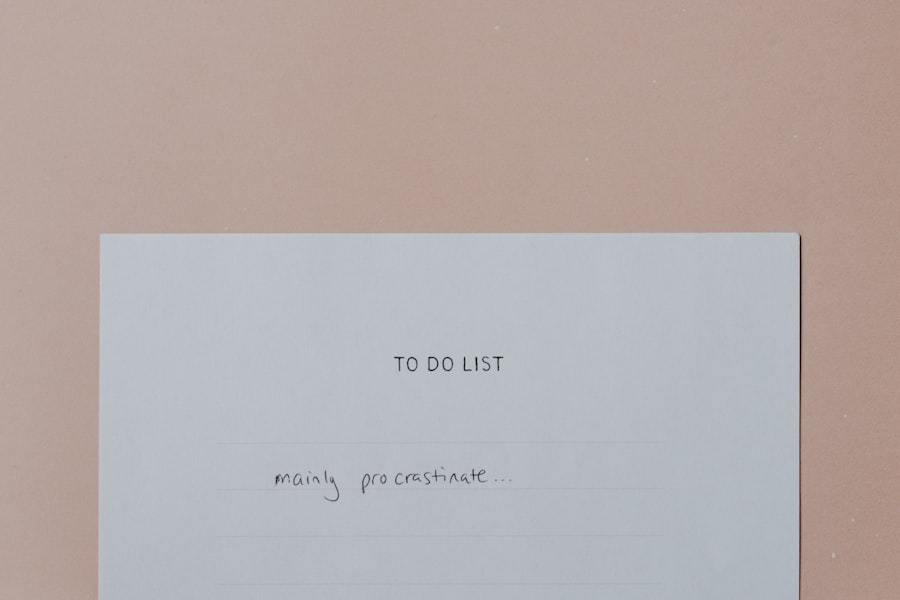
You’ve likely sat at your desk, illuminated by the cool glow of your screen, the cursor blinking accusingly on a blank document. The deadline looms, a distant but growing thundercloud, yet your mind dances with distractions – a quick scroll through social media, an urge to organize your desk (again), or a sudden fascination with the dust motes in the sunbeam. This is procrastination, your personal Everest, and you’ve decided today is the day you plant your flag at the summit. You are here to learn how to conquer it, not with fleeting motivation, but with a structured approach: the “Same Hour Restart.”
The Labyrinth of Inertia
Procrastination is not about laziness. It is a complex interplay of psychological factors, a labyrinth of inertia that can feel impossible to escape. You know what you should be doing, but the sheer act of beginning, or returning to a task after a break, seems to demand an insurmountable amount of mental energy. It’s like trying to push a boulder uphill; the initial push feels agonizing, and any pause allows gravity to pull it back. This is where the Same Hour Restart offers a practical, actionable strategy.
Before you can dismantle the walls of procrastination, you must understand the bricks they are made of. Your mind, when confronted with an overwhelming or unpleasant task, can create a variety of diversions. Recognizing these patterns is the first step in disrupting them.
The Fear of Failure
One of the most potent drivers of procrastination is the fear of failure. You might unconsciously delay starting a project because the thought of not succeeding is more painful than the discomfort of not trying. This can manifest as a perfectionist streak, where you believe that if you cannot do it perfectly, it is better not to do it at all. This self-sabotage, born from a desire for excellence, ultimately prevents you from achieving anything. Your mind acts like a cautious explorer, hesitant to venture into unknown territory for fear of getting lost, even when the treasure lies just beyond the treeline.
The Overwhelm Factor
Tasks that appear large or multifaceted can induce a state of overwhelm. The sheer volume of work, the number of steps involved, or the uncertainty of the outcome can paralyze your decision-making process. You become like a sailor facing a vast, uncharted ocean, unsure of which direction to steer, ultimately remaining anchored in the harbor. This feeling of being inundated can lead to avoidance, a subconscious desire to shrink the problem by making no progress.
The Allure of Instant Gratification
In the modern world, instant gratification is a constant siren song. The immediate reward of checking social media, watching a short video, or engaging in a quick conversation can feel far more appealing than the delayed reward of completing a challenging task. Your brain is wired to favor immediate pleasure, and breaking free from this conditioning requires conscious effort. This is why the Same Hour Restart is designed to provide small, achievable wins, offering a micro-dose of satisfaction to counteract the larger, less tangible rewards of long-term accomplishment.
The “Not Feeling Like It” Trap
Perhaps the most common refrain of the procrastinator is the “I don’t feel like it” excuse. This sentiment ignores the reality that motivation is not a prerequisite for action; it is often a consequence of action. Waiting for inspiration to strike is like waiting for rain in a desert – it might happen, but relying on it is a recipe for perpetual thirst. You are essentially allowing your current emotional state to dictate your future success, a precarious foundation to build upon.
If you’re looking for effective strategies to combat procrastination, you might find the article on the same hour restart plan particularly helpful. This approach encourages individuals to reset their focus and productivity within the hour, making it easier to tackle tasks without feeling overwhelmed. For more insights on this topic, check out the article here: Same Hour Restart Plan for Procrastination.
The Mechanics of the Same Hour Restart
The Same Hour Restart is a structured technique designed to break the cycle of procrastination by focusing on consistent, manageable engagement with your tasks. It’s not about forcing yourself into hours of unproductive struggle; it’s about creating a reliable bridge back to your work, no matter how long you’ve been away.
The Principle of Recurrence
At its heart, the Same Hour Restart relies on the principle of recurrence. You establish a specific time each day – ideally linked to when you should be working or when you usually find yourself drifting – and commit to engaging with your task for a set period, even if it’s just for a few minutes. This repeated exposure, even in small doses, gradually erodes the inertia associated with starting or resuming. Think of it as repeatedly dipping your toes in a cold pool; eventually, the initial shock fades, and you adapt to the temperature.
The Power of the Fixed Point
The “same hour” is your fixed point, your anchor in the storm of distractions. By designating a consistent time, you begin to train your brain to associate that specific period with the task at hand. This creates a predictable cue, making it easier to transition into productive work. It’s like setting a recurring alarm, not just for waking up, but for engaging with your responsibilities. This regularity builds momentum and reduces the cognitive load of deciding when to start. Instead of a blank calendar, you have a recurring appointment with your goals.
The Mini-Commitment
The “restart” element is crucial. It acknowledges that you will inevitably be disrupted, that you will stray, and that you might even abandon your task completely for a period. The Same Hour Restart isn’t about flawless execution, but about reliable resumption. The mini-commitment is to simply return to the task at the designated hour, for a predetermined, short duration. This is often as little as 15 or 25 minutes (you can explore different durations based on your preferences and task complexity). The key is that it’s achievable and feels less daunting than committing to a full work session. This small, manageable chunk is the stepping stone across the chasm of procrastination.
The Pomodoro Technique Integration
The Same Hour Restart often works synergistically with techniques like the Pomodoro Technique. After your dedicated restart time, you can then implement Pomodoros (focused work intervals typically lasting 25 minutes) interspersed with short breaks. This structured approach within your restart period maximizes your focused engagement after you’ve successfully navigated the initial hurdle. If your Same Hour Restart is set for 10 AM, you might then choose to complete one or two Pomodoros starting at 10 AM, making your restart incredibly productive.
The “Just Five Minutes” Mindset
Within your Same Hour Restart, cultivate a “just five minutes” mentality. This is particularly effective when you feel completely unmotivated. Tell yourself that you only need to work for five minutes. More often than not, once you’ve started, you will find it easier to continue for longer. The resistance is primarily in the initial initiation, the act of overcoming the threshold. The Same Hour Restart provides the perfect framework for this “just five minutes” strategy to take root and flourish.
Implementing the Same Hour Restart: A Step-by-Step Guide

Turning theory into practice requires a clear, actionable plan. The Same Hour Restart is not a magic bullet, but a tool that, when wielded deliberately, can significantly alter your relationship with your tasks.
Step 1: Identify Your “Same Hour”
The first and most critical step is to choose your “same hour.” This should ideally be a time when you are generally available and when you typically experience the urge to procrastinate. It could be:
- The hour before your typical social media scrolling binges.
- The time after you finish your morning routine but before your workday officially begins.
- A specific block in the afternoon when you tend to experience a slump.
Consider your existing schedule and identify a recurring slot that you can realistically dedicate. Be honest with yourself. If your mornings are a chaotic rush, an 8 AM restart might be setting yourself up for failure. Perhaps a 2 PM restart, when you’re more likely to be settled, is more appropriate. This hour is not about completing a Herculean task; it’s about showing up.
Step 2: Define Your Mini-Commitment Duration
Next, decide on the length of your “restart” session. For many, starting with 15-25 minutes is highly effective. This duration is long enough to make some progress but short enough to feel manageable and less intimidating.
- Beginner: 15 minutes.
- Intermediate: 25 minutes.
- Advanced (once in the habit): 30-45 minutes.
The key is to choose a duration that you can realistically commit to, even on days when your motivation is at rock bottom. This isn’t about peak performance; it’s about consistent engagement.
Step 3: Schedule Your Restart
Treat your Same Hour Restart as a non-negotiable appointment. Block it out in your calendar, set reminders, and communicate it to yourself (and perhaps trusted accountability partners) as a firm commitment. The more you treat it with importance, the more important it will become.
- Digital Calendar: Use your preferred calendar app and set recurring reminders.
- Physical Planner: Mark it as a priority in your daily or weekly planner.
- Alarms: Set multiple alarms if necessary to ensure you don’t miss your designated hour.
The act of scheduling imbues the task with a sense of legitimacy, elevating it from a vague intention to a concrete plan.
Step 4: Prepare Your Environment
Before your Same Hour Restart begins, ensure your workspace is conducive to focus. Minimize distractions and have everything you need readily available. This reduces friction and makes it easier to transition into work.
- Close unnecessary tabs and applications.
- Silence your phone or put it in another room.
- Gather the materials you’ll need for your task.
- Communicate to housemates or family that you need uninterrupted time.
Think of it as clearing the runway for your productivity airplane to take off. The smoother the runway, the easier the takeoff.
Step 5: Engage with Your Task
When your designated hour arrives, sit down and begin working on your task for the predetermined duration. Do not overthink it. The goal is simply to engage.
- Start with the easiest part of the task.
- Focus on making any kind of progress, however small.
- If you get stuck, do not dwell on it; move to another aspect of the task.
- The goal is not perfection; it is engagement.
Remember, the “restart” is about rebuilding the habit of working, not about achieving peak performance in that initial burst.
The “No Judgment” Clause
Crucially, do not judge your output during your Same Hour Restart. The purpose is to break inertia and re-engage. If your writing is clunky, your code is messy, or your research is unfocused, that is perfectly acceptable. The act of doing is the victory. You can refine and improve later. This “no judgment” clause is your shield against the inner critic that often fuels procrastination.
The “Progress Over Perfection” Mantra
Repeat the mantra “progress over perfection” to yourself during your restart. This will help to detach you from the fear of not meeting impossibly high standards and allow you to simply move forward. Even a single sentence written or a single line of code written is a win.
Overcoming Common Pitfalls and Maintaining Momentum
The Same Hour Restart is a powerful tool, but like any tool, its effectiveness depends on how you use it and your ability to adapt to challenges.
Pitfall 1: The “Just One More Minute” Trap
This is where you allow your mini-commitment to bleed into excessive, unproductive time, or conversely, you let the “just one more minute” excuse prevent you from returning to the task. Be firm with your timing. If your session is 25 minutes, stop after 25 minutes, regardless of whether you feel you’re “just about to get into the flow.” The goal is consistent, predictable engagement, not a marathon.
- Set a timer and stick to it.
- Use this for your breaks too, if using a Pomodoro-like structure.
- The discipline of stopping is as important as the discipline of starting.
Pitfall 2: Lack of Specificity Within the Hour
While the Same Hour Restart is about when to engage, it’s also beneficial to have some idea of what you will tackle within that hour. Without a loose plan, you might find yourself staring blankly at your screen even within your designated time.
- Before your week begins, jot down 1-2 key tasks you aim to make progress on for your restart hours.
- At the end of each workday, identify the first 1-2 small steps for your next restart.
- This provides direction and prevents aimless wandering.
Pitfall 3: Forgetting or Skipping Your Restart
Life happens, and sometimes you will miss your Same Hour Restart. The key is not to let one missed session derail your entire effort. Instead of viewing it as a failure, see it as a temporary setback.
- Acknowledge the missed session without self-recrimination.
- Immediately reschedule the missed session for later that day, or recommit to your planned restart for the next day.
- The habit is more important than perfect attendance.
The Same Hour Restart is a muscle you are building. A missed workout doesn’t mean you abandon fitness; it means you get back to it.
Pitfall 4: Expecting Immediate, Dramatic Results
While the Same Hour Restart can yield noticeable improvements, it’s a strategy for building sustainable habits, not for achieving overnight miracles. Do not get discouraged if you don’t feel like a productivity guru within a week.
- Focus on consistency over intensity.
- Celebrate small wins – completing your restart session is a win.
- Track your progress over time to observe the cumulative effect.
The long-term impact of consistent, small actions often far surpasses the fleeting intensity of sporadic bursts of effort. It’s the steady drip of water that eventually wears away stone.
If you’re struggling with procrastination, you might find the same hour restart plan particularly helpful. This approach encourages you to reset your focus every hour, allowing for short breaks that can enhance productivity. For more insights on managing procrastination effectively, check out this informative article on productive strategies that can help you stay on track and make the most of your time.
Expanding the Reach: Integrating the Same Hour Restart into Your Life
| Metric | Description | Example Value | Measurement Frequency |
|---|---|---|---|
| Number of Restarts | Count of times the individual restarts the task within the same hour after procrastinating | 3 | Per hour |
| Average Delay Before Restart | Average time (in minutes) between procrastination onset and task restart | 10 minutes | Per restart |
| Task Completion Rate | Percentage of tasks completed after same hour restarts | 75% | Per day |
| Procrastination Duration | Total time spent procrastinating before restarting the task | 15 minutes | Per hour |
| Focus Retention | Percentage of time focused on task after restart within the same hour | 80% | Per hour |
| Number of Interruptions | Count of external or internal interruptions during the same hour restart period | 2 | Per hour |
The principles of the Same Hour Restart can be applied beyond a single task or project. It’s a foundational strategy for developing greater discipline and consistency in many areas of your life.
Application 1: Learning and Skill Development
When you’re trying to learn a new skill, whether it’s a language, a musical instrument, or coding, the Same Hour Restart can be an invaluable tool. Instead of aiming for lengthy, infrequent practice sessions, commit to a specific hour each day for focused learning. This consistent exposure will build fluency and retention far more effectively than sporadic marathon sessions.
- Allocate your “Same Hour” to your chosen learning activity.
- Focus on small, achievable learning objectives within that hour.
- The repetition builds neural pathways, solidifying your knowledge.
Application 2: Health and Fitness Goals
For those struggling to maintain an exercise routine or healthy eating habits, the Same Hour Restart offers a structured approach. Instead of waiting for the “perfect” time to go to the gym or prepare a healthy meal, designate a specific hour for it.
- Your “Same Hour” could be for a 30-minute workout, meal preparation, or even mindful eating practice.
- The consistency builds the habit, making it feel less like a chore and more like a natural part of your day.
- This prevents the “all or nothing” mindset that often derails health goals.
Application 3: Personal Projects and Hobbies
Do you have a novel you want to write, a craft you want to pursue, or a personal project you’ve been putting off? The Same Hour Restart is your gateway. These are often the tasks that we feel most guilty about procrastinating on because they are driven by passion rather than obligation.
- Dedicate your “Same Hour” to your creative endeavor.
- Focus on the process, not just the outcome. Enjoy the act of creation.
- This prevents your passions from becoming buried under the weight of daily responsibilities.
By integrating the Same Hour Restart into various facets of your life, you are not just conquering procrastination; you are cultivating a more disciplined, purposeful, and ultimately, more fulfilling existence. You are actively choosing to engage with your goals, one consistent hour at a time.
FAQs
What is the same hour restart plan for procrastination?
The same hour restart plan is a time management technique designed to help individuals overcome procrastination by allowing them to reset their focus and start fresh within the same hour they began a task.
How does the same hour restart plan help reduce procrastination?
This plan encourages people to acknowledge when they are procrastinating and immediately restart their work within the same hour, preventing extended delays and promoting continuous progress on tasks.
Can the same hour restart plan be used for all types of tasks?
Yes, the plan is flexible and can be applied to various tasks, whether they are work-related, academic, or personal projects, as long as the individual commits to restarting promptly within the hour.
What are the key steps involved in implementing the same hour restart plan?
The key steps include recognizing procrastination, stopping the current unproductive activity, resetting your mindset, and beginning the task anew within the same hour to maintain momentum.
Is the same hour restart plan effective for everyone struggling with procrastination?
While many find it helpful, effectiveness can vary depending on individual habits and motivation levels. It is often most successful when combined with other time management and productivity strategies.