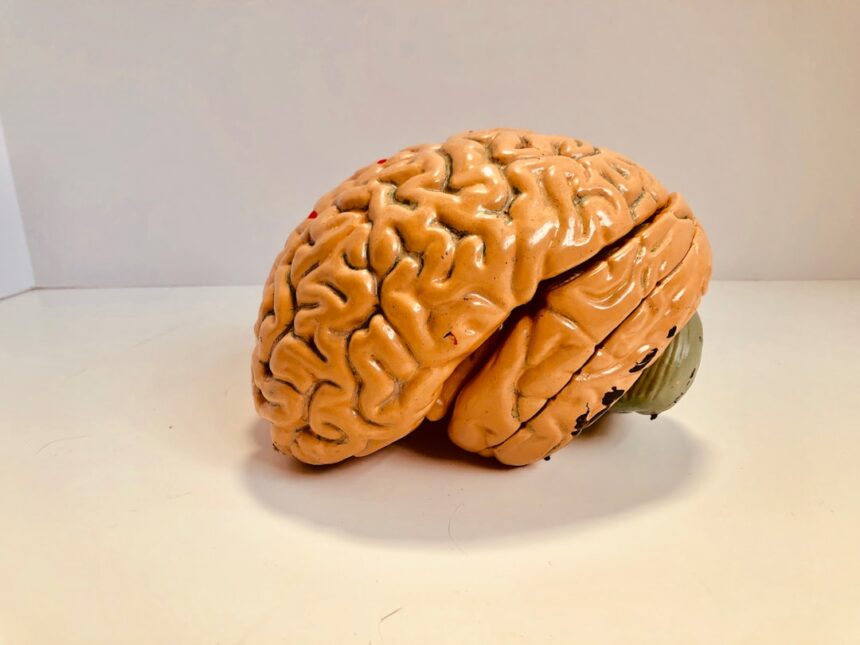
You, the discerning reader, are likely already aware of the pervasive human tendency to dwell on immediate concerns. This inclination, while sometimes advantageous for survival, often develops into what this article terms the “present brain trap.” This trap represents a cognitive bias where your focus, resources, and decision-making processes are disproportionately weighted towards current, tangible realities, often at the expense of long-term planning, abstract thought, and future outcomes. It is not an active, malicious force but rather a deeply ingrained pattern of thinking, a cognitive groove carved by millions of years of evolutionary pressure. Imagine your mind as a highly sophisticated navigation system: the present brain trap causes it to prioritize the next turn rather than the ultimate destination, even when the latter holds far greater significance. This article will explore the multifaceted nature of this trap, its underlying mechanisms, and, crucially, strategies for you to navigate and ultimately break free from its confines.
The Evolutionary Roots of presentism
To understand why you find yourself susceptible to the present brain trap, it is essential to consider its evolutionary origins. For your ancestors, immediate survival was paramount. The successful procurement of food, evasion of predators, and securing of shelter were daily imperatives. Long-term planning, while not entirely absent, was secondary to the exigencies of the moment.
The Hunter-Gatherer Imperative
During the vast majority of human history, your ancestors operated within a hunter-gatherer paradigm. In this environment, food was often scarce and unpredictable. The immediate consumption of a kill or gathered forage was a rational and often necessary act to ensure energy reserves. Storing large quantities of perishables was challenging, and the future was inherently uncertain. This constant pressure forged neural pathways that emphasized instantaneous gratification and short-term problem-solving.
The Threat Response System
You possess a highly developed threat response system, often referred to as the “fight or flight” mechanism, governed by structures like the amygdala. This system is designed to react instantaneously to perceived dangers. While invaluable for escaping immediate threats, its activation can hijack your prefrontal cortex, the seat of rational thought and long-term planning. When you are under stress, even non-physical stress, your brain tends to narrow its focus, prioritizing the immediate resolution of the perceived threat over broader considerations.
Dopamine, Reward, and Immediate Gratification
The neurotransmitter dopamine plays a critical role in your reward system. It is released in anticipation and experience of pleasurable activities. While essential for motivation, this system can be exploited by the present brain trap. Activities that provide immediate gratification, such as checking social media, consuming sugary foods, or engaging in impulsive behaviors, trigger a dopamine rush. This reinforces the neural pathways associated with present-oriented actions, making it harder for you to resist subsequent impulses and prioritize delayed gratification. You are, in essence, being offered a delectable yet ultimately less nourishing immediate snack over a fulfilling, carefully prepared future meal.
Manifestations of the Present Brain Trap in Your Life
The present brain trap is not an abstract concept; you likely encounter its effects in numerous aspects of your daily existence. It is a subtle current, often unnoticed, yet powerful in shaping your decisions and experiences.
Procrastination and Task Avoidance
One of the most common manifestations of the present brain trap is procrastination. You know a task needs to be completed, and you understand the long-term benefits of doing so. However, the immediate discomfort or perceived effort of starting the task outweighs the distant rewards. Instead, you opt for more immediately gratifying activities, creating a loop of avoidance and stress. This is akin to endlessly polishing a broken compass instead of consulting a map for your journey.
Financial Short-sightedness and Impulsive Spending
In the realm of personal finance, the present brain trap manifests as impulsive spending and a lack of long-term financial planning. You might prioritize the immediate pleasure of a new gadget or an extravagant meal over saving for retirement, a down payment on a house, or an emergency fund. The immediate dopamine hit of a purchase eclipses the abstract, future benefits of financial security. Your wallet becomes a sieve, constantly letting out resources for immediate satisfaction.
Neglect of Health and Well-being
Your health is another area where the present brain trap exerts considerable influence. You may prioritize immediate cravings for unhealthy foods over nutritional choices, or choose sedentary entertainment over physical activity. The long-term consequences of poor health habits are often abstract and distant, making them less impactful than the immediate comfort or pleasure offered by less healthy choices. It’s like neglecting the foundations of your house because you’re enjoying the furniture within.
Relationship Challenges and Communication Breakdown
Even in your relationships, the present brain trap can be detrimental. In moments of interpersonal conflict, you might prioritize winning an argument or expressing immediate frustration over the long-term health of the relationship. This can lead to impulsive statements, unresolved issues, and a gradual erosion of trust and intimacy. You are choosing to ignite a small, immediate fire rather than tending to the garden of your connection.
The Cognitive Mechanisms at Play
Behind these observable behaviors lie specific cognitive biases and limitations that contribute to the present brain trap. Understanding these mechanisms empowers you to recognize and counteract them.
Hyperbolic Discounting
One of the most significant cognitive biases at play is hyperbolic discounting. This phenomenon describes your tendency to disproportionately value immediate rewards over future rewards, even when the future reward is objectively larger. For example, you might prefer £5 today over £10 tomorrow, but you would likely prefer £100 in 366 days over £50 in 365 days. The “discount” applied to future rewards increases dramatically the closer they are to the present. You are, in essence, applying a magnifying glass to the present and a diminishing lens to the future.
The Planning Fallacy
The planning fallacy refers to your systematic tendency to underestimate the time and resources required to complete future tasks, even when you have past experience with similar tasks. This is often fueled by an optimistic bias and a focus on the ideal scenario rather than potential obstacles. This fallacy contributes to procrastination, as you might believe you have ample time to complete a task, only to find yourself in a frantic rush as the deadline approaches. You are like a sailor who consistently believes their voyage will be swift, despite always encountering unexpected storms.
Scarcity Mindset
When you perceive resources (time, money, energy) as scarce, your brain tends to narrow its focus even further, prioritizing immediate needs and solutions. This scarcity mindset can exacerbate the present brain trap, making it difficult to allocate resources towards long-term goals. For example, when financially constrained, you might struggle to invest in education or future opportunities, even if they could break the cycle of scarcity. Your vision becomes tunnel-like, only perceiving the immediate edges of your circumstances.
Strategies for Breaking Free from the Trap
Breaking free from the present brain trap is not about eradicating your innate drives but about developing conscious strategies to manage and redirect them. It requires consistent effort and self-awareness.
Cultivating Future-Oriented Thinking
The first step is to actively cultivate a future-oriented mindset. This involves consciously shifting your attention and imagination towards your desired future.
Visualization and Goal Setting
Regularly visualize your long-term goals in vivid detail. What will your life look like when you achieve them? How will you feel? This act of mental rehearsal can make future rewards feel more tangible and immediate, thus reducing the effects of hyperbolic discounting. Break down large, daunting goals into smaller, manageable steps. This makes the path to the future seem less overwhelming.
Practice “Future Self” Empathy
Consider your “future self” as a distinct individual whose well-being depends on your current actions. Ask yourself: “What decision would my future self thank me for today?” This mental exercise can foster a sense of responsibility and care for your future, making it more challenging to succumb to immediate impulses. Imagine a future version of yourself looking back; what advice would they give you?
Implementing Structural and Behavioral Interventions
Beyond cognitive shifts, concrete actions can help you counter the present brain trap.
Environment Design and “Nudging”
Modify your environment to make desired long-term behaviors easier and undesirable short-term behaviors harder. For example, if you want to eat healthier, remove tempting junk food from your home. If you want to save money, set up automatic transfers to a savings account. These “nudges” reduce the cognitive load required to make good choices. You are designing a riverbed that naturally guides the water towards your desired destination.
Pre-commitment Devices
Utilize pre-commitment strategies, where you make a decision in advance that binds you to a future course of action. This could involve setting deadlines, making public declarations of your goals, or using accountability partners. For instance, signing up for a gym membership paid in advance makes it harder to skip workouts. You are essentially tying your own hands in the present to ensure your future actions align with your goals.
The “Two-Minute Rule” for Overcoming Procrastination
When faced with a task you are procrastinating on, commit to doing it for just two minutes. Often, the initial inertia is the largest barrier. Once you start, you are more likely to continue. This small commitment significantly lowers the activation energy required to begin, tricking your present brain into taking action. It’s like gently pushing a boulder down a hill; the initial effort is often the greatest.
Mindfulness and Present Moment Awareness
While the article addresses the “present brain trap,” it is crucial to distinguish it from healthy present moment awareness. Mindfulness, the practice of intentionally bringing your attention to the present moment without judgment, is a powerful tool to break free from reactive, impulsive presentism.
Distinguishing Reactive from Intentional Presence
The present brain trap is characterized by a reactive focus on immediate gratification or threat. Mindfulness, on the other hand, is an intentional and aware engagement with the present. It allows you to observe your impulses and cravings without immediately acting on them, creating a crucial space between stimulus and response. You are not trapped in the moment, but observing it from an elevated perspective.
Observing Thoughts and Impulses without Judgment
Through mindfulness practices, you can learn to observe your thoughts, emotions, and cravings as transient phenomena. When you feel an urge to procrastinate or engage in an impulsive behavior, rather than giving in immediately, you can acknowledge the urge without judgment. This breaks the automatic cycle of impulse-action and gives you the opportunity to choose a more aligned response. You are becoming the observer of your own internal landscape, rather than merely a passenger.
Cultivating Patience and Delayed Gratification
Mindfulness cultivates patience, a cornerstone of delayed gratification. By being present with discomfort, boredom, or longing, you develop the capacity to tolerate these feelings without immediate recourse to short-term solutions. This strengthens your “future muscles,” making it easier to prioritize long-term rewards over fleeting pleasures. This practice gradually expands your mental timeline, allowing you to see beyond the immediate horizon.
Conclusion: Your Path to Intentional Living
The present brain trap is an inherent aspect of your human experience, a legacy of your evolutionary past. However, acknowledging its existence and understanding its mechanisms empowers you to move beyond its limitations. By cultivating future-oriented thinking, implementing strategic interventions, and practicing mindfulness, you can transform your relationship with the present. You are not destined to be ruled by immediate impulses and short-sighted decisions. Instead, you possess the capacity to become an intentional architect of your own future, skillfully navigating the complexities of time and ultimately, breaking free to construct a life of greater purpose and long-term fulfillment. The keys to your cognitive freedom are within your grasp; it is up to you to unlock them.
FAQs
What is the “present brain trap”?
The present brain trap refers to the cognitive bias where individuals focus excessively on immediate experiences or short-term outcomes, often neglecting long-term consequences or future planning.
Why is overcoming the present brain trap important?
Overcoming the present brain trap is important because it helps improve decision-making, encourages long-term goal setting, and reduces impulsive behaviors that can negatively impact personal and professional life.
What are common signs that someone is stuck in the present brain trap?
Common signs include difficulty delaying gratification, prioritizing short-term rewards over long-term benefits, procrastination on important tasks, and a tendency to react emotionally rather than thoughtfully.
What strategies can help overcome the present brain trap?
Effective strategies include practicing mindfulness, setting clear long-term goals, breaking tasks into smaller steps, using reminders of future consequences, and developing self-discipline through consistent habits.
Can professional help assist in overcoming the present brain trap?
Yes, professionals such as psychologists or cognitive behavioral therapists can provide techniques and support to help individuals recognize and change patterns associated with the present brain trap.