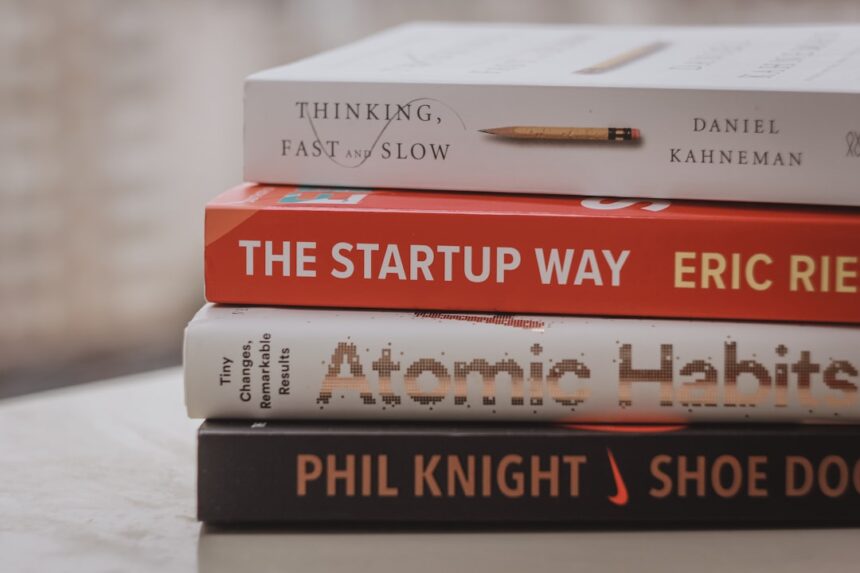
Forming habits is akin to sculpting your daily existence. You are the sculptor, and your actions are the chisel. The process, however, can often feel like chipping away at granite with a toothpick – arduous, slow, and sometimes disheartening. Fortunately, by understanding the psychological mechanisms at play, you can transform this endeavor from an insurmountable task into a manageable, even rewarding, undertaking. This article will guide you through the principles of habit formation, offering practical strategies to break down the barriers that impede your progress and build a more consistent, intentional life.
Your brain is a master of efficiency, and habits are its ultimate expression of this mastery. They are ingrained patterns of behavior that, once established, require minimal conscious effort. Think of a habit as a well-worn path in a forest. Initially, forging that path through the undergrowth demands significant energy and focus. However, with repeated travel, the path becomes clearer, and you can navigate it almost on autopilot, your mind free to contemplate other matters.
The Habit Loop: A Foundational Model
The most widely accepted model for understanding habits is the “habit loop,” first popularized by Charles Duhigg. This loop consists of three key components that, when cycled through repeatedly, solidify a behavior.
Cue: The Trigger for Action
The cue is the spark that ignites the habit. It can be anything from a specific time of day, a particular location, a preceding action, a certain emotional state, or even the presence of certain people. For example, the feeling of your alarm clock buzzing is a cue for many to reach for their phone. The sight of a coffee maker might cue you to brew a cup. Understanding your cues is the first step in consciously shaping your habits. Without a clear cue, the desired behavior is unlikely to be initiated. It’s the starting pistol in the race of your routine.
Routine: The Behavior Itself
The routine is the actual action or series of actions that constitute the habit. This is the behavior you are trying to establish or break. If the cue is your alarm clock buzzing, the routine might be checking social media. If the cue is the sight of the coffee maker, the routine is preparing and drinking coffee. This is the physical or mental manifestation of the habit. Mastering the routine often involves making it as simple and accessible as possible.
Reward: The Payoff That Reinforces the Loop
The reward is the positive outcome that your brain associates with the cue and routine. This reinforces the behavior, making it more likely to occur again in the future. The reward can be a physical sensation, like the jolt of caffeine from coffee, or an emotional one, such as the fleeting sense of connection from checking social media. This is the delicious frosting on the cake of your routine, the reason your brain logs this sequence as beneficial. Without a perceived reward, the habit loop will weaken and eventually dissipate.
The Role of the Basal Ganglia
Neuroscience research points to the basal ganglia, a group of structures deep within the brain, as a key area responsible for habit formation. When a behavior is performed repeatedly, the basal ganglia become more involved, streamlining the process and reducing activity in more conscious areas of the brain like the prefrontal cortex. This neurological shift is why habits can feel automatic; your brain is literally rewiring itself for efficiency. It’s like a seasoned craftsman who can perform complex tasks with their eyes closed, their finely tuned motor skills taking over.
The Impact of Repetition
The sheer act of repetition is the engine of habit formation. Each time you successfully navigate the habit loop, you strengthen the neural pathways associated with that behavior. The more you repeat an action in response to a specific cue and receive a satisfying reward, the more automatic it becomes. This is why consistency is paramount. Sporadic attempts are like trying to build a brick wall with only a handful of bricks; the structure will never firmly take shape.
In exploring the concept of lowering the barrier to entry for developing new habits, it’s insightful to consider the strategies outlined in a related article. This piece emphasizes the importance of making small, manageable changes that can lead to significant long-term benefits. By simplifying the initial steps required to adopt a new habit, individuals can increase their chances of success and maintain motivation over time. For more detailed insights, you can read the article here: Lowering the Barrier to Entry for Habits.
Deconstructing Obstacles: Identifying Your Barriers
Before you can begin to build new habits, it is crucial to identify the internal and external forces that are currently hindering your progress. These barriers can manifest in various forms, from a lack of clarity to overwhelming self-doubt. Recognizing these roadblocks is the first step in devising strategies to overcome them.
Lack of Clarity: The Fog of Indecision
Often, people struggle with habit formation not due to a lack of effort, but a lack of clear definition. If your goal is to “be healthier,” this is too vague. Your brain needs a specific target. This is like trying to hit a bullseye with a blindfold on. You need to know precisely where to aim.
Vague vs. Specific Goals
Ambiguous intentions are the enemy of focused action. Instead of aiming for a general outcome like “eat better,” concrete objectives such as “eat one serving of vegetables with lunch” or “replace sugary drinks with water by 3 PM” provide actionable targets.Specificity brings the abstract into the tangible realm.
Procrastination: The Art of Delay
Procrastination is a pervasive barrier, often rooted in anxiety, perfectionism, or the perception that a task is too daunting. It’s the insidious whisper that tells you, “You can do it later,” robbing you of present momentum.
Fear of Failure and Perfectionism
The fear of not executing a habit perfectly can lead to avoiding it altogether. This is a trap where the pursuit of an ideal prevents any progress from being made. It’s like refusing to start learning to swim because you might not be Michael Phelps on your first try.
Overwhelm and Task Size
When a habit feels too large or complex, it can trigger a sense of overwhelm, leading to avoidance. The sheer magnitude of the task can feel like trying to move a mountain with your bare hands.
Inconsistency: The Unstable Foundation
A lack of consistency is perhaps the most common reason for habit formation failure. Without a steady stream of repetition, even well-intentioned efforts will crumble. Building a habit requires consistent reinforcement, like regularly watering a plant for it to grow.
The “All or Nothing” Mentality
Adopting an “all or nothing” approach can be detrimental. Missing one day of your new habit doesn’t negate all your previous efforts; it’s merely a single missed step, not a complete derailment. This mindset is like abandoning a road trip because you hit a minor pothole.
Lack of Motivation: The Dwindling Fuel
While intrinsic motivation is powerful, relying solely on fleeting bursts of inspiration is an unreliable strategy. True habit formation is often driven by discipline and the establishment of routines rather than constant enthusiasm. Motivation can be like a flickering candle; discipline is the steady, burning log.
Relying on External Motivation
External motivators, such as the opinions of others or the desire for immediate external validation, often prove unsustainable in the long run. They are fleeting forces that can disappear as quickly as they arise.
Building Blocks of Success: Strategies for Effective Habit Formation

With a clear understanding of habit mechanics and the obstacles you might face, you can now implement concrete strategies to facilitate the formation of desired behaviors. These techniques are designed to make the process smoother and more sustainable.
The Power of Tiny Habits: Start Small, Grow Strong
The principle of “tiny habits,” popularized by BJ Fogg, emphasizes starting with incredibly small, almost ludicrously easy actions. The goal is to achieve immediate success and build momentum, rather than aiming for a large, potentially intimidating change. This is the foundation upon which a skyscraper is built – a meticulously laid, strong base.
Incremental Escalation: The Gradual Ascent
Begin with a habit so small that it’s practically impossible not to do it. For instance, if you want to establish a meditation practice, start with meditating for just one minute. Once that becomes automatic, you can gradually increase the duration. This approach leverages what is known as the “IKEA effect,” where we value things more if we have a hand in assembling them – in this case, you are assembling your habit.
Anchoring to Existing Habits: Piggybacking for Progress
Connect your new desired habit to an existing, already ingrained habit. This is known as habit stacking. For example, “After I brush my teeth (existing habit), I will do two push-ups (new habit).” The established routine acts as a reliable cue for the new behavior. This is like adding a new room to a house that is already standing; the existing structure provides support.
Environmental Design: Sculpting Your Surroundings
Your environment plays a significant role in cueing and facilitating your behaviors. By strategically designing your surroundings, you can make desired habits more accessible and undesirable habits more difficult to perform. This is essentially creating a supportive ecosystem for your goals.
Accessibility and Visibility: Making it Easy
Make the tools and resources for your desired habit readily available and visible. If you want to eat healthier, keep fruit in a visible bowl on your counter. If you want to read more, leave a book on your bedside table. Conversely, make it harder to access tempting but unhealthy alternatives. Put tempting snacks in the back of the pantry or out of sight.
Removing Friction: Smoothing the Path
Reduce the number of steps or decisions required to perform a habit. If you want to exercise in the morning, lay out your workout clothes the night before. The fewer obstacles there are, the more likely you are to follow through. This is like clearing the path of debris before embarking on a journey.
Reward Systems: Reinforcing Positive Behavior
While intrinsic motivation is important, implementing intelligent reward systems can significantly bolster habit formation. These rewards should be integrated into the habit loop, reinforcing the connection between the cue, routine, and positive outcome.
Immediate Gratification: The Sweet Taste of Success
When you successfully complete a new habit, offer yourself a small, immediate reward. This doesn’t have to be elaborate. It could be acknowledging your accomplishment with a positive affirmation, enjoying a few minutes of guilt-free leisure, or savoring a small, healthy treat that you’ve designated as a reward. The key is for the reward to be closely linked in time to the completed behavior.
Delayed Gratification and Long-Term Benefits: The Vision of the Future
While immediate rewards are helpful, it’s also crucial to connect your habits to their long-term benefits. Remind yourself of the overarching goals you are working towards – improved health, increased knowledge, greater peace of mind. This future-oriented perspective can provide sustained motivation, even when immediate gratification is absent. This is like planting a seed, knowing that while the harvest is in the future, the act of planting is essential.
The Psychology of Success: Leveraging Cognitive Biases

Understanding how your mind works can provide powerful leverage in the quest for habit formation. By consciously applying principles of cognitive psychology, you can make the process more intuitive and less reliant on sheer willpower.
The Halo Effect: Positive Associations
The halo effect describes the tendency for an initial positive impression to influence subsequent judgments. If you can create a positive initial experience with a new habit, you are more likely to associate it with positive feelings, making it easier to continue. This is like getting off to a good start in a race, which can boost your confidence for the remainder of the competition.
Celebrating Small Wins: Building Positive Momentum
Actively celebrate every small success you achieve in your habit formation journey. This creates a positive feedback loop, reinforcing the desired behavior. Acknowledging your progress, no matter how small, keeps your spirits high and your motivation fueled. This is akin to a musician practicing scales – each correct note contributes to the overall mastery of the instrument.
The Zeigarnik Effect: The Power of Unfinished Tasks
The Zeigarnik effect suggests that people remember unfinished or interrupted tasks better than completed ones. You can leverage this by occasionally pausing a habit before you’ve fully completed it, which can create a subtle psychological pull to return to it later. However, this strategy requires careful application to avoid fostering a sense of incompleteness that leads to abandonment. It’s like leaving a fascinating book open on a cliffhanger, intriguing you to pick it up again.
Strategic Interruption: Creating an Anticipation Gap
Consider strategically interrupting a habit just as you’re about to finish. For example, if you’re reading, stop at a compelling point. If you’re exercising, finish your set just before muscle fatigue truly sets in. This creates a sense of anticipation and an inherent desire to complete the task when you next engage with it.
Cognitive Dissonance: Aligning Actions with Beliefs
Cognitive dissonance is the psychological discomfort experienced when holding two or more conflicting beliefs, ideas, or values, or when your behavior contradicts your beliefs. You can use this by consciously aligning your desired habits with your core values.
Reinforcing Values: Making Habits Meaningful
Clearly articulate why a particular habit is important to you and how it aligns with your values. For instance, if you value well-being, connecting your exercise routine to that value makes it more compelling. This creates an internal pressure to act in accordance with your beliefs, making the habit feel less like an imposition and more like an expression of your identity. This is like ensuring all the pieces of a puzzle fit together harmoniously.
Lowering the barrier to entry for habits can significantly enhance our ability to adopt positive changes in our lives. By simplifying the process and making it more accessible, individuals are more likely to stick with their new routines. For further insights on this topic, you can explore a related article that discusses practical strategies for habit formation and maintenance. Check it out here to learn more about how small adjustments can lead to lasting improvements.
Maintaining Momentum: Sustaining Your Habits Over Time
| Metric | Description | Example Value | Impact on Habit Formation |
|---|---|---|---|
| Time to Start | Average time required to begin the habit | 2 minutes | Shorter time lowers friction, increasing likelihood of starting |
| Number of Steps | Steps needed to initiate the habit | 3 steps | Fewer steps reduce complexity and encourage consistency |
| Required Resources | Materials or tools needed to perform the habit | Minimal (e.g., just a notebook) | Lower resource needs reduce barriers and cost |
| Setup Effort | Effort needed to prepare for the habit | Low (e.g., no special setup) | Less effort increases ease and motivation |
| Reminder Frequency | How often reminders are sent to perform the habit | Daily | Regular reminders help maintain habit consistency |
| Initial Difficulty | Perceived difficulty when starting the habit | Low | Lower difficulty encourages early adoption |
| Success Rate | Percentage of users who maintain the habit after 1 month | 65% | Higher success rate indicates effective barrier reduction |
Forming a habit is a milestone, but sustaining it requires ongoing attention and adaptation. The journey of habit formation is not a sprint; it’s a marathon that requires consistent pacing and strategic refueling.
The Importance of Flexibility and Adaptation
Life is dynamic, and rigid adherence to a plan can often lead to failure when unexpected circumstances arise. Be prepared to adapt your habits to fit changing situations without completely abandoning your goals. This is like a skilled sailor adjusting their sails to catch the changing winds.
Dealing with Setbacks: The Inevitable Potholes
Recognize that setbacks are an inevitable part of any long-term endeavor. Don’t let a missed day or a lapse in performance derail your entire progress. View these instances as learning opportunities and recommit to your habit as soon as possible. Think of it as getting back on the horse after a fall.
Reassessing and Adjusting: Continuous Improvement
Periodically reassess the effectiveness of your habits and whether they still serve your goals. It’s likely that as you evolve, your needs and priorities will also shift. Be willing to adjust the frequency, duration, or even the nature of your habits to ensure they remain relevant and beneficial. This is a process of ongoing refinement, like a sculptor continually evaluating and shaping their work.
Building a Supportive Ecosystem: The Village Effect
Surrounding yourself with supportive individuals and environments can significantly enhance your ability to maintain habits. Accountability partners, supportive communities, and environments that encourage your desired behaviors can provide invaluable assistance. It’s like having a cheerleading squad for your personal growth.
Accountability Partners: Shared Responsibility
Find an accountability partner or join a group with similar goals. Regularly checking in with each other creates a sense of shared commitment and can provide encouragement and constructive feedback. This external locus of responsibility can be a powerful motivator.
Gradual Integration into Identity: Becoming the Habit
Ultimately, the most sustainable habits are those that become integrated into your sense of self. When a habit no longer feels like an effort but rather a natural expression of who you are, its longevity is significantly increased. This is the transformation from merely performing an action to embodying it, making it an intrinsic part of your personal narrative.
By understanding the underlying principles of habit formation, diligently identifying and dismantling your personal barriers, strategically implementing effective techniques, and embracing the ongoing process of adaptation, you can effectively break down the walls that stand between you and lasting change. The power to sculpt a more intentional and fulfilling life resides within you; these strategies are merely the tools to help you wield that power with greater efficacy.

▶️ WARNING: Why Your Brain Treats “Future You” Like A Stranger
FAQs
What does “lowering the barrier to entry” mean in the context of habits?
Lowering the barrier to entry refers to making it easier to start and maintain new habits by reducing obstacles, effort, or complexity involved in beginning the behavior.
Why is it important to lower the barrier to entry when forming new habits?
Lowering the barrier to entry increases the likelihood of successfully adopting new habits by minimizing resistance, making the habit feel more achievable and less overwhelming.
What are some common strategies to lower the barrier to entry for habits?
Common strategies include breaking habits into smaller steps, preparing necessary materials in advance, simplifying the habit routine, and creating an environment that supports the habit.
Can technology help in lowering the barrier to entry for habits?
Yes, technology such as habit-tracking apps, reminders, and automation tools can help reduce effort and provide motivation, making it easier to start and maintain habits.
How does lowering the barrier to entry affect long-term habit formation?
By making habits easier to start, lowering the barrier to entry helps build consistency and momentum, which are critical for turning new behaviors into lasting habits.