
You embark on a journey of self-improvement, a perpetual quest for greater efficiency, better health, or profound personal growth. Habit formation, rather than an abstract concept, is the very bedrock upon which such aspirations are built. Without consistent, well-ingrained routines, even the most ambitious goals remain fleeting mirages. This article introduces you to the “3-Step Floor Rule,” a pragmatic framework designed to ensure the persistence and resilience of your chosen habits, even amidst adversity. You will discover how to fortify your behavioral foundations, making them impervious to the inevitable disruptions of daily life.
Before delving into the three steps, it is crucial that you grasp the fundamental metaphor of the “floor.” Imagine your desired habit as a structure you are meticulously constructing. A robust structure requires a solid, unwavering foundation—the floor. This “floor” represents the absolutely minimal, non-negotiable action you commit to performing for your habit, regardless of circumstances. It is your lowest acceptable threshold, your absolute bottom line.
The Role of Minimal Viable Action (MVA)
The “floor” is intimately linked with the concept of Minimal Viable Action (MVA). An MVA for a habit is the smallest, easiest, and quickest action you can take that still constitutes a performance of that habit. For exercising, this might be a single push-up or a five-minute walk, rather than a full hour-long gym session. For writing, it could be a single sentence, not a thousand words. You define this MVA for each habit, acknowledging its critical role as your “floor.”
Why a “Floor” is Essential for Persistence
Without a clearly defined “floor,” your habits become susceptible to the vagaries of your mood, energy levels, and external distractions. On days when you feel unmotivated or overwhelmed, the absence of a minimum threshold makes it easy to succumb to inaction. The “floor” acts as a psychological buffer, a non-negotiable commitment that reduces the friction associated with starting and keeps the momentum of your habit alive, even if barely. It’s akin to keeping a pilot light lit; even a small flame prevents the entire system from shutting down completely.
In exploring the concept of the floor rule for habits, you may find it beneficial to read a related article that delves deeper into the psychology of habit formation and maintenance. This article discusses practical strategies for implementing the floor rule effectively, ensuring that even the smallest actions can lead to significant changes over time. For more insights, check out this informative piece at Productive Patty.
Step 1: Define Your True Minimum
This is the foundational step where you meticulously identify the absolute, non-negotiable minimum you are willing to commit to for each habit. You are not striving for peak performance here; you are establishing a sustainable baseline.
Identifying the Absolute Lowest Threshold
For each habit you wish to cultivate or strengthen, you must ask yourself: “What is the absolute minimum I can do for this habit that still counts as performing it, even on my worst day, when I am tired, stressed, or sick?” Your answer should be astonishingly easy, bordering on trivial. If your goal is to read daily for an hour, your floor might be reading one page. If you aim to meditate for 20 minutes, your floor could be one minute of mindful breathing.
The Importance of Eliminating All Friction
When defining your true minimum, you must aggressively eliminate all potential friction points. Consider the logistics, the required effort, and the time commitment. The ideal floor should be so effortless that the thought of skipping it feels more burdensome than performing it. If your current floor for exercise still feels like a significant hurdle on an off day, you haven’t lowered it enough. You are aiming for a commitment so small that it is irrational to skip it.
Examples of Effective “Floors”
- Exercise: Instead of “Go to the gym for an hour,” your floor might be “Do 10 push-ups or walk around the block once.”
- Reading: Instead of “Read a chapter of a book,” your floor could be “Read one paragraph or one page.”
- Writing: Instead of “Write 500 words,” your floor could be “Write one sentence or a single bullet point.”
- Learning a Language: Instead of “Study for 30 minutes,” your floor might be “Review five flashcards.”
- Healthy Eating: Instead of “Cook a nutritious meal,” your floor could be “Eat one piece of fruit or drink a glass of water before anything else.”
Step 2: Establish Your Activation Trigger

A habit, regardless of its established “floor,” requires a prompt or a cue to initiate. This second step involves meticulously identifying and linking your habit’s “floor” activity to a specific, consistent trigger in your existing routine. You are essentially building a bridge between an existing action and your new, minimal habit.
The Power of Habit Stacking
The most effective method for establishing an activation trigger is “habit stacking.” This involves appending your new habit’s floor to an existing, firmly established habit. You identify a current routine that you perform reliably every day, and then you decide that “after I [current habit], I will [new habit’s floor].” This leverages the momentum of an already deeply ingrained behavior.
Selecting Reliable Cues
When selecting a cue for habit stacking, you must choose one that is:
- Frequent: Performed daily, ideally multiple times a day.
- Specific: A clearly defined action, not a vague intention.
- Immediate: Occurs right before you want to perform your new habit.
- Unavoidable: An action you simply cannot skip.
Examples of reliable cues include brushing your teeth, drinking your morning coffee, turning off your alarm, or walking through your front door. You integrate your floor into the fabric of these existing routines.
Designing Your If-Then Plan
Formalizing your activation trigger involves creating an “if-then” plan. This is a clear, concise statement that defines the cue and the subsequent action.
- If: [Specific event or time happens]
- Then: [I will perform my habit’s floor]
For instance:
- If I finish brushing my teeth in the morning, then I will do 10 push-ups.
- If I sit down with my morning coffee, then I will read one page.
- If I open my laptop for work, then I will write one sentence.
This creates a concrete mental link, removing much of the decision-making burden that often derails new habits.
Step 3: Implement the “No Zero Days” Principle
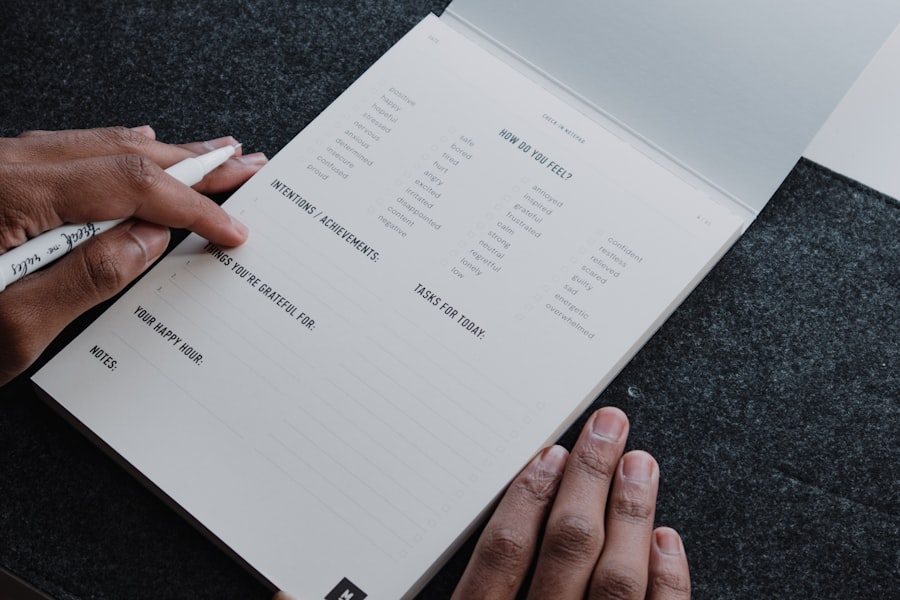
This is the critical enforcement mechanism of the 3-Step Floor Rule. The “No Zero Days” principle dictates that you never allow a day to pass without performing at least your habit’s defined “floor.” While you are encouraged to do more on good days, you are absolutely forbidden from doing nothing.
Why “No Zero Days” is Non-Negotiable
Skipping even a single day for a new habit can create a dangerous precedent. It opens the door to future skips and erodes the psychological commitment. By consistently performing your “floor,” even when you feel like doing nothing, you reinforce the neural pathways associated with that habit. You are telling your brain, “This is something we always do, no matter what.” This continuous engagement, no matter how small, is what ultimately builds robust habits.
The Role of Forgiveness and Resilience
The “No Zero Days” principle does not imply perfection. There will be days when you barely meet your floor, and that is perfectly acceptable. The goal is not to perform perfectly every day, but to perform something every day. Should you genuinely forget or be prevented from performing your floor, the principle still applies for the following day: you acknowledge the lapse, refocus, and immediately re-engage. You forgive yourself for the slip, but you do not allow it to become a pattern. Your commitment is to the process, not to an unbroken streak of optimized performance. The floor ensures that even a stumble does not become a fall down the entire staircase.
Leveraging the Power of Momentum
Each successful “floor” performance, no matter how minor, contributes to the overall momentum of your habit. It’s like pushing a car: initially, it requires significant effort, but with each successive push, it becomes slightly easier to maintain movement. Your “floor” ensures that this momentum never completely dissipates. Even a small push forward is infinitely better than stagnating or, worse, rolling backward. This sustained, minimal effort is what allows new behaviors to slowly but surely become automatic.
In exploring effective strategies for habit formation, the concept of the floor rule offers valuable insights into how we can create sustainable changes in our daily routines. This approach emphasizes the importance of setting a minimum standard for our habits, ensuring that we engage in them consistently, even on our busiest days. For a deeper understanding of this principle and its practical applications, you can read more in this insightful article on habit formation at Productive Patty. By implementing the floor rule, individuals can cultivate resilience and maintain progress toward their goals, regardless of life’s challenges.
Advanced Applications and Nuances
| Metric | Description | Example | Benefit |
|---|---|---|---|
| Minimum Daily Action | The smallest possible habit action to maintain consistency | Write 1 sentence per day | Reduces resistance and builds momentum |
| Consistency Rate | Percentage of days the habit is performed | 90% of days in a month | Improves habit formation and retention |
| Time Spent | Duration spent on the habit daily | 5 minutes of meditation | Ensures habit fits into daily routine easily |
| Progress Increment | Gradual increase in habit intensity or duration | Add 1 push-up every week | Prevents burnout and encourages growth |
| Trigger Cue | Event or reminder that initiates the habit | Brush teeth before journaling | Helps automate the habit through association |
While the 3-Step Floor Rule provides a robust framework, its application can be refined and extended for even greater effectiveness.
Gradual Elevation of Your Floor
As your habit strengthens and becomes more ingrained, you will naturally find that your initial “floor” becomes laughably easy. At this point, you can consider gradually elevating your floor. For example, if your initial exercise floor was 10 push-ups, after a few weeks or months, you might elevate it to 20 push-ups or a 10-minute walk. However, this elevation should be gradual and only occur once the current floor is firmly established and feels effortless. Do not raise your floor prematurely, as this reintroduces friction.
The Floor for Complex or Intermittent Habits
Not all habits are daily occurrences. For habits performed weekly or on specific days, the “floor” concept still applies. You define your minimum for that specific commitment. For instance, if your habit is “review finances every Sunday,” your floor might be “open the budgeting app and look at one transaction.” The “No Zero Days” principle then translates to “No Zero Weeks” or “No Zero Scheduled Days.”
The Floor as a Safety Net, Not a Ceiling
It is crucial to remember that your “floor” is a safety net, not a ceiling. On days when you feel energetic and motivated, you are encouraged to exceed your floor significantly. The floor exists to save you from complete inaction on difficult days. It is not intended to limit your ambition on good days. Think of it as a trampoline: you can jump as high as you want, but the trampoline is there to catch you if you don’t reach your usual height.
Overcoming Resistance and Self-Sabotage
You will inevitably encounter days filled with internal resistance, where your mind invents myriad excuses to avoid even your minimal commitment. This is where your pre-defined “floor” and “activation trigger” become invaluable. By removing the decision-making process (“Should I do it?”) and replacing it with an automatic response (“It’s time to do my floor”), you bypass much of this internal negotiation. The commitment is to the action, however small, not to the feeling of wanting to perform the action.
Conclusion
The “3-Step Floor Rule”—defining your true minimum, establishing an activation trigger, and implementing the “No Zero Days” principle—provides a powerful, practical framework for mastering habits. This method acknowledges the inherent human tendency towards resistance and provides a pragmatic counter-strategy. By consistently performing your minimal viable action, you build an unbreakable chain of small successes, transforming aspirational goals into deeply embedded behaviors. Your habits become resilient structures, anchored by an unyielding foundation. Through this disciplined yet forgiving approach, you cultivate the consistency that is the hallmark of true mastery, steadily progressing towards your most significant aspirations, one “floor” at a time.

▶️ WARNING: Why Your Brain Treats “Future You” Like A Stranger
FAQs
What is the floor rule for habits?
The floor rule for habits is a strategy that encourages setting a minimum, easy-to-achieve standard for daily habits. Instead of aiming for perfection, you commit to doing at least a small, manageable amount of the habit each day, ensuring consistency and reducing the chance of skipping it altogether.
How does the floor rule help in building habits?
By focusing on a low minimum effort, the floor rule reduces resistance and makes it easier to start and maintain habits. This approach helps build momentum and gradually increases motivation, making it more likely that the habit will stick over time.
Can the floor rule be applied to any type of habit?
Yes, the floor rule can be applied to a wide range of habits, including exercise, reading, meditation, or healthy eating. The key is to define a simple, achievable baseline that feels manageable every day.
What is the difference between the floor rule and setting high goals?
The floor rule emphasizes starting with a minimal, consistent effort, while high goals often involve ambitious targets that can be overwhelming. The floor rule prioritizes consistency and sustainability over intensity, reducing burnout and increasing long-term success.
Is the floor rule effective for breaking bad habits?
The floor rule is primarily designed for building positive habits by establishing a low-effort baseline. While it may indirectly help reduce bad habits by replacing them with small positive actions, other strategies are typically more effective for directly breaking negative behaviors.