
In business and innovation, the Minimum Viable Product (MVP) strategy involves launching new concepts with minimal resources by creating the simplest version of a product that provides value to customers. This approach reduces risk and enables rapid feedback collection for product refinement. The MVP methodology can be applied to personal development as well.
Rather than pursuing comprehensive self-improvement, individuals can implement small, measurable steps toward their goals, preventing overwhelm and enabling consistent progress. Applying the MVP approach to personal growth promotes practical development strategies. Instead of delaying action until conditions are ideal or pursuing perfection, this method prioritizes incremental progress.
This perspective reduces self-imposed pressure and facilitates engagement with new challenges and unfamiliar areas of personal development. The MVP framework functions as an operational principle that supports meaningful action while maintaining flexibility for continuous learning and adjustment throughout the development process.
Key Takeaways
- The MVP mindset encourages starting with a simple, functional version of personal growth goals to enable quick progress and learning.
- Personal growth benefits from iterative testing, feedback, and adapting strategies based on real experiences and outcomes.
- Embracing failure and setbacks is crucial for learning and refining your personal development approach.
- Setting realistic goals and balancing ambition with practicality helps maintain motivation and achievable progress.
- Cultivating resilience and adaptability supports sustaining long-term personal growth through continuous MVP cycles.
Understanding Personal Growth and Development
Personal growth is a lifelong journey that encompasses various aspects of your life, including emotional, intellectual, and social development. It involves a conscious effort to improve yourself, expand your horizons, and enhance your overall well-being. Understanding personal growth requires recognizing that it is not a linear process; rather, it is filled with ups and downs, moments of clarity, and periods of confusion.
You may find that your growth is influenced by external factors such as relationships, career changes, or life experiences, as well as internal factors like mindset and motivation. At its core, personal growth is about self-discovery and self-awareness. It invites you to explore your values, beliefs, and aspirations while challenging you to step outside your comfort zone.
This exploration can lead to profound insights about who you are and what you want from life. As you engage in this process, you may uncover hidden strengths and weaknesses that shape your identity. By understanding the multifaceted nature of personal growth, you can better navigate the complexities of your journey and make informed decisions that align with your true self. You can learn more about overcoming the perfectionism loop in this insightful video.
Applying MVP Principles to Personal Growth
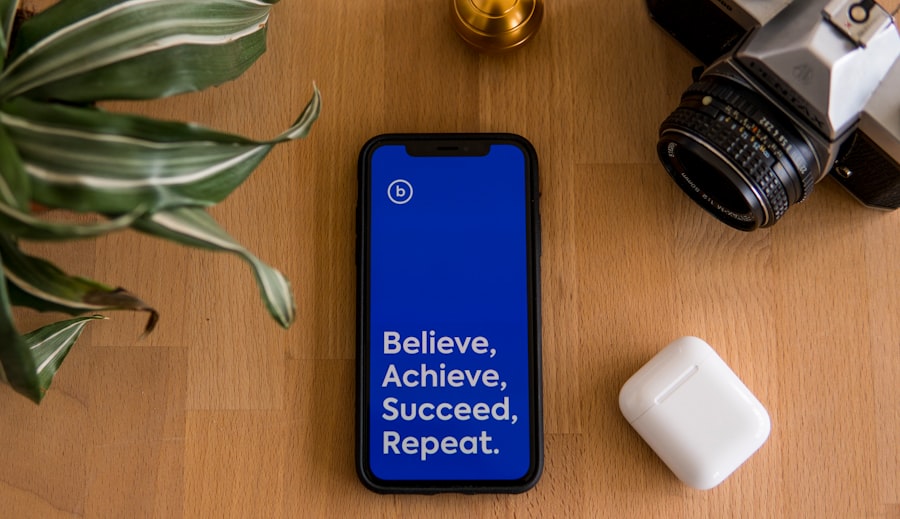
Applying MVP principles to personal growth means breaking down your aspirations into manageable components that can be tested and refined over time. Instead of attempting to overhaul your entire life in one fell swoop, you can identify specific areas where you want to grow and develop small experiments to facilitate that growth. For instance, if you aspire to become more physically active, rather than committing to an intense workout regimen right away, you might start by incorporating short walks into your daily routine.
This incremental approach allows you to gauge what works for you without overwhelming yourself. Moreover, the MVP approach encourages you to embrace a mindset of experimentation. You can view each step in your personal growth journey as a hypothesis that needs testing.
If a particular strategy or habit doesn’t yield the desired results, it’s not a failure; it’s simply data that informs your next move. This iterative process fosters resilience and adaptability, enabling you to pivot when necessary and refine your approach based on what resonates with you. By applying MVP principles to personal growth, you create a dynamic framework that supports continuous learning and improvement.
Identifying Your Minimum Viable Product for Personal Growth
To effectively implement the MVP mindset in your personal growth journey, it’s essential to identify your Minimum Viable Product—essentially, the core elements that will drive your development forward. Start by reflecting on your goals and aspirations. What specific areas do you want to improve?
Whether it’s enhancing your communication skills, building healthier relationships, or pursuing a new career path, pinpointing these areas will help you focus your efforts. Once you’ve identified your goals, break them down into smaller, actionable steps that represent your MVP. For example, if your goal is to improve your public speaking skills, your MVP might involve joining a local Toastmasters club or practicing speaking in front of friends or family.
The key is to choose actions that are achievable yet impactful enough to propel you toward your larger objectives. By defining your Minimum Viable Product in this way, you create a clear roadmap for personal growth that allows for flexibility and adaptation as you progress.
Testing and Iterating Your Personal Growth MVP
| Metric | Description | Measurement Method | Target Value | Frequency |
|---|---|---|---|---|
| Iteration Speed | Time taken to complete one cycle of personal development goal setting, action, and review | Days from goal setting to review | 7-14 days | Per iteration |
| Learning Outcome Completion | Percentage of planned learning outcomes achieved in each MVP cycle | Number of outcomes achieved / total planned outcomes × 100% | 80% or higher | Per iteration |
| Feedback Incorporation Rate | Percentage of feedback points integrated into next MVP cycle | Number of feedback points applied / total feedback points × 100% | 90% or higher | Per iteration |
| Minimum Viable Action (MVA) Completion | Ratio of minimum viable actions completed versus planned | Completed MVAs / Planned MVAs | 1.0 (100%) | Weekly |
| Confidence Growth | Self-assessed confidence improvement in targeted skill areas | Survey scale 1-10 before and after MVP cycle | Increase of 1-2 points per cycle | Per iteration |
| Risk-Taking Frequency | Number of new or challenging actions attempted per MVP cycle | Count of new challenges attempted | At least 1 per cycle | Per iteration |
| Reflection Time | Time dedicated to reflecting on MVP cycle outcomes | Minutes spent in reflection or journaling | 30 minutes minimum | Per iteration |
With your Minimum Viable Product established, the next step is to put it into action and test its effectiveness. This phase is crucial because it allows you to gather insights about what works for you and what doesn’t. As you engage in the activities you’ve outlined as part of your MVP, pay close attention to how they make you feel and the results they yield.
Are you experiencing growth? Are there aspects that feel uncomfortable or unproductive? This reflective practice will help you assess the viability of your chosen path.
Iteration is a fundamental aspect of the MVP approach. Based on the feedback you gather during testing, be prepared to make adjustments to your strategies or goals. If something isn’t resonating with you or producing the desired outcomes, don’t hesitate to pivot.
For instance, if public speaking feels daunting despite initial enthusiasm, consider exploring alternative methods of communication that align better with your comfort level. The iterative process fosters a sense of agency in your personal growth journey, allowing you to tailor your approach based on real-time experiences.
Embracing Failure and Learning from Setbacks

In any journey of personal growth, setbacks are inevitable. Embracing failure as a natural part of the process is essential for fostering resilience and long-term success. When things don’t go as planned or when you encounter obstacles along the way, it’s easy to feel discouraged or defeated.
However, viewing these moments as opportunities for learning can shift your perspective significantly. Each setback provides valuable insights that can inform your future actions and decisions. To cultivate this mindset, practice self-compassion when faced with challenges.
Acknowledge that everyone experiences setbacks at some point in their lives; it’s part of being human. Instead of dwelling on what went wrong, focus on what you can learn from the experience. Ask yourself questions like: What could I have done differently?
What insights can I take away from this situation? By reframing failure as a stepping stone rather than a stumbling block, you empower yourself to continue moving forward with renewed determination.
Leveraging Feedback and Data for Personal Growth
Feedback is an invaluable tool in the realm of personal growth. Whether it comes from friends, mentors, or self-reflection, constructive feedback can provide insights that help you refine your approach and enhance your development journey.
Their perspectives can shed light on blind spots or areas where you may need improvement. In addition to external feedback, leverage data from your own experiences to inform your growth process. Keep track of your progress by journaling or using apps designed for goal tracking.
Documenting your achievements and challenges allows you to identify patterns over time and make informed decisions about where to focus your efforts next. By combining external feedback with self-generated data, you create a comprehensive understanding of your growth trajectory that empowers you to make meaningful adjustments along the way.
Setting Realistic Goals and Expectations
Setting realistic goals is crucial for maintaining motivation and momentum in your personal growth journey. While it’s important to dream big and aspire for greatness, it’s equally vital to ground those aspirations in reality. Start by breaking down larger goals into smaller milestones that are achievable within a reasonable timeframe.
This approach not only makes the process less daunting but also provides opportunities for celebration along the way. When setting expectations for yourself, consider factors such as time constraints, available resources, and personal circumstances. It’s essential to be honest with yourself about what you can realistically accomplish given your current situation.
By setting attainable goals, you create a sense of accomplishment that fuels further motivation and encourages continued progress. Remember that personal growth is not a race; it’s a journey that unfolds at its own pace.
Balancing Ambition with Realism in Personal Growth
Striking a balance between ambition and realism is key to sustainable personal growth. While ambition drives you to pursue new heights and challenge yourself, unrealistic expectations can lead to frustration and burnout. To navigate this delicate balance effectively, regularly assess your goals against your current capabilities and circumstances.
Are you pushing yourself too hard? Are there areas where you need to dial back expectations? One effective strategy is to adopt a flexible mindset that allows for adjustments along the way.
Recognize that ambition doesn’t have to mean an all-or-nothing approach; instead, it can manifest in incremental progress toward larger goals. Celebrate small victories while keeping an eye on the bigger picture. By maintaining this balance between ambition and realism, you create an environment conducive to sustained growth without sacrificing well-being.
Cultivating Resilience and Adaptability in Personal Growth
Resilience and adaptability are essential qualities for navigating the ups and downs of personal growth. Life is unpredictable; challenges will arise unexpectedly, and plans may need to change at a moment’s notice. Cultivating resilience involves developing coping strategies that enable you to bounce back from setbacks while maintaining a positive outlook on future possibilities.
To enhance adaptability in your personal growth journey, practice mindfulness techniques that encourage present-moment awareness. This practice helps you stay grounded during times of uncertainty and allows for greater flexibility in responding to changing circumstances. Additionally, embrace a mindset of curiosity—view challenges as opportunities for exploration rather than obstacles to overcome.
By fostering resilience and adaptability within yourself, you’ll be better equipped to navigate the complexities of personal growth with confidence.
Sustaining the MVP Mindset for Long-term Personal Growth
Sustaining the MVP mindset over the long term requires commitment and intentionality. As you continue on your personal growth journey, regularly revisit your goals and assess whether they still align with your evolving aspirations. The MVP approach encourages ongoing reflection and adaptation; therefore, don’t hesitate to adjust your strategies as needed based on new insights or changing circumstances.
Incorporate regular check-ins with yourself—whether through journaling or discussions with trusted friends—to evaluate progress and celebrate achievements along the way. By maintaining this reflective practice, you’ll cultivate a deeper understanding of what works for you while reinforcing the importance of continuous learning in personal growth. Ultimately, sustaining the MVP mindset empowers you not only to achieve meaningful change but also to embrace the journey itself as an integral part of who you are becoming.
The concept of a minimum viable product (MVP) is not only applicable in the realm of startups and product development but can also be a powerful mindset for personal development. By focusing on the essentials and iterating based on feedback, individuals can make significant strides in their personal growth. For more insights on how to apply this MVP mindset to your personal development journey, check out this article on Productive Patty.
WATCH THIS! 🎯 PERFECTIONISM LOOP THAT KILLS YOUR DREAMS — How to Break Free in 5 Minutes
FAQs
What is a Minimum Viable Product (MVP) mindset?
The Minimum Viable Product (MVP) mindset refers to focusing on creating the simplest version of a product or solution that can be released to test ideas and gather feedback quickly. It emphasizes efficiency, learning, and iterative improvement rather than perfection from the start.
How does the MVP mindset apply to personal development?
In personal development, the MVP mindset encourages individuals to start with small, manageable changes or habits that provide immediate value and feedback. Instead of waiting to be perfect, one takes action early, learns from experiences, and continuously improves over time.
Why is adopting an MVP mindset beneficial for personal growth?
Adopting an MVP mindset helps reduce procrastination and fear of failure by promoting early action and experimentation. It allows individuals to learn what works best for them, adapt quickly, and build momentum through incremental progress.
Can the MVP mindset help overcome perfectionism?
Yes, the MVP mindset directly counters perfectionism by valuing progress over perfection. It encourages launching or trying out ideas in their simplest form, which helps individuals move forward without being stuck on making everything flawless.
What are some examples of applying the MVP mindset in personal development?
Examples include starting a new habit with just five minutes a day, creating a basic version of a personal project to test interest, or setting small, achievable goals to gather feedback and adjust strategies accordingly.
How can someone start adopting the MVP mindset in their personal development journey?
Begin by identifying one small, actionable step toward a goal, implement it quickly, and observe the results. Use feedback and experiences to refine and expand efforts gradually rather than waiting for ideal conditions or complete readiness.
Is the MVP mindset only useful for entrepreneurs and startups?
No, while the MVP concept originated in entrepreneurship and product development, its principles are widely applicable to personal development, learning, and any area where iterative progress and feedback are valuable.
What challenges might someone face when adopting the MVP mindset?
Challenges can include discomfort with imperfection, fear of judgment, impatience with slow progress, or difficulty in prioritizing minimal viable actions. Overcoming these requires mindset shifts and practice in embracing experimentation and learning.
How does feedback play a role in the MVP mindset for personal development?
Feedback is essential as it informs what is working and what needs adjustment. In personal development, feedback can come from self-reflection, mentors, peers, or measurable outcomes, guiding continuous improvement.
Can the MVP mindset lead to long-term success in personal development?
Yes, by fostering a habit of taking consistent, incremental actions and learning from experience, the MVP mindset supports sustainable growth and adaptability, which are key to long-term personal development success.