
Optimizing an environment for deep work and focus is not a passive endeavor; it is an active construction of a personal ecosystem designed for peak cognitive performance. This ecosystem, much like a carefully cultivated garden, requires intentional design and consistent maintenance to yield its most productive fruits. Understanding and implementing these principles enables you to transition from merely working to engaging in deep work – a state of focused, uninterrupted concentration on a single task, pushing your cognitive capabilities to their limit.
Your immediate physical surroundings act as the canvas upon which your deep work is painted. A haphazard, cluttered space is analogous to a painter attempting intricate detail on a chaotic, pre-splattered canvas. To achieve clarity in your work, you must first achieve clarity in your workspace.
Minimizing Visual Distractions
Unnecessary visual stimuli are like tiny, insistent gnats, each demanding a fraction of your attention. Even if you believe you are ignoring them, your brain is expending resources to filter them out.
- Decluttering the Desk: A clear desk is a clear mind. Remove anything not directly pertinent to your current task. This includes papers from other projects, decorative items if they prove distracting, and even personal mementos that might trigger trains of thought unrelated to your work. Think of your desk as a minimalist stage, where only the essential props for the current act are present.
- Strategic Placement of Tools: Arrange your essential tools (keyboard, mouse, monitor, notebook) in a logical, ergonomic manner. This reduces friction in your workflow and eliminates momentary hesitations that can break your concentration. Every reach, every glance should be fluid and purpose-driven.
- Wall Space Awareness: Be mindful of what is within your peripheral vision. If your workstation faces a wall, ensure it is unadorned or features calming, neutral imagery. If facing a window, consider its view. A bustling street might provide entertainment but at the cost of focused attention. Curtains or blinds can offer immediate control over external visual stimuli.
Optimizing Auditory Landscape
Sound, or the absence thereof, profoundly impacts concentration. Like a finely tuned instrument, your auditory environment can either enhance or disrupt the harmony of your thoughts.
- Noise Cancellation Strategies: For many, complete silence is the ideal. High-quality noise-canceling headphones can be invaluable, acting as an auditory shield against the cacophony of the outside world. Consider their investment as an investment in your cognitive output.
- Strategic Soundscapes: For others, complete silence can be itself distracting. In such cases, ambient soundscapes can provide a gentle, non-intrusive auditory backdrop. This could include white noise, brown noise, instrumental music without lyrics (classical, lo-fi, ambient electronic), or even nature sounds. The key is that the sound should be predictable and non-demanding of your attention, acting as a sonic veil rather than a spotlight.
- Communicating Boundaries: If you share a workspace, establish clear boundaries regarding noise. This might involve using ‘do not disturb’ signs, communicating specific deep work periods to colleagues or family members, or agreeing upon designated quiet zones.
Ergonomics and Comfort
Discomfort is a relentless saboteur of focus. A nagging backache or strained neck is a constant signal to your brain, pulling resources away from your primary task. Your body is the vessel for your mind; treat it with the care it deserves.
- Chair and Desk Adjustment: Invest in an ergonomic chair that provides proper lumbar support and allows your feet to be flat on the floor or on a footrest. Adjust your desk height so your forearms are parallel to the floor when typing. These adjustments prevent muscular strain and promote healthy posture.
- Monitor Positioning: Your monitor should be at arm’s length, with the top of the screen at eye level. This minimizes neck strain and encourages a natural head position. Consider a second monitor if it genuinely enhances your workflow, but ensure its placement follows ergonomic principles.
- Breaks and Movement: No matter how ergonomic your setup, prolonged static positions are detrimental. Integrate regular short breaks (e.g., the Pomodoro Technique’s 5-minute breaks) to stand, stretch, and move. This improves blood circulation, reduces stiffness, and offers a micro-reset for your mind.
Creating an optimal environment for deep work and focus is essential for enhancing productivity and creativity. A related article that delves into effective strategies for environment design is available at Productive Patty. This resource offers valuable insights on how to tailor your workspace to minimize distractions and maximize concentration, making it a must-read for anyone looking to improve their focus and work efficiency.
Designing a Digital Fortress
In the modern era, the digital environment often presents more acute challenges to focus than the physical one. Your digital tools, if utilized without discipline, transform from instruments of productivity into engines of distraction.
Streamlining Your Digital Workspace
A cluttered digital desktop is the virtual equivalent of a physical mess, each icon a potential lure into unproductive tangents.
- Desktop Decluttering: Maintain a minimalist desktop. Only essential applications or temporary files relevant to your current deep work session should be visible. Utilize folders and organizational systems to keep your digital space orderly. Think of it as a virtual clean-desk policy.
- Browser Tab Management: An excessive number of open browser tabs is a common culprit for fractured attention. Each tab is a potential rabbit hole. Develop habits for closing tabs not immediately needed or utilizing tab management extensions to hibernate or group them.
- Focused Applications: Employ applications designed for focus. These range from minimalist text editors that remove interface clutter to ‘focus mode’ features within operating systems that temporarily block notifications and hide distracting elements.
Battling Digital Notifications
Notifications are the siren calls of the digital world, each promising new information, new content, new interactions – all designed to pull your attention away.
- Disabling Non-Essential Notifications: This is perhaps the most critical step. For deep work, almost all notifications are non-essential. Turn off alerts from social media, email clients, news applications, and even many messaging apps. Your deep work session is a protected space; treat notifications as an unwelcome intrusion.
- Scheduled Check-ins: Instead of reacting to notifications, schedule specific times to check emails, messages, and social media. This transforms passive reaction into active, intentional engagement, allowing you to batch these less cognitively demanding tasks.
- ‘Do Not Disturb’ Modes: Utilize ‘Do Not Disturb’ features on your computer and phone. These are digital gates, allowing only critical, pre-approved communications to penetrate your deep work sanctuary.
Managing Communication Channels
Email and messaging platforms, while invaluable for collaboration, are often designed for immediate gratification and can be major disruptors of focus.
- Email Management During Deep Work: Close your email client entirely during deep work blocks. The urge to “just check” emails is a powerful one, but even a quick glance can shatter your concentration. It takes a significant amount of time to regain focus once an email has pulled you away.
- Strategic Use of Messaging Apps: If team collaboration requires messaging, communicate your deep work periods to your colleagues. Utilize status messages (e.g., “Deep Work – response delayed”) to manage expectations. Consider designated real-time communication blocks outside of your deep work periods.
- Setting Boundaries with Colleagues/Clients: Explicitly communicate your deep work periods to colleagues, team members, and even clients if appropriate. Establishing this expectation helps them understand your availability and reduces the likelihood of interruptions. This is not about being unavailable; it’s about being strategically unavailable for specific, high-value work.
Structuring Your Time for Deep Work
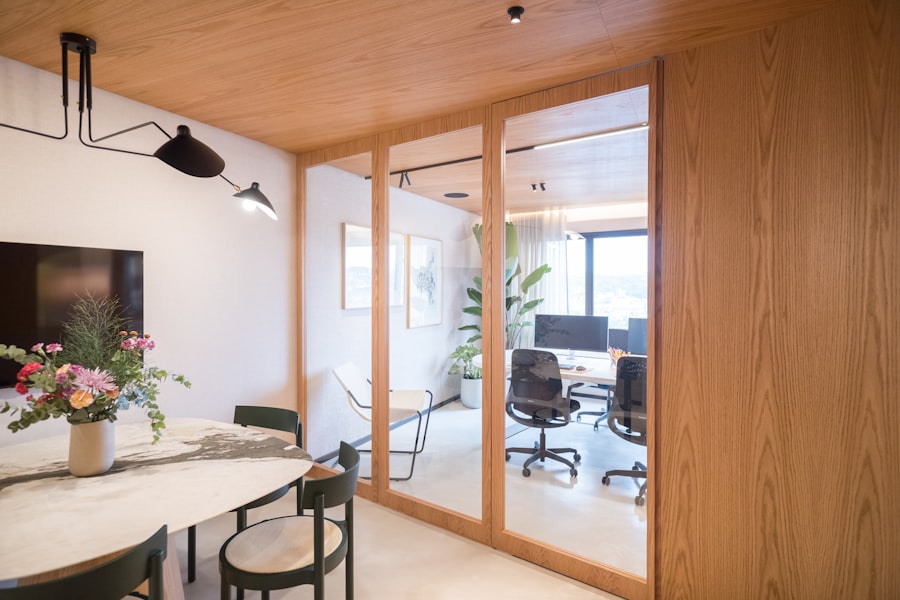
Optimizing your environment extends beyond the physical and digital; it encompasses the temporal framework within which you operate. Without intentional time structuring, even the most optimized space can be rendered ineffective.
Implementing Deep Work Blocks
Deep work cannot be squeezed into the margins of your day; it demands dedicated, non-negotiable blocks of time.
- Scheduling Dedicated Slots: Identify your peak cognitive hours – are you a morning person or an evening person? Schedule your deep work sessions during these times. Treat these blocks like unmissable appointments, protecting them rigorously.
- Time Blocking: Use a calendar or a time-blocking application to explicitly allocate specific hours for deep work. This makes your intention visible and concrete, acting as a commitment device.
- The Pomodoro Technique and Variants: Consider structured focus techniques like the Pomodoro Technique (25 minutes of focused work followed by 5 minutes of break). Experiment with different intervals to find what best suits your cognitive rhythm and task demands.
Minimizing Context Switching
Every time you switch tasks, your brain pays a “switching cost.” It’s like leaving one building, walking across town, and entering another, only to go back and forth repeatedly. Each transition incurs inefficiency.
- Batching Similar Tasks: Group similar tasks together. For instance, answer all emails at once, make all phone calls at once, and perform all administrative tasks together. This prevents the mental whiplash of constantly shifting gears.
- Protecting Deep Work Blocks: During your deep work sessions, commit fully to the designated task. Resist the urge to check email, glance at a news headline, or engage in any other activity that is not directly related. Your deep work block is a sealed container for a single purpose.
- Clear Start and End Rituals: Create rituals to signal the beginning and end of a deep work block. This might be putting on specific headphones, opening a particular application, or even making a cup of tea. These small cues help your brain transition into and out of focused states.
Strategic Breaks and Recovery
Deep work is a marathon, not a sprint. Just as an athlete needs recovery, your brain needs dedicated periods of rest and rejuvenation.
- Planned Micro-Breaks: Integrate short, intentional breaks within your deep work blocks. Stand up, stretch, look away from your screen, or take a short walk. These micro-breaks prevent mental fatigue and can even boost creativity.
- Disengagement After Work: When your workday ends, truly disengage. Avoid checking work emails or thinking about work problems late into the evening. Your brain needs time to process and rest without the pressure of active work.
- Restorative Activities: Dedicate time to activities that genuinely recharge you – exercise, spending time in nature, engaging in hobbies, or connecting with loved ones. These are not luxuries; they are essential for sustainable deep work capacity.
Cultivating a Deep Work Mindset
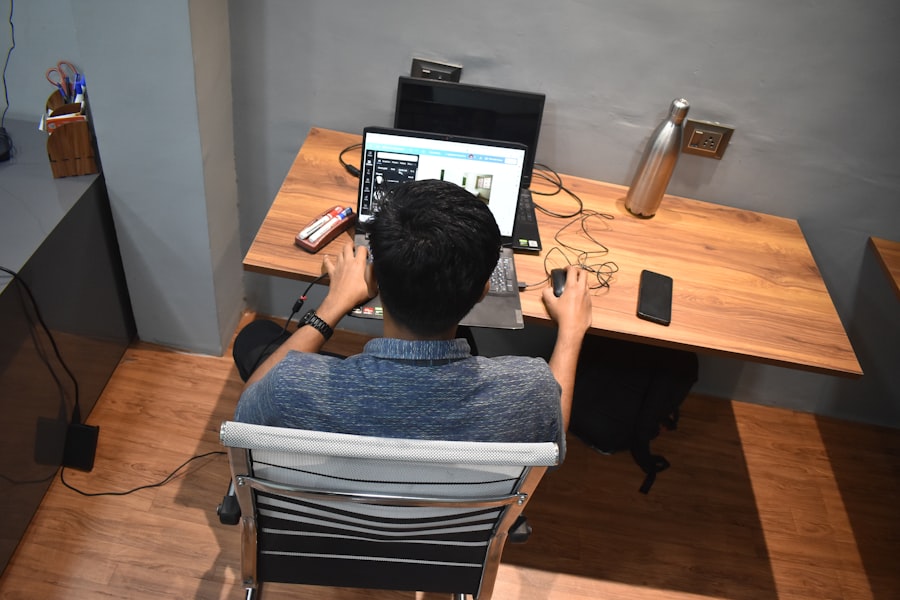
While external factors are crucial, the internal landscape of your mind is the ultimate determinant of your focus. Your mindset acts as the internal operating system for your deep work environment.
Embracing Single-Tasking
Multitasking is a myth, a deceptive illusion of productivity. What appears as multitasking is, in reality, rapid and inefficient task-switching.
- The Myth of Multitasking: Understand that toggling between tasks significantly reduces efficiency and increases errors. Your brain is not designed to process multiple complex streams of information simultaneously.
- Committing to One Task: During deep work, commit wholeheartedly to the single task at hand. Eliminate the temptation to jump between applications or projects. Your current task deserves your undivided attention.
- Practicing Mindfulness: Develop mindfulness practices that help you bring your attention back to the present moment when it wanders. This could be through meditation, mindful breathing, or simply noticing sensory details around you.
Managing Internal Distractions
Even in a perfect external environment, your own thoughts can act as powerful saboteurs of focus.
- The “To-Do List” Dump: Keep a notebook or digital document handy exclusively for jotting down intrusive thoughts, ideas for other projects, or tasks that pop into your head. Acknowledging these thoughts and giving them a physical place outside your immediate focus allows your brain to release them.
- Dealing with Procrastination: Understand the underlying causes of your procrastination (fear of failure, lack of clarity, dread of difficulty). Break down daunting tasks into smaller, more manageable steps. Give yourself permission to make progress, not necessarily perfection.
- Self-Compassion: Be kind to yourself when your focus wavers. It is a natural human tendency. Instead of self-criticism, gently guide your attention back to your task, as you would a straying child.
Setting Clear Objectives
A lack of clarity is a common reason for focus erosion. If you don’t know where you’re going, any path seems equally valid, and the temptation to wander becomes irresistible.
- Defining the “Why”: Before starting a deep work session, clearly articulate the objective of that session. What specific outcome are you aiming for? This “why” acts as your compass, guiding your focus.
- Breaking Down Large Tasks: Large, ambiguous tasks can be overwhelming. Break them into smaller, concrete sub-tasks. Focus on completing one specific sub-task during your deep work block.
- Measuring Progress: Establish clear metrics for success. How will you know when you’ve achieved your objective for the deep work session? This provides tangible feedback and motivation.
Creating an environment conducive to deep work and focus is essential for maximizing productivity. One insightful article that explores this topic in depth is available on Productive Patty, where various strategies are discussed to enhance your workspace for better concentration. By implementing these techniques, you can transform your surroundings into a sanctuary for focused work. For more information, you can read the full article here.
Regular Review and Iteration
| Metric | Description | Recommended Value/Setting | Impact on Deep Work |
|---|---|---|---|
| Noise Level | Ambient sound measured in decibels (dB) | 30-40 dB (quiet room or soft background noise) | Lower noise levels reduce distractions and improve concentration |
| Lighting | Type and intensity of light in the workspace | Natural light or 4000-5000K cool white LED, 300-500 lux | Proper lighting reduces eye strain and enhances alertness |
| Workspace Clutter | Amount of unnecessary items on desk/work area | Minimal clutter, only essential items present | Reduces cognitive load and distractions |
| Ergonomics | Furniture and equipment setup for comfort and posture | Adjustable chair, desk at elbow height, monitor at eye level | Improves comfort, reduces fatigue, supports longer focus periods |
| Temperature | Ambient room temperature in degrees Celsius | 20-22°C (68-72°F) | Optimal temperature supports cognitive function and comfort |
| Color Scheme | Colors used in the environment | Soft blues, greens, or neutral tones | Calming colors help reduce stress and maintain focus |
| Technology Distractions | Presence of distracting devices or notifications | Devices on silent or Do Not Disturb mode; notifications minimized | Minimizes interruptions and maintains flow state |
| Air Quality | Level of fresh air and ventilation | Good ventilation with fresh air exchange every 1-2 hours | Improves cognitive performance and alertness |
Optimizing your environment for deep work is not a one-time project; it is an ongoing process of refinement and adaptation. Your needs will change, your work demands will evolve, and your environment should adapt accordingly.
Assessing Effectiveness
Like any system, your deep work environment needs periodic scrutinization to ensure it is performing as intended.
- Post-Session Reflection: After each deep work session or at the end of the day, briefly reflect on its effectiveness. What went well? What disrupted your focus? Were there any environmental factors (physical, digital, or temporal) that hindered your progress?
- Journaling for Insights: Keep a journal of your deep work experiences. This can reveal patterns in your productivity, identify common distractions, and highlight conditions under which you perform best.
- Seeking Feedback (Optional): If working in a shared environment, solicit feedback from colleagues or family members on how your deep work protocols affect them and if there are areas for improvement in mutual respect for focus.
Adapting to Change
Life and work are dynamic. What works today might not work tomorrow.
- Flexibility within Structure: While structure is paramount, rigidity can be detrimental. Be prepared to adjust your deep work schedule or environmental setup in response to new projects, unexpected events, or changes in personal energy levels.
- Experimentation: Don’t be afraid to try new tools, techniques, or environmental adjustments. Experiment with different types of ambient sound, alternative time-blocking methods, or even a standing desk for part of your day.
- Continuous Improvement: View your deep work environment as a living system. Regularly seek out new information, research best practices, and implement small, incremental improvements. Each adjustment, however minor, contributes to a more robust and effective system for sustained focus.
By systematically addressing these physical, digital, temporal, and mental facets of your environment, you construct more than just a workspace; you forge a robust and resilient fortress for your attention, enabling you to consistently engage in the demanding yet profoundly rewarding endeavor of deep work.

STOP Your Dopamine Drain: The 24-Hour Reset
FAQs
What is environment design for deep work and focus?
Environment design for deep work and focus refers to the intentional arrangement and modification of your physical and digital surroundings to minimize distractions and enhance concentration, enabling sustained periods of productive work.
Why is environment design important for deep work?
A well-designed environment reduces interruptions and cognitive overload, helping to maintain focus and improve the quality and efficiency of work. It supports the brain’s ability to enter a state of deep concentration, which is essential for complex problem-solving and creativity.
What are common elements of an environment designed for deep work?
Key elements include a quiet or noise-controlled space, comfortable seating, adequate lighting, minimal clutter, and the removal or silencing of digital distractions such as notifications and unnecessary devices.
How can technology be managed to support deep work?
Technology can be managed by turning off non-essential notifications, using apps that block distracting websites, setting specific times to check emails, and keeping only necessary tools open during focused work sessions.
Can environment design improve focus for remote workers?
Yes, remote workers can benefit significantly from environment design by creating a dedicated workspace, establishing routines, controlling noise levels, and setting boundaries to separate work from personal life, all of which help enhance focus and productivity.