
You may have encountered situations where a close relationship, once a source of comfort and emotional security, has become a battlefield of veiled manipulations and subtle gaslighting. This insidious shift can often be attributed to the weaponization of empathy. Empathy, a cornerstone of human connection and understanding, is typically viewed as a positive trait, fostering compassion and mutual support. However, in the wrong hands, or when corrupted by ulterior motives, it can be twisted into a potent tool for control and emotional subjugation. This article explores the multifaceted impact of weaponized empathy in relationships, dissecting its mechanisms, identifying its manifestations, and providing insights into its potential long-term consequences.
Empathy, at its core, is the capacity to understand or feel what another person is experiencing from within their frame of reference, that is, the capacity to place oneself in another’s position. It allows you to connect with others on a deeper level, to share their joys and sorrows, and to offer genuine support. There are two primary types of empathy:
Cognitive Empathy
- Definition: Also known as perspective-taking, cognitive empathy is the intellectual ability to understand another person’s thoughts and feelings. You can grasp what they are feeling without necessarily feeling it yourself.
- Application in Weaponization: A manipulator proficient in cognitive empathy can accurately anticipate your reactions, understand your vulnerabilities, and predict how certain actions or words will affect you. This allows them to tailor their strategies for maximum impact, much like a seasoned chess player anticipating their opponent’s moves. They don’t necessarily care about your feelings, but they understand them intimately.
Affective Empathy
- Definition: Also known as emotional empathy, this refers to the capacity to feel or share the emotions of another person. When someone feels sad, you feel a reverberation of that sadness within yourself.
- Application in Weaponization: While often considered a more “pure” form of empathy, affective empathy can also be weaponized. A skilled manipulator might feign profound emotional empathy, mirroring your distress or joy to create a false sense of connection and trust. This allows them to draw you in and establish a bond that they can later exploit. They act as a chameleon, adopting your emotional hues to blend seamlessly into your emotional landscape, only to reveal their true intentions once embedded.
The perversion of empathy occurs when these innate capacities, designed for connection and understanding, are deliberately employed to achieve selfish ends at your expense. It transforms from a bridge of understanding into a strategic lever of control. You might experience this as a disconcerting sensation, a feeling that your emotional responses are being meticulously cataloged and then used against you, like your internal operating manual has been pilfered and is now being used to hack your system.
The concept of weaponized empathy in relationships can significantly alter the dynamics between individuals, often leading to manipulation and emotional distress. For a deeper understanding of this phenomenon and its implications, you can explore a related article that delves into the nuances of emotional intelligence and its potential misuse. This insightful piece can be found at Productive Patty, where it discusses how empathy, when weaponized, can undermine trust and authenticity in personal connections.
Mechanisms of Weaponized Empathy
The process by which empathy is weaponized involves several distinct, yet often interconnected, mechanisms. These strategies are often subtle, making them difficult for you to immediately identify or confront.
Emotional Blackmail
- Description: This involves using your emotional reactions, particularly your guilt, fear, or obligation, to manipulate your behavior. The weaponizer, having a deep understanding of your emotional triggers, will skillfully elicit these feelings to coerce you into compliance.
- Example: Imagine your partner knows you deeply value harmony and fear conflict. They might say, “If you truly cared about our relationship, you wouldn’t do something that makes me feel so upset.” Here, your empathy for their “upset” (whether genuine or fabricated) is leveraged to control your actions. They know your desire for peace and use it as a weapon, creating an emotional hostage situation.
Guilt-Tripping and Victimhood
- Description: This tactic involves portraying oneself as the aggrieved party, often exaggerating or fabricating suffering, to evoke your sympathy and subsequent guilt. Your natural empathetic response to perceived suffering is then exploited to make you feel responsible or obligate you to act in a certain way.
- Example: A colleague who consistently underperforms might, when confronted, lament their “overwhelming personal struggles” and how “nobody understands what they’re going through,” implying that your concerns are insensitive given their supposed plight. Your empathy for their “suffering” is used to deflect accountability and maintain their advantageous position. You become the villain in a story where they are the perpetually suffering protagonist, a narrative crafted solely for your emotional submission.
False Vulnerability and Confession
- Description: A manipulator might strategically reveal seemingly deep vulnerabilities or confess to past mistakes to foster intimacy and trust. This isn’t genuine self-disclosure but a calculated move to lower your guard and encourage your empathetic investment. Once you empathize with their “struggles,” you become more susceptible to their influence.
- Example: A new acquaintance might share a tearful story about a painful past event, seemingly seeking your understanding and support. This act of “honesty” can create a powerful bond, making you feel special and trusted. This perceived intimacy then opens the door for them to make unreasonable requests or subtly manipulate your perceptions of others. They offer you a counterfeit key to their emotional fortress, inviting you in only to trap you within their agenda.
Gaslighting through Emotional Projection
- Description: This particularly insidious form of manipulation involves projecting their own negative emotions or intentions onto you, often coupled with a deliberate attempt to make you doubt your own perceptions and sanity. Your empathy is used to absorb their projected negativity, leading to confusion and self-doubt.
- Example: If you express hurt over their insensitive comment, they might respond, “You’re just overly sensitive, like your mother always said. I didn’t mean anything by it, you’re always looking for a reason to be a victim.” Here, your genuine emotional response is invalidated and reframed as a flaw, while simultaneously projecting their insensitivity onto you as your “over-sensitivity.” Your empathetic distress is then used to convince you that you are the problem, twisting your internal compass until you no longer trust your bearings.
Manifestations in Relationships
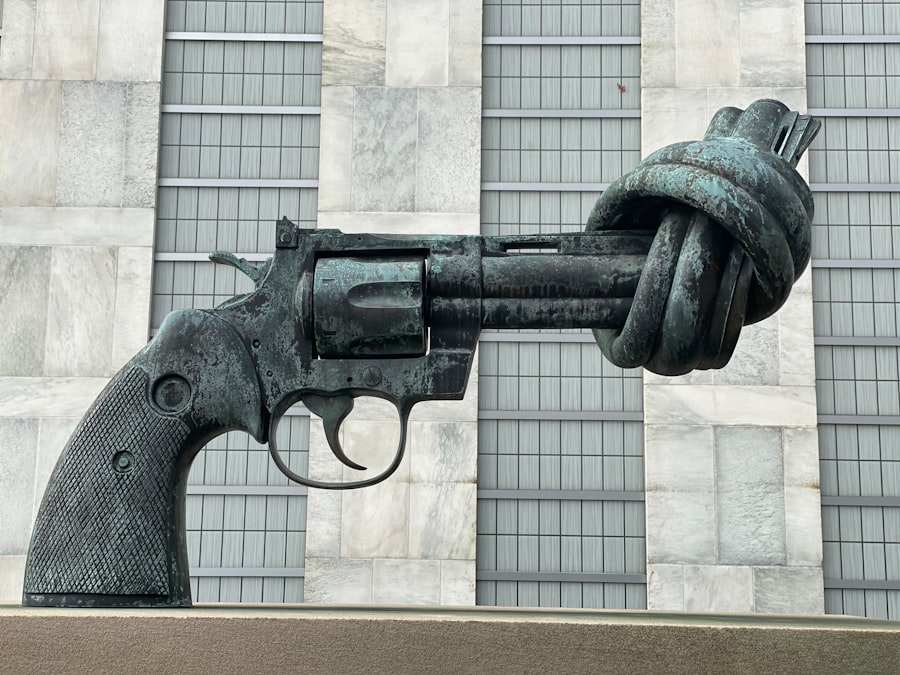
The impact of weaponized empathy plays out in various ways across different types of relationships, leaving a trail of emotional devastation.
Erosion of Trust
- Impact: When you consistently feel that your empathy is being exploited, trust begins to erode. You start questioning the authenticity of declarations of affection, apologies, and even expressions of sadness. The relationship becomes a minefield where every emotional exchange is scrutinized for ulterior motives.
- Consequence: This constant suspicion leads to emotional guardedness and a reluctance to share your true feelings, effectively shutting down the open communication vital for a healthy relationship. The once clear waters of trust become murky and unnavigable.
Power Imbalance and Control
- Impact: Weaponized empathy is fundamentally about establishing and maintaining a power imbalance. The manipulator gains control by understanding and exploiting your emotional landscape, effectively turning your strengths (your empathetic capacity) into weaknesses.
- Consequence: You may find yourself making decisions or acting in ways that compromise your own well-being or values, all driven by a subliminal pressure to manage the other person’s emotional state or alleviate their perceived suffering. You become the puppet, and your empathy, the strings.
Emotional Exhaustion and Burnout
- Impact: Constantly being subjected to emotional manipulation, especially through guilt-tripping and victimhood, is profoundly draining. You are perpetually in a state of emotional vigilance, trying to decipher genuine emotions from manufactured ones, and feeling responsible for another person’s emotional equilibrium.
- Consequence: This prolonged emotional labor leads to burnout, manifesting as anxiety, depression, a sense of helplessness, and a profound loss of personal energy. You are like a battery constantly being drained, with no opportunity for recharge.
Identity Confusion and Self-Doubt
- Impact: Gaslighting, a key component of weaponized empathy, is designed to make you question your reality and your own sanity. When your emotional responses are repeatedly invalidated or reframed as flaws, you begin to doubt your instincts, your memories, and ultimately, your sense of self.
- Consequence: This can lead to a fragmented sense of identity, where you no longer trust your judgments or believe in your own experiences. You become a shadow of your former self, lost in a fog of self-reproach and uncertainty. The manipulator effectively holds up a distorted mirror, forcing you to see a reflection that is not truly your own.
Recognizing and Responding to Weaponized Empathy
Identifying weaponized empathy can be challenging, as its tactics are often subtle and insidious. However, recognizing the signs is the first crucial step towards protecting yourself.
Identifying Key Indicators
- Persistent Feelings of Guilt or Obligation: You frequently feel guilty or responsible for the other person’s emotions or problems, even when logic dictates otherwise.
- Emotional Rollercoaster: The relationship is characterized by dramatic emotional swings, often initiated by the other person, leaving you feeling constantly off-balance.
- Invalidation of Your Feelings: Your emotional responses are consistently dismissed, minimized, or reframed as irrational or overly sensitive.
- One-Sided Emotional Labor: You are consistently providing emotional support and care, while your own emotional needs are neglected or met with indifference.
- Conditional Love or Affection: Expressions of love or affection seem contingent upon your compliance or ability to meet the other person’s demands.
Practical Strategies for Response
- Establish Strong Boundaries: Clearly define what you are and are not responsible for. This involves setting limits on your emotional availability and the extent to which you will engage in certain conversations or behaviors. Remember, boundaries are not walls, but rather permeable fences that protect your inner sanctum.
- Validate Your Own Feelings: Do not allow someone else to dictate the validity of your emotional experience. Trust your gut feelings and acknowledge your emotions, even if the other person attempts to dismiss them. Keep your internal compass calibrated to your own true north.
- Seek External Validation: Talk to trusted friends, family members, or a therapist about your experiences. An outside perspective can help you gain clarity and confirm that your perceptions are accurate. This provides an objective mirror, reflecting reality back to you without distortion.
- Limit Emotional Investment: If you recognize a consistent pattern of weaponized empathy, strategically limit your emotional investment in the relationship. This doesn’t necessarily mean cutting ties entirely, but rather reducing the degree to which you allow their emotional ploys to affect you.
- Practice Self-Care: Engaging in activities that replenish your emotional energy is crucial. This can include mindfulness, spending time in nature, pursuing hobbies, or simply taking time for introspection. You must proactively refill your own emotional reservoir to prevent complete depletion.
- Consider Professional Help: If you find yourself in a deeply entrenched relationship characterized by weaponized empathy, seeking professional guidance from a therapist or counselor can be invaluable. They can equip you with coping mechanisms, help you navigate complex emotional dynamics, and support you in making difficult decisions.
The concept of weaponized empathy in relationships can significantly alter the dynamics between individuals, often leading to manipulation rather than genuine connection. For a deeper understanding of this phenomenon, you might find it insightful to explore a related article that delves into the nuances of emotional manipulation and its effects on interpersonal bonds. This exploration can shed light on how empathy, when misused, can create toxic patterns. To read more about this topic, check out the article here.
Long-Term Consequences and Healing
| Metric | Description | Impact on Relationships | Example Data |
|---|---|---|---|
| Frequency of Manipulative Behaviors | How often weaponized empathy is used to influence or control | Increases mistrust and emotional distance | Reported in 35% of surveyed couples |
| Emotional Exhaustion Levels | Degree of emotional fatigue experienced by the targeted partner | Leads to decreased relationship satisfaction | Average score of 7.2/10 on emotional exhaustion scale |
| Conflict Resolution Effectiveness | Ability to resolve disagreements constructively | Reduced by 40% when weaponized empathy is present | Effectiveness drops from 80% to 48% |
| Trust Levels | Degree of trust between partners | Significantly lowered due to perceived manipulation | Trust scores decrease by 30% in affected relationships |
| Relationship Longevity | Duration of the relationship in years | Shortened average duration in relationships with weaponized empathy | Average duration reduced from 8 years to 5 years |
The long-term effects of prolonged exposure to weaponized empathy can be profound, impacting your mental health, self-esteem, and future relationships.
Mental Health Deterioration
- Impact: Chronic exposure to emotional manipulation can lead to sustained anxiety, depression, and even trauma-related symptoms. The constant stress of navigating an unpredictable and emotionally exploitative environment takes a significant toll.
- Consequence: This can manifest as difficulty sleeping, loss of appetite, persistent feelings of sadness or dread, and a diminished capacity for joy.
Damaged Self-Esteem and Self-Worth
- Impact: When your kindness, generosity, and empathy are consistently used against you, it can deeply damage your perception of these very qualities. You might begin to view your empathetic nature as a flaw, something to be suppressed.
- Consequence: This erosion of self-esteem can lead to a pervasive sense of inadequacy, making it difficult to assert your needs or believe in your own value.
Difficulty Forming Healthy Relationships
- Impact: After experiencing weaponized empathy, you may develop a defensive posture in future relationships, struggling to trust others or to fully engage emotionally. The fear of being exploited again can create a significant barrier to intimacy.
- Consequence: This can lead to a cycle of guardedness, making it challenging to build new connections or to fully experience the joy and vulnerability of genuine human connection. You may unconsciously project past experiences onto new individuals, seeing threats where none exist.
The Path to Healing
Healing from the impact of weaponized empathy is a journey that requires patience, self-compassion, and often, professional support.
- Reclaiming Your Narrative: Part of healing involves understanding that the manipulation was not your fault. The problem lies with the person who chose to weaponize empathy, not with your capacity for connection.
- Rebuilding Trust in Self: Through self-reflection and therapeutic work, you can gradually rebuild trust in your own perceptions, instincts, and emotional responses. This involves gently challenging the distorted narratives you may have internalized.
- Learning DISCERNMENT: You will develop a refined ability to differentiate between genuine empathy and its weaponized counterpart. This doesn’t mean becoming cynical, but rather becoming more discerning about where and how you direct your emotional energy.
- Embracing Healthy Empathy: Crucially, healing involves rediscovering the positive power of empathy without fear. You learn to extend empathy to those who are deserving and reciprocal, while also setting firm boundaries to protect yourself from exploitation.
Weaponized empathy represents a profound betrayal of trust and a distortion of a fundamental human capacity. By understanding its mechanisms, recognizing its manifestations, and actively implementing strategies for protection and healing, you can reclaim your emotional autonomy and safeguard your relationships from this insidious form of manipulation. You possess the inherent ability to connect and understand, and that power, when wielded with awareness and self-respect, remains an invaluable asset.

SHOCKING: Why “Healed” People Are The Most Narcissistic
FAQs
What is weaponized empathy in relationships?
Weaponized empathy refers to the manipulation of another person’s feelings of empathy to gain control or influence in a relationship. It involves using someone’s capacity for understanding and compassion against them to achieve personal goals or avoid accountability.
How does weaponized empathy affect communication between partners?
Weaponized empathy can distort communication by creating imbalances where one partner exploits the other’s empathy to avoid honest dialogue or responsibility. This can lead to misunderstandings, resentment, and a breakdown of trust within the relationship.
Can weaponized empathy lead to emotional abuse?
Yes, weaponized empathy can be a form of emotional abuse. When one partner consistently manipulates the other’s empathetic nature to control or harm them emotionally, it undermines the victim’s well-being and autonomy.
What are common signs of weaponized empathy in a relationship?
Common signs include one partner frequently playing the victim to elicit sympathy, using guilt to influence decisions, dismissing the other’s feelings by claiming to understand them better, and avoiding accountability by appealing to the other’s empathy.
How can individuals protect themselves from weaponized empathy in relationships?
Individuals can protect themselves by setting clear boundaries, recognizing manipulative behaviors, fostering open and honest communication, seeking support from trusted friends or professionals, and developing self-awareness about their own empathetic responses.