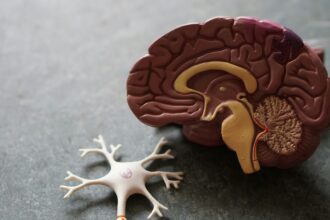
Your brain, that intricate command center behind your eyes, is constantly processing a torrent of information. But how does it manage to sift through the noise and zero in on what’s important? A significant part of that ability hinges on a remarkable neurotransmitter: acetylcholine. Understanding acetylcholine’s role in your focus is like peering into the engine room of your attention.
Acetylcholine, often abbreviated as ACh, is a chemical messenger that plays a pivotal role in a vast array of bodily functions, but its impact on your cognitive processes, particularly your ability to concentrate, is profound. It’s one of the first neurotransmitters to be discovered, named for its role in “choline” or “spirit.” Think of it as a specialized courier, carrying crucial instructions across the tiny gaps between your nerve cells, called synapses.
A Tale of Two Receptors: Nicotinic and Muscarinic
The function of acetylcholine is dictated by the type of receptor it binds to. Your neurons are equipped with two primary families of ACh receptors: nicotinic and muscarinic. This is where the nuance of ACh’s influence on focus emerges.
Nicotinic Receptors: The Rapid Responders
Nicotinic receptors are ionotropic, meaning they directly open channels that allow ions to flow across the cell membrane when ACh binds. This leads to a rapid, excitatory response. Picture them as immediate on-ramps to neural communication, speeding up the transmission of signals. These receptors are particularly abundant in the neuromuscular junction, where they are essential for muscle contraction, but they are also found throughout the brain, including areas critical for attention and learning. Different subtypes of nicotinic receptors exist, each with slightly different properties and distributions, contributing to the complexity of ACh signaling.
Muscarinic Receptors: The Modulators of Mood and Mind
Muscarinic receptors, on the other hand, are metabotropic. When ACh binds, it triggers a cascade of intracellular events, leading to a slower, more prolonged effect. Think of these as dimmer switches for neural activity, allowing for more subtle and sustained modulation. There are five subtypes of muscarinic receptors (M1-M5), each with distinct roles in different brain regions. Their influence on focus is often more indirect, shaping the overall excitability and responsiveness of neural circuits.
Synthesis and Breakdown: A Constant Cycle
Acetylcholine is synthesized in the neuron’s terminal from choline and acetyl-CoA. This process is carried out by an enzyme called choline acetyltransferase. Once released into the synapse, ACh exerts its effect by binding to its receptors. However, its action is short-lived. To prevent continuous stimulation and allow for precise signaling, ACh is rapidly broken down by the enzyme acetylcholinesterase. This breakdown reclaims choline, which can be reused for further ACh synthesis. This intricate cycle ensures that ACh is available when needed and clears the synapse efficiently.
Recent research in the neuroscience of acetylcholine has shed light on its crucial role in attention and focus. Acetylcholine, a neurotransmitter, is essential for various cognitive functions, including memory and learning. A related article that delves deeper into these mechanisms can be found at this link. This article explores how acetylcholine influences neural circuits and its implications for enhancing focus and cognitive performance.
The Brain Regions Where Acetylcholine Reigns Supreme for Focus
Acetylcholine’s influence on focus isn’t uniformly distributed across your brain. Specific neural circuits and regions are heavily reliant on ACh for optimal attentional performance. Understanding these areas is like mapping the key control rooms in your cognitive penthouse.
The Basal Forebrain: The Attention Network’s Hub
The basal forebrain, a cluster of nuclei located at the base of your forebrain, is a primary source of cholinergic projections to the entire cerebral cortex. This is a critical hub for generating and maintaining your attention. Neurons in the basal forebrain, particularly in the nucleus of Meynert, send out widespread axons that release ACh throughout the cortex. This widespread release primes cortical circuits, making them more receptive to incoming information and better equipped to sustain focus. Imagine the basal forebrain as the conductor of an orchestra, orchestrating the arousal and attention of the entire ensemble.
Medial Septal Nucleus and Diagonal Band of Broca: Guiding Cortical Rhythms
While the nucleus of Meynert is a major player, other basal forebrain structures like the medial septal nucleus and the diagonal band of Broca also contribute to cholinergic signaling, particularly influencing hippocampal and cortical rhythms like theta and gamma oscillations. These oscillations are implicated in various cognitive functions, including attention, memory, and learning. Disruptions in these rhythmic patterns can impair your ability to focus and process information efficiently.
The Locus Coeruleus: Orchestrating Arousal and Vigilance
While not solely cholinergic, the locus coeruleus, a small nucleus in the brainstem, plays a crucial role in arousal and vigilance, and its activity is modulated by cholinergic inputs. The locus coeruleus is a major source of norepinephrine, another key neurotransmitter involved in attention. The interplay between acetylcholine and norepinephrine from the locus coeruleus is essential for maintaining a state of readiness to respond to stimuli and for sustained attention. Think of the locus coeruleus as the security guard, constantly scanning the perimeter and alerting the rest of the system to potential threats or important events.
The Thalamus: The Sensory Gateway’s Gatekeeper
The thalamus acts as a crucial relay station for sensory information before it reaches the cerebral cortex. Cholinergic projections from the basal forebrain to the thalamus influence how sensory signals are processed and gated. Acetylcholine can enhance the transmission of salient sensory information while filtering out less relevant signals, thereby improving your ability to focus on what matters. This is akin to the thalamus putting on a filter, allowing only the most important messages from the outside world to pass through to your consciousness.
How Acetylcholine Shapes the Neural Landscape of Focus

Acetylcholine doesn’t just passively transmit signals; it actively sculpts the way your neural circuits function, making them more amenable to sustained attention. Its mechanisms are diverse and impact the very excitability and responsiveness of your neurons.
Enhancing Signal-to-Noise Ratio: Amplifying the Important
One of the most critical roles of acetylcholine in focus is its ability to enhance the signal-to-noise ratio. In your brain, there’s a constant barrage of neural activity, some of which is relevant to your current task, and some of which is mere background chatter. Acetylcholine helps to amplify the neural responses to attended stimuli while suppressing the responses to unattended stimuli. This means that the signals you’re trying to focus on become louder and clearer, while irrelevant information fades into the background. Imagine your brain as a radio receiver; ACh helps you tune into the desired station, making the music loud and clear while static remains at a whisper.
Strengthening Cortical Excitability: Pumping Up the Neurons
Acetylcholine, particularly through its action on muscarinic receptors, increases the excitability of neurons in the cerebral cortex. This makes them more likely to fire in response to incoming signals. When your cortical neurons are more “excitable,” they are better primed to process information and sustain attention. It’s like giving the neurons a shot of espresso; they become more alert and ready to work.
Facilitating Neural Oscillations: Synchronizing the Brain’s Pace
As mentioned earlier, acetylcholine plays a role in shaping neural oscillations, such as gamma and theta waves. These synchronized patterns of neuronal firing are thought to be crucial for binding information together and for maintaining coherent cognitive processes, including focus. By influencing these oscillations, ACh helps to synchronize the activity of different brain regions, allowing them to communicate more effectively and support sustained attention. Think of these oscillations as coordinated drumming, allowing different parts of your brain to move in harmony.
Modulating Neurotransmitter Release: A Chemical Symphony
Acetylcholine’s influence extends beyond its own direct signaling. It can also modulate the release of other neurotransmitters, such as dopamine and norepinephrine, both of which are heavily involved in attention and reward. This cross-talk between neurotransmitter systems creates a complex symphony of chemical activity that underpins your ability to focus. ACh can act as a conductor for other neurotransmitter “musicians,” influencing their timing and intensity.
Refining Sensory Processing: Filtering the Input
By acting on the thalamus and directly within sensory processing areas of the cortex, acetylcholine helps to refine how you perceive incoming sensory information. It can bias your perception towards stimuli that are relevant to your current goals and away from distractions. This means that even if a distracting stimulus is present, ACh helps your brain prioritize the information you’re paying attention to, making it seem more prominent. It’s like having a smart filter on your senses, allowing you to see and hear what you need to and ignore what you don’t.
The Impact of Acetylcholine Imbalances on Focus

When the delicate balance of acetylcholine signaling is disrupted, the consequences for your focus can be significant. These imbalances are not just theoretical; they underpin a range of cognitive challenges.
Age-Related Cognitive Decline: A Fading Signal
As you age, there is a natural decline in cholinergic function. This can contribute to the age-related slowing of cognitive processes, including a reduced ability to concentrate and maintain attention. The efficiency of ACh synthesis and release may decrease, and the number or sensitivity of ACh receptors might decline, leading to weaker cholinergic signaling. This is like the batteries in your cognitive remote control slowly losing their charge, making it harder to control your focus.
Neurodegenerative Diseases: A Severed Connection
In neurodegenerative diseases like Alzheimer’s disease, there is a substantial loss of cholinergic neurons, particularly in the basal forebrain. This severe depletion of ACh is a major contributor to the profound cognitive impairments, including severe deficits in attention, memory, and executive function, observed in these conditions. The loss of these cholinergic neurons is like cutting major communication lines in your brain, leading to widespread network dysfunction.
Attention-Deficit/Hyperactivity Disorder (ADHD): A Mismatched Signal
While the exact neurobiological underpinnings of ADHD are complex and involve multiple neurotransmitter systems, there is evidence suggesting that cholinergic dysfunction may play a role. Some research indicates alterations in ACh levels or receptor function in individuals with ADHD, potentially contributing to difficulties with sustained attention and impulse control. The cholinergic system may not be effectively signaling to regulate arousal and focus in the way that is optimal for typical attentional demands. This is like your car’s alarm system being hypersensitive, going off at minor noises and distracting you from the road.
Recent research into the neuroscience of acetylcholine has shed light on its crucial role in enhancing focus and cognitive function. Acetylcholine, a neurotransmitter, is essential for various brain functions, including attention and memory. For those interested in exploring this topic further, a related article can be found at Productive Patty, which delves into how acetylcholine influences our ability to concentrate and perform tasks efficiently. Understanding these mechanisms can provide valuable insights into improving mental clarity and productivity.
Strategies to Support Healthy Acetylcholine Function for Enhanced Focus
| Metric | Description | Relevance to Acetylcholine | Impact on Focus |
|---|---|---|---|
| Acetylcholine Concentration (µM) | Amount of acetylcholine present in synaptic clefts | Higher concentrations enhance cholinergic signaling | Improves attention and sustained focus |
| Choline Acetyltransferase (ChAT) Activity (U/mg protein) | Enzyme responsible for synthesizing acetylcholine | Increased activity leads to more acetylcholine production | Supports cognitive processes including focus |
| Acetylcholinesterase (AChE) Activity (U/mg protein) | Enzyme that breaks down acetylcholine in synapses | Lower activity prolongs acetylcholine action | Enhances attention span and reduces distractibility |
| Muscarinic Receptor Density (receptors/mm²) | Number of muscarinic acetylcholine receptors in cortex | Higher density increases cholinergic responsiveness | Facilitates selective attention and focus |
| Nicotinic Receptor Density (receptors/mm²) | Number of nicotinic acetylcholine receptors in prefrontal cortex | Modulates neurotransmitter release and neural excitability | Improves working memory and attentional control |
| Prefrontal Cortex Acetylcholine Release (pmol/min) | Rate of acetylcholine release in the prefrontal cortex | Increased release correlates with heightened alertness | Enhances executive function and focus |
| Behavioral Focus Score (scale 1-10) | Quantitative measure of sustained attention in tasks | Positively correlated with acetylcholine signaling efficiency | Higher scores indicate better focus and concentration |
While you cannot directly control your brain’s neurotransmitter levels, several lifestyle factors and strategies can support healthy cholinergic function and, consequently, improve your focus. These are your tools for maintaining the optimal performance of your brain’s attention system.
Nutrition: Fueling the Cholinergic Engine
Your diet plays a crucial role in providing the building blocks for neurotransmitter synthesis. Choline, a precursor to acetylcholine, is particularly important. You can obtain choline from various food sources.
Choline-Rich Foods: The Essential Ingredients
Foods like eggs, liver, soybeans, and fish are excellent sources of choline. Ensuring adequate choline intake is fundamental for your brain to produce sufficient acetylcholine. Think of these foods as providing the high-octane fuel your brain needs.
Omega-3 Fatty Acids: The Lubricant for Neural Communication
Omega-3 fatty acids, found in fatty fish, flaxseeds, and walnuts, are important for maintaining the health and fluidity of cell membranes, including those of neurons. This fluidity is crucial for effective neurotransmitter release and receptor function. They act as the lubricant keeping the gears of your neural communication running smoothly.
Sleep: The Brain’s Overnight Maintenance Crew
Adequate and quality sleep is absolutely essential for all aspects of brain function, including cholinergic signaling. During sleep, your brain consolidates memories, clears metabolic waste, and restores its neurotransmitter systems. Disruptions to sleep can significantly impair your attention span and cognitive performance due to their impact on ACh regulation. Sleep is your brain’s nightly tune-up, ensuring all systems are firing optimally for the next day.
Exercise: The Blood Flow Booster
Regular physical exercise has a profound impact on brain health, including improving blood flow to the brain and promoting the growth of new neurons and synapses. Exercise can also influence neurotransmitter systems, including the cholinergic system, potentially enhancing ACh release and receptor sensitivity. It’s like giving your brain a constant boost of fresh air and energy.
Mindfulness and Meditation: Training the Attentional Muscle
Practices like mindfulness meditation have been shown to enhance attentional control and improve cognitive function. While the mechanisms are still being investigated, it is thought that these practices can strengthen the neural networks involved in attention, including those modulated by acetylcholine. Regular practice can be seen as a form of mental calisthenics, building the capacity of your focus muscle.
Cognitive Training: Exercising Your Mental Agility
Engaging in mentally stimulating activities, such as learning new skills, solving puzzles, or playing strategy games, can help to maintain and even enhance cognitive function. These activities challenge your brain and can lead to structural and functional changes that support better attention and focus, likely by promoting the health and efficiency of cholinergic pathways. It’s like cross-training your brain, strengthening its overall cognitive fitness.

WATCH NOW ▶️ STOP Your Mental Drain: The 24-Hour Decision Reset
FAQs
What role does acetylcholine play in the brain’s focus mechanisms?
Acetylcholine is a neurotransmitter that significantly influences attention and focus by modulating neural circuits in the brain, particularly in areas like the prefrontal cortex and hippocampus. It enhances signal-to-noise ratio in neural processing, helping the brain to prioritize relevant stimuli.
How does acetylcholine affect cognitive functions related to attention?
Acetylcholine facilitates cognitive functions such as sustained attention, selective attention, and working memory by promoting synaptic plasticity and improving communication between neurons. This neurotransmitter helps maintain alertness and the ability to concentrate on tasks.
Which brain regions are primarily involved in acetylcholine-mediated focus?
Key brain regions involved include the basal forebrain, which releases acetylcholine widely across the cortex, and the prefrontal cortex, which is critical for executive functions and attention control. The hippocampus also plays a role in attention and memory processes influenced by acetylcholine.
Can disruptions in acetylcholine signaling impact attention disorders?
Yes, impairments in acetylcholine signaling have been linked to attention-related disorders such as Alzheimer’s disease and attention deficit hyperactivity disorder (ADHD). Reduced acetylcholine activity can lead to difficulties in maintaining focus and cognitive decline.
Are there any treatments targeting acetylcholine to improve focus?
Certain medications, such as cholinesterase inhibitors, increase acetylcholine levels in the brain and are used to treat cognitive symptoms in conditions like Alzheimer’s disease. Research is ongoing to develop therapies that modulate acetylcholine signaling to enhance attention and focus in various neurological disorders.