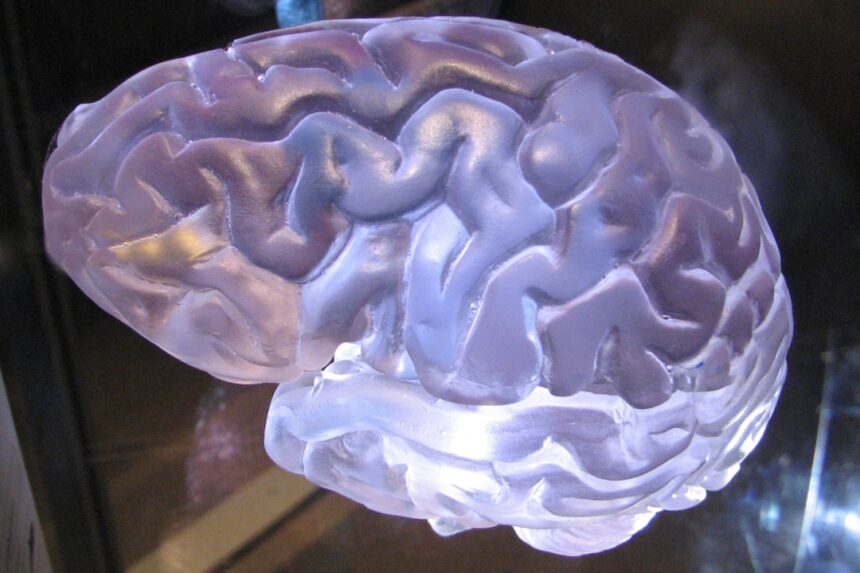
Your brain is an extraordinary organ, constantly processing information and making predictions about the world around you. This predictive power is not merely a byproduct of your cognitive functions; it is a fundamental aspect of how you navigate life. From anticipating the next word in a conversation to predicting the outcome of a complex situation, your brain is engaged in a continuous cycle of forecasting.
Understanding this capability can enhance your awareness of how you think and interact with your environment. The concept of brain predictive power encompasses various cognitive processes, including perception, decision-making, and problem-solving. By leveraging past experiences and current sensory information, your brain creates models of reality that help you make informed choices.
This article will delve into the science behind these predictions, exploring how your brain anticipates future events, the role of memory and emotions, and how you can harness this ability for personal growth.
Key Takeaways
- The brain uses past experiences and memory to anticipate future events.
- Emotions significantly influence the accuracy of our brain’s predictions.
- Cognitive biases can distort predictive thinking and lead to errors.
- Intuition plays a key role in enhancing our brain’s predictive capabilities.
- Ongoing research aims to better understand and improve brain prediction skills.
The Science Behind Brain Predictions
At the core of your brain’s predictive power lies a complex interplay of neural networks and cognitive functions. Neuroscientists have discovered that your brain operates on a predictive coding framework, where it continuously generates hypotheses about incoming sensory information. When you encounter new stimuli, your brain compares them against these predictions, allowing for rapid processing and efficient responses.
This mechanism not only saves time but also conserves cognitive resources, enabling you to focus on more pressing tasks. Research has shown that specific areas of your brain, such as the prefrontal cortex and the parietal lobe, play crucial roles in this predictive process. The prefrontal cortex is responsible for higher-order thinking and decision-making, while the parietal lobe integrates sensory information to form a coherent understanding of your surroundings.
Together, these regions work in harmony to create a seamless experience of reality, allowing you to anticipate what might happen next based on previous encounters and learned behaviors.
How Your Brain Predicts Future Events
Your brain’s ability to predict future events is rooted in its capacity to recognize patterns. As you go through life, you accumulate experiences that shape your understanding of cause and effect. For instance, if you notice that dark clouds often precede rain, your brain learns to associate these visual cues with the likelihood of precipitation.
This pattern recognition enables you to make informed decisions, such as carrying an umbrella when the sky looks ominous. Moreover, your brain employs a mechanism known as “forward modeling,” which allows it to simulate potential outcomes based on current information. When faced with a decision, your brain can project various scenarios and evaluate their potential consequences.
This process not only aids in decision-making but also helps you prepare for different possibilities, enhancing your adaptability in uncertain situations. By understanding how your brain predicts future events, you can become more attuned to the cues that inform your decisions.
The Role of Memory in Predictive Thinking
| Aspect | Description | Metric/Example | Impact on Predictive Thinking |
|---|---|---|---|
| Working Memory Capacity | The amount of information that can be held and manipulated temporarily | Average capacity: 7±2 items | Higher capacity allows better integration of past experiences for prediction |
| Long-Term Memory Retrieval Speed | How quickly relevant memories can be accessed | Retrieval time: 200-500 ms | Faster retrieval supports quicker and more accurate predictions |
| Memory Encoding Accuracy | Precision with which experiences are stored | Encoding error rate: ~5-10% | Accurate encoding ensures reliable data for future predictions |
| Pattern Recognition Ability | Ability to identify regularities from past experiences | Recognition accuracy: 85-95% | Improves anticipation of future events based on memory |
| Memory Consolidation Time | Duration required to stabilize memories | Typically several hours to days | Consolidated memories enhance long-term predictive models |
Memory plays a pivotal role in shaping your brain’s predictive capabilities. Your past experiences serve as a repository of information that informs your predictions about future events. When you encounter a situation similar to one you’ve faced before, your brain retrieves relevant memories to guide your response.
This reliance on memory allows for quicker decision-making and enhances your ability to navigate familiar environments. However, not all memories are created equal. The accuracy and reliability of your memories can significantly impact your predictions.
For instance, if you have a vivid memory of a negative experience in a particular context, it may lead you to overestimate the likelihood of similar outcomes in the future. Conversely, positive memories can foster optimism and encourage risk-taking behavior. By recognizing the influence of memory on your predictive thinking, you can work towards refining your recollections and ensuring they serve you well in future scenarios.
The Influence of Emotions on Brain Predictions
Emotions are powerful drivers of behavior and play a crucial role in how your brain makes predictions.
For example, fear can heighten your sensitivity to potential threats, leading you to predict negative outcomes more readily than when you’re feeling calm and secure.
This emotional lens can skew your perception of reality and influence your decision-making processes. Moreover, emotions can also enhance or inhibit memory recall, further impacting your predictive abilities. When you’re emotionally charged, certain memories may become more salient, overshadowing others that could provide a more balanced perspective.
Understanding this interplay between emotions and predictions can empower you to manage your emotional responses more effectively, allowing for clearer thinking and better decision-making in high-stress situations.
How to Harness Your Brain’s Predictive Power
Harnessing your brain’s predictive power involves cultivating awareness of how you think and make decisions. One effective strategy is mindfulness practice, which encourages you to observe your thoughts and feelings without judgment. By becoming more aware of your cognitive processes, you can identify patterns in your thinking that may lead to biased predictions or irrational decisions.
Additionally, engaging in reflective practices—such as journaling or discussing experiences with others—can help clarify your thought processes and refine your predictive abilities. By analyzing past decisions and their outcomes, you can gain insights into how your brain constructs predictions and learn to adjust your approach accordingly. This self-awareness not only enhances your decision-making skills but also fosters personal growth as you become more attuned to the nuances of your cognitive landscape.
The Impact of Cognitive Biases on Predictive Thinking
Cognitive biases are systematic errors in thinking that can distort your perceptions and influence your predictions. These biases often arise from mental shortcuts that your brain takes when processing information. For instance, confirmation bias leads you to seek out information that supports your existing beliefs while ignoring contradictory evidence.
This tendency can significantly impact how you predict future events, as it may cause you to overlook critical data that could inform a more accurate assessment. Another common bias is the availability heuristic, where you rely on immediate examples that come to mind when evaluating a situation. If you’ve recently heard about a plane crash, for example, you might overestimate the risks associated with flying despite statistical evidence indicating its safety.
By recognizing these cognitive biases and their effects on your predictive thinking, you can work towards mitigating their influence and making more informed decisions.
The Connection Between Intuition and Predictive Abilities
Intuition often plays a significant role in how you make predictions about future events. This gut feeling arises from the subconscious processing of information based on past experiences and learned patterns. While intuition may seem like an instinctual response, it is deeply rooted in the predictive capabilities of your brain.
When faced with uncertainty or complex situations, your brain draws upon its vast reservoir of knowledge to generate intuitive insights. However, relying solely on intuition can be risky if not balanced with rational analysis. While intuitive judgments can be quick and efficient, they are also susceptible to biases and errors.
To enhance your predictive abilities, it’s essential to strike a balance between intuition and analytical thinking. By combining these two approaches, you can make more nuanced predictions that take into account both emotional insights and logical reasoning.
The Limitations of Brain Predictions
Despite its remarkable capabilities, your brain’s predictive power is not infallible. One significant limitation is its reliance on past experiences; when faced with entirely new situations or unprecedented events, your brain may struggle to generate accurate predictions. This limitation can lead to overconfidence in familiar patterns or an inability to adapt quickly to changing circumstances.
Additionally, external factors such as stress or fatigue can impair cognitive functioning and hinder predictive accuracy. When you’re overwhelmed or exhausted, your brain may revert to simplistic heuristics rather than engaging in thorough analysis. Recognizing these limitations is crucial for developing a more realistic understanding of your predictive abilities and ensuring that you approach decision-making with caution and flexibility.
Improving Your Brain’s Predictive Abilities
Improving your brain’s predictive abilities requires intentional practice and engagement with various cognitive strategies. One effective method is exposure to diverse experiences that challenge your existing mental models. By stepping outside of your comfort zone and encountering new situations, you can expand the range of information available for future predictions.
Additionally, engaging in critical thinking exercises can sharpen your analytical skills and enhance your ability to evaluate potential outcomes objectively. Techniques such as scenario planning—where you envision multiple possible futures based on different variables—can help refine your predictive capabilities by encouraging you to consider various perspectives and possibilities.
The Future of Brain Predictive Research
As research into brain predictive power continues to evolve, exciting advancements are on the horizon. Scientists are exploring the neural mechanisms underlying prediction at increasingly granular levels, utilizing technologies such as functional MRI (fMRI) and electrophysiological recordings to gain insights into how different brain regions collaborate during predictive tasks. Moreover, interdisciplinary approaches combining neuroscience with psychology and artificial intelligence are paving the way for innovative applications in fields ranging from mental health treatment to decision-making in business environments.
As our understanding deepens, we may unlock new strategies for enhancing human cognition and harnessing the full potential of our brains’ predictive capabilities. In conclusion, recognizing the intricacies of how your brain predicts future events empowers you to navigate life with greater awareness and intention. By understanding the science behind these predictions and actively working to refine them through practice and reflection, you can enhance both personal growth and decision-making skills in an ever-changing world.
The concept of the brain as a prediction machine is fascinating, as it highlights how our cognitive processes are largely driven by the brain’s ability to anticipate future events based on past experiences. This idea is explored in greater detail in a related article on the topic, which can be found at Productive Patty.
WATCH THIS! The Laziness LIE That Kills Your Productivity (The Science of Self-Sabotage)
FAQs
What does it mean that the brain is a prediction machine?
The brain as a prediction machine means it constantly anticipates future events based on past experiences and current sensory input. It uses these predictions to efficiently process information and guide behavior.
How does the brain make predictions?
The brain makes predictions by using neural networks that compare incoming sensory data with stored memories and learned patterns. This process involves areas like the cortex and the hippocampus, which help generate expectations about what will happen next.
Why is prediction important for brain function?
Prediction allows the brain to process information faster and more efficiently by preparing responses in advance. It helps in decision-making, learning, perception, and motor control, enabling humans to adapt quickly to changing environments.
Which parts of the brain are involved in prediction?
Key brain regions involved in prediction include the prefrontal cortex, which plans and anticipates outcomes; the hippocampus, which stores memories; and sensory cortices, which process incoming information and compare it to expectations.
How does prediction affect perception?
Prediction shapes perception by filling in gaps in sensory information and filtering out irrelevant data. This means what we perceive is often a combination of actual sensory input and the brain’s expectations, leading to faster and more accurate interpretation of the environment.
Can the brain’s predictions be wrong?
Yes, the brain’s predictions can be incorrect, especially when faced with novel or unexpected situations. When predictions don’t match reality, the brain updates its models to improve future predictions, a process known as prediction error correction.
How does understanding the brain as a prediction machine help in neuroscience?
Recognizing the brain as a prediction machine helps researchers understand cognitive functions like learning, memory, and perception. It also informs treatments for neurological and psychiatric disorders where predictive processing may be impaired, such as schizophrenia or autism.
Is the concept of the brain as a prediction machine widely accepted?
Yes, the idea that the brain functions as a prediction machine is a widely supported theory in cognitive neuroscience and psychology, supported by extensive research on brain activity and behavior.