
You stand at the precipice of understanding, poised to delve into the intricate dance between your neurochemistry and your spiritual experiences. This article will guide you through the compelling evidence suggesting that dopamine, often dubbed the “reward molecule,” plays a far more profound role in your perception and validation of spiritual phenomena than previously appreciated. As you navigate these complex interconnections, you will gain insight into how your brain may be hardwired to interpret and reinforce spiritual beliefs, offering a fresh perspective on faith, mysticism, and the human search for meaning.
To grasp dopamine’s role in spiritual validation, you must first understand its fundamental functions within your brain. Dopamine is not merely a pleasure chemical; rather, it is a sophisticated neurotransmitter involved in a multitude of critical processes. Its influence extends far beyond fleeting moments of joy, impacting your motivation, learning, attention, and even your sense of salience – that innate ability to determine what is important in your environment.
Dopamine’s Multifaceted Roles
Consider your brain as a highly complex orchestra, with dopamine acting as a versatile conductor. It doesn’t just play one instrument; it influences the entire ensemble.
- Motivation and Goal-Directed Behavior: When you pursue a goal, whether it’s solving a puzzle or seeking spiritual enlightenment, dopamine neurons in your mesolimbic pathway are activated. This system drives your behavior towards anticipated rewards, creating a powerful loop that reinforces actions leading to positive outcomes.
- Learning and Conditioning: Your brain is constantly making associations. Dopamine strengthens connections between stimuli and behaviors, allowing you to learn from experience. If a particular spiritual practice consistently leads to feelings of peace or profound insight, dopamine helps to solidify that association, making you more likely to repeat the practice.
- Reward and Pleasure: While not solely a pleasure chemical, dopamine release is often associated with pleasurable experiences. The anticipation of a reward, rather than the reward itself, often triggers the strongest dopamine surge. This predictive coding is crucial for understanding how spiritual experiences are validated.
- Salience and Attention: Dopamine helps you prioritize information. In a cluttered world, your brain must decide what is important and what can be ignored. Dopamine highlights events or stimuli that are relevant to your goals or survival, drawing your attention and imbuing them with significance.
The Dopaminergic System: A Network for Meaning
Your brain’s intricate dopamine system can be visualized as a network of highways, with different routes leading to distinct destinations. The most prominent pathways involved in motivation and reward are the mesolimbic pathway and the mesocortical pathway. The mesolimbic pathway projects from the ventral tegmental area (VTA) to the nucleus accumbens, a key region for reward anticipation and motivation. The mesocortical pathway extends from the VTA to the prefrontal cortex, a region critical for executive functions, decision-making, and higher-order thought. These pathways work in concert, shaping your perceptions and influencing your beliefs.
Dopamine, often referred to as the “feel-good” neurotransmitter, plays a significant role in our experiences of pleasure and reward, which can extend to spiritual validation. An intriguing article that explores this connection is available at Productive Patty, where the author delves into how dopamine influences our spiritual experiences and the sense of fulfillment that comes from them. This intersection of neuroscience and spirituality offers valuable insights into how our brain chemistry can shape our beliefs and practices.
Dopamine and the “Feeling of Knowing”
One of the most compelling connections between dopamine and spiritual validation lies in its role in generating the “feeling of knowing” or conviction. When you experience a profound sense of certainty about a spiritual truth, or feel an undeniable connection to something larger than yourself, dopamine may be playing a significant role in cementing that internal sensation.
Predictive Coding and Confirmation Bias
Your brain operates as a sophisticated prediction machine. It constantly generates hypotheses about the world and then assesses incoming sensory information against these predictions. When these predictions are confirmed, a surge of dopamine can be experienced, reinforcing the neural pathways associated with that prediction. In the context of spiritual experiences, if you anticipate a divine presence, a feeling of enlightenment, or a profound insight, and your brain interprets incoming sensory or cognitive information as confirming that expectation, dopamine release can solidify this confirmation bias. You are, in essence, receiving neurochemical validation for your pre-existing beliefs or nascent spiritual insights.
- The “Aha!” Moment: Consider the sudden flash of insight or the “Aha!” moment you might experience during meditation or contemplation. This subjective experience often comes with a strong sense of conviction. Dopamine is known to be involved in these moments of cognitive breakthrough, providing a neurochemical stamp of approval to newly formed connections or understandings.
- Pattern Recognition in the Abstract: Humans are adept at pattern recognition, even in ambiguous or abstract data. When you perceive meaning or divine intervention in seemingly random events, your brain is actively constructing a narrative. Dopamine can reinforce these perceived patterns, making them feel more significant and “real.” This can manifest as seeing signs, synchronicities, or experiencing a general sense of interconnectedness.
The Role of Expectation and Belief
Your expectations and pre-existing beliefs act as powerful filters through which you interpret the world. If you expect to encounter spiritual truths, your brain may be primed to interpret ambiguous stimuli in a way that confirms those expectations. This is where the interplay between top-down processing (your beliefs and expectations) and bottom-up processing (sensory information) becomes crucial. Dopamine facilitates this interaction, acting as a bridge between your internal world of beliefs and your interpretation of external experiences.
Dopamine and Altered States of Consciousness
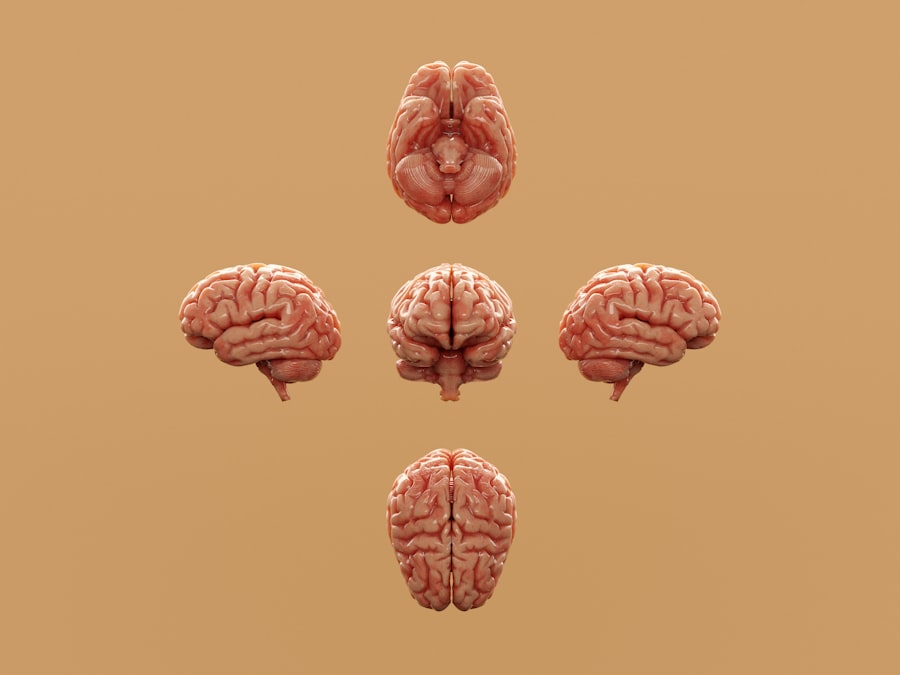
Many spiritual traditions involve practices designed to induce altered states of consciousness, such as meditation, trance, fasting, or prayer. These practices often lead to profound subjective experiences, including visions, a sense of unity, or encounters with what is perceived as divine. Research suggests that dopamine plays a critical role in mediating these experiences and their subsequent interpretation.
The Dopaminergic System Under Stress and Sensory Deprivation
Extreme physiological states, such as those induced by prolonged fasting, sleep deprivation, or sensory isolation (as encountered in monastic practices or solitary retreats), can significantly impact dopamine levels and receptor sensitivity.
- Dopamine Sensitization: In some cases, prolonged stress or sensory deprivation can lead to dopamine receptor hypersensitivity. This means that even small amounts of dopamine release can have a more pronounced effect, leading to heightened emotional responses and intensified perceptual experiences. This could contribute to the vivid hallucinations or profound insights reported during such states.
- Increased Synaptic Availability: Certain ascetic practices may also influence the synthesis and release of dopamine, or alter the density of dopamine transporters, leading to greater synaptic availability. This increased availability could contribute to the heightened sense of awareness, motivation, and reward often reported in individuals engaging in intense spiritual disciplines.
Psychosis and Spirituality: A Delicate Balance
It is important to acknowledge the delicate balance between heightened dopamine activity and pathological states. Aberrant dopamine signaling is a hallmark of psychotic disorders, where individuals may experience delusions, hallucinations, and a distorted sense of reality. While spiritual experiences and psychotic episodes share some phenomenological similarities (e.g., intense subjective conviction, altered perceptions), they are fundamentally distinct. The key differentiator often lies in the individual’s ability to maintain reality testing and integrate these experiences into a coherent, functional life. However, understanding the neurochemical overlap can provide valuable insights into the mechanisms underlying intense subjective states, regardless of their origin.
Dopamine and the Reinforcement of Spiritual Practices

Your brain is exquisitely designed to reinforce behaviors that lead to positive outcomes. If a spiritual practice consistently invokes feelings of peace, connection, or profound meaning, your dopaminergic system works to solidify that association, making you more likely to engage in that practice again. This creates a feedback loop, cementing spiritual engagement.
The Reward Pathway and Spiritual Habits
Think of your spiritual pursuits as a continuous learning process. Each time you engage in prayer, meditation, communal worship, or acts of altruism, and you experience a positive internal state, your brain receives a “reward.” This reward, mediated by dopamine, strengthens the neural circuits associated with those actions.
- Intrinsic Motivation: Unlike extrinsic rewards (like money or praise), intrinsic motivation comes from within. The feelings of joy, peace, or purpose derived from spiritual practices are powerful intrinsic motivators. Dopamine is a crucial component in driving and sustaining this intrinsic motivation, fostering a desire to continue seeking these internal rewards.
- Habit Formation: Over time, consistent engagement in spiritual practices, reinforced by dopamine, can lead to the formation of habits. These habits become integrated into your daily life, creating a structured pathway for continued spiritual exploration and development. The initial effort required to engage in a new practice gradually diminishes as the behavior becomes automatic and intrinsically rewarding.
The Social Dimension of Spiritual Validation
Humans are inherently social creatures. Your spiritual journey is often intertwined with communal experiences and shared beliefs. Dopamine plays a significant role in social bonding and the reinforcement of group norms. When you participate in communal rituals, experience collective effervescence, or receive affirmation for your beliefs from your spiritual community, your brain’s reward system is activated. This reinforces your sense of belonging and validates your spiritual path through social cohesion. The shared dopamine surge during collective experiences can create a powerful sense of unity and shared purpose, further cementing the perceived validity of the spiritual framework.
Recent studies have begun to explore the intriguing connection between dopamine and spiritual validation, suggesting that the neurotransmitter plays a significant role in our experiences of transcendence and connection. For those interested in delving deeper into this fascinating topic, a related article can be found at this link, which discusses how dopamine influences our perception of spirituality and the sense of fulfillment it can bring. Understanding this relationship may provide insights into how our brain chemistry affects our spiritual journeys and the validation we seek in our beliefs.
Future Directions and Ethical Considerations
| Metric | Description | Relevance to Spiritual Validation | Typical Measurement Method | Reported Findings |
|---|---|---|---|---|
| Dopamine Release | Amount of dopamine released in the brain | Increased dopamine release is associated with feelings of reward and validation during spiritual experiences | Positron Emission Tomography (PET) scans, fMRI | Elevated dopamine levels observed during meditation and prayer |
| Dopamine Receptor Activity | Binding activity of dopamine receptors (D1, D2, etc.) | Receptor sensitivity may influence the intensity of spiritual experiences and validation | Neuroimaging, receptor binding assays | Higher D2 receptor availability linked to enhanced spiritual experiences |
| Subjective Reward Scores | Self-reported feelings of reward or validation | Correlates with dopamine activity during spiritual practices | Questionnaires, Likert scales | Participants report increased feelings of validation during dopamine-enhancing activities |
| Neural Activation in Reward Centers | Activation levels in brain regions like the nucleus accumbens | These areas are rich in dopamine and linked to feelings of spiritual reward | fMRI, PET scans | Increased activation observed during spiritual rituals and meditation |
| Dopamine Transporter Levels | Density of dopamine transporters regulating dopamine availability | May modulate the duration and intensity of spiritual validation experiences | Neuroimaging, molecular assays | Variations in transporter levels correlate with individual differences in spiritual experience intensity |
Your exploration of dopamine’s role in spiritual validation opens up a fascinating frontier for both scientific inquiry and philosophical contemplation. As you delve deeper into these mechanisms, new questions arise, and existing knowledge prompts you to consider the broader implications.
Neuromodulation and Controlled Spiritual Experiences
The increasing understanding of neurochemistry raises the possibility of neuromodulation techniques (e.g., transcranial magnetic stimulation, deep brain stimulation, pharmacological interventions) being used to influence spiritual experiences. While speculative, the ability to selectively target dopaminergic pathways could theoretically enhance certain subjective states, potentially leading to intentionally induced meditative states, heightened feelings of transcendence, or even artificial senses of conviction. This prospect, however, is fraught with profound ethical implications.
- Authenticity and Agency: If spiritual experiences can be chemically or electrically induced, what does this imply about their authenticity? Does a state of transcendence achieved through neuromodulation hold the same intrinsic value as one arrived at through dedicated spiritual practice? This touches upon fundamental questions of human agency and the nature of genuine spiritual discovery.
- Therapeutic Applications: On the other hand, understanding the neural underpinnings of spiritual experiences could open doors for therapeutic interventions. For individuals struggling with spiritual dryness, existential despair, or difficulty finding meaning, responsible and ethical neuromodulation could potentially offer avenues for fostering positive internal states and a renewed sense of purpose. This would necessitate careful consideration of informed consent, potential side effects, and the overarching goals of such interventions.
Reconciling Science and Spirituality
Your journey through this topic highlights a growing trend: the increasingly nuanced conversation between scientific understanding and spiritual inquiry. Rather than seeing neurochemistry as reducing spiritual experiences to mere biological phenomena, you can view it as providing a deeper understanding of the intricate machinery through which these experiences manifest.
- A Deeper Respect: By appreciating the brain’s role, you gain a deeper respect for the complexity of human consciousness and the mechanisms that allow for such profound subjective states. This perspective does not diminish the spiritual; rather, it enriches your understanding of how it is embodied and experienced.
- Transcending Reductionism: The aim is not to reduce something as multifaceted as spirituality to a single neurotransmitter. Instead, the goal is to acknowledge dopamine’s contribution as a crucial component within a vast and interconnected neural network. Your spiritual experiences remain deeply personal, meaningful, and often ineffable, even with a growing understanding of their neurobiological correlates. This scientific lens merely offers a framework for comprehending the how, without necessarily dictating the why or the ultimate meaning you ascribe to these experiences.
You have now explored the multifaceted role of dopamine in shaping your spiritual perceptions and validating your beliefs. From its fundamental functions in motivation and learning to its involvement in altered states of consciousness and the reinforcement of spiritual practices, dopamine emerges as a key player in the intricate tapestry of human spirituality. As scientific inquiry continues to unravel the mysteries of the brain, your understanding of yourself, your beliefs, and your place in the universe will continue to evolve, enriched by both neuroscientific insights and timeless spiritual wisdom.

SHOCKING: Why “Healed” People Are The Most Narcissistic
FAQs
What is dopamine and what role does it play in the brain?
Dopamine is a neurotransmitter, a chemical messenger in the brain that plays a key role in reward, motivation, pleasure, and reinforcement of behaviors. It helps regulate mood, attention, and learning processes.
How is dopamine connected to spiritual experiences?
Dopamine is believed to influence spiritual experiences by enhancing feelings of reward and pleasure during moments of spiritual insight or validation. Increased dopamine activity can reinforce behaviors and thoughts associated with spiritual practices.
What does spiritual validation mean in the context of dopamine?
Spiritual validation refers to the sense of confirmation or affirmation that individuals feel when their spiritual beliefs or experiences are reinforced. Dopamine release during these moments can create a rewarding sensation, encouraging continued engagement in spiritual activities.
Can dopamine levels affect a person’s likelihood to seek spiritual experiences?
Yes, dopamine levels can influence motivation and reward-seeking behavior, which may affect a person’s inclination toward spiritual practices. Higher dopamine activity can enhance the perceived reward from spiritual experiences, potentially increasing the desire to pursue them.
Are there any scientific studies linking dopamine to spirituality?
Several studies have explored the relationship between dopamine and spirituality, suggesting that dopamine pathways are involved in the processing of spiritual and religious experiences. However, this is an emerging field, and more research is needed to fully understand the mechanisms involved.