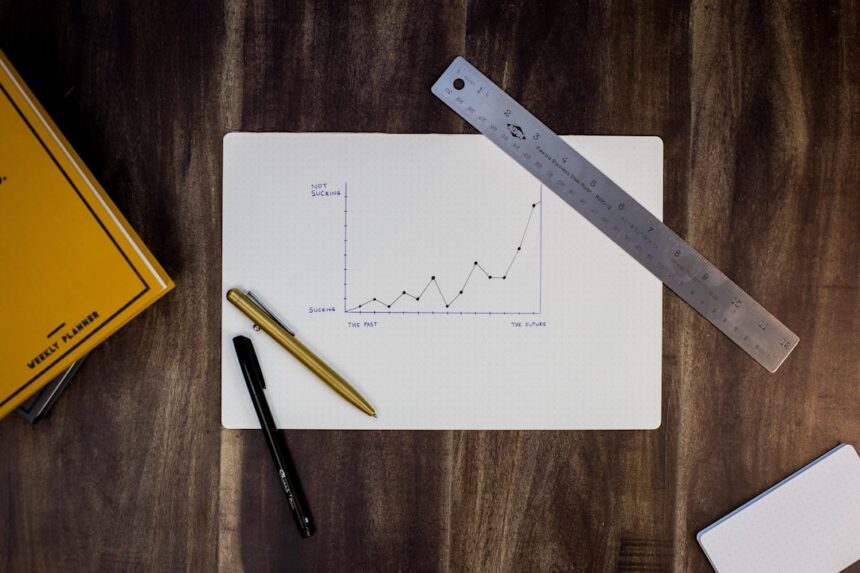
You are constantly seeking to optimize your output, to refine your methodologies, and to ultimately achieve more with the finite resource of time. This guide, “The Ultimate Productivity System: Get More Done,” provides a structured approach to understanding, implementing, and maintaining a robust framework for maximizing your effectiveness. It is not a panacea, but rather a set of principles and actionable strategies designed to be integrated into your existing operations, offering a path towards greater efficiency and the realization of your objectives.
Before you can build an effective system, you must first comprehend the underlying mechanisms and common pitfalls that impede your progress. Productivity is not merely about working harder; it’s about working smarter, and this requires a deep dive into your current habits and mental models. Discover the [best productivity system](https://youtu.be/yTq5OM-YhRs) to enhance your daily workflow and achieve more.
Deconstructing Your Current Workflow
Consider your present approach to tasks. Do you follow a systematic process, or do you react to immediate demands? A truthful assessment is the first step towards improvement.
- Identifying Bottlenecks: Where do delays consistently occur? Is it a specific task, a handover, or a lack of clarity in instructions? Pinpointing these areas is paramount. For example, if you find yourself constantly sidetracked by emails, your inbox management is a bottleneck.
- Analyzing Time Allocation: How do you actually spend your working hours? Tools for time tracking can reveal surprising discrepancies between your perceived and actual time usage. You might believe you spend an hour on a report, but tracking could reveal it’s closer to two, interspersed with numerous distractions.
- Recognizing Energy Fluctuations: Your capacity for focused work is not constant. You experience peaks and troughs in your energy levels throughout the day. Ignoring these natural rhythms can lead to burnout and decreased output. For instance, attempting complex analytical tasks when your cognitive energy is at its lowest is a recipe for frustration and inefficiency.
The Problem of Busyness vs. Productivity
Many people confuse busyness with productivity. You may be constantly engaged, perpetually occupied, yet fail to move the needle on your most important goals. This distinction is crucial to grasp.
- The Sunk Cost Fallacy in Effort: You might continue to invest time and energy into tasks that yield minimal results simply because you have already invested significant effort. This is akin to endlessly polishing a broken cog in a machine – it looks better, but it still doesn’t contribute to the machine’s function.
- The Illusion of Multitasking: While seemingly efficient, switching between tasks rapidly – true multitasking – demonstrably reduces both the speed and quality of your work. Your brain incurs a “switching cost” every time you shift focus, diminishing cognitive resources.
- The Trap of Reactive Work: If your day is primarily dictated by incoming requests and emergencies, you are operating reactively. This prevents you from proactively shaping your work and dedicating time to high-impact activities. You are a ship perpetually tossed by waves, rather than charting your own course.
If you’re looking for a productivity system that truly delivers results, you might find the insights in this article particularly helpful: Best Productivity System That Actually Works. This resource offers practical tips and strategies that can help you streamline your tasks and enhance your focus, making it easier to achieve your goals. Whether you’re a busy professional or a student juggling multiple responsibilities, the techniques outlined in the article can be tailored to fit your unique needs and lifestyle.
Establishing Your Strategic Compass
With a foundational understanding of your current state, you can begin to establish a clear direction. Productivity without purpose is merely activity. Your “strategic compass” ensures that your efforts are aligned with your overarching objectives.
Defining Clear Goals and Objectives
Vague aspirations rarely lead to tangible outcomes. You need concrete, measurable targets to steer your actions.
- The SMART Framework: If you are unfamiliar with the SMART criteria, it stands for Specific, Measurable, Achievable, Relevant, and Time-bound. For example, “Be more productive” is not SMART. “Complete the Q3 financial report by October 15th with an accuracy rate of 99% and submit it to management” is.
- Hierarchy of Goals: Your goals should not exist in isolation. You need a hierarchy, from your overarching life vision down to daily tasks. Think of it as a set of nested Russian dolls: your daily actions fit into weekly objectives, which support monthly milestones, all contributing to your annual goals, which themselves are components of your long-term vision.
- Regular Goal Review: Your environment and priorities can shift. You must regularly review and adjust your goals to maintain relevance. A quarterly review is often sufficient to ensure alignment.
Prioritization Methodologies
Not all tasks are created equal. Your ability to distinguish between urgent and important, and to act accordingly, is a cornerstone of productivity.
- The Eisenhower Matrix: This popular tool helps you categorize tasks into four quadrants: Urgent & Important (Do first), Important & Not Urgent (Schedule), Urgent & Not Important (Delegate), and Not Urgent & Not Important (Eliminate). You need to be ruthless in applying this to avoid cluttering your schedule with low-value activities.
- The ABCDE Method: This simpler method involves assigning priority levels (A for critical, B for important, C for nice-to-do, D for delegate, E for eliminate) to your task list. You then focus on completing all ‘A’ tasks before moving to ‘B’, and so forth.
- The MoSCoW Method: Commonly used in project management, this technique categorizes requirements as Must have, Should have, Could have, and Won’t have. While often applied to projects, you can adapt it to your personal task list to ensure you are focusing on the essentials.
Designing Your Workflow Engine
Your workflow engine is the repeatable system you employ to process tasks, manage information, and execute your work. It’s the infrastructure that supports your strategic compass.
Information Capture and Organization
The ability to capture ideas, tasks, and relevant information reliably is critical to preventing mental overload and ensuring nothing falls through the cracks.
- A Single Point of Entry: Whether it’s a physical notebook, a digital note-taking app, or a dedicated task manager, you need one trusted system where all incoming information is first recorded. This prevents mental “tabs” from staying open, draining your cognitive energy.
- Categorization and Tagging: Once captured, items need to be organized in a way that makes them easily retrievable. Employ categories, tags, or folders to create a logical structure. For instance, you might tag notes by project, client, or topic.
- Regular Review and Processing: An accumulation of unprocessed information is as bad as having no system at all. You need a dedicated time to review your captured items, process them into actionable tasks, delegate them, or archive them. This is your “inbox zero” for information.
Task Management Systems
Choosing and consistently using a task management system is fundamental to knowing what needs to be done and when.
- Digital vs. Analog: Both digital tools (e.g., Todoist, Asana, Trello) and analog systems (e.g., bullet journals, physical planners) have their advantages. The best system is the one you will consistently use.
- Integration with Calendar: Your tasks should ideally be integrated with your calendar. If a task requires a specific time slot, block it out. This transforms your calendar from a mere appointment book into a strategic plan for your day.
- Breaking Down Large Tasks: You must learn to dissect large, daunting projects into smaller, manageable sub-tasks. Each sub-task should be actionable and clearly defined. “Write a report” becomes “Outline report sections,” “Gather data for Section 1,” “Draft Section 1,” and so on. This makes the overall objective less intimidating and provides clear next steps.
Optimizing Your Execution Strategy

A well-designed system is only as good as your ability to execute it. This section focuses on the techniques and practices that enhance your ability to perform tasks effectively and maintain focus.
Time Management Techniques
Leveraging established time management techniques can significantly boost your output and reduce procrastination.
- The Pomodoro Technique: This involves working in focused bursts (typically 25 minutes) followed by short breaks (5 minutes). After four “Pomodoros,” you take a longer break (15-30 minutes). This technique promotes deep work and combats mental fatigue.
- Time Blocking: Dedicate specific blocks of time in your calendar for particular tasks or task categories. For instance, block out an hour each morning for “Deep Work” on your most important project, and another block in the afternoon for “Email Processing.”
- The Two-Minute Rule: If a task takes less than two minutes to complete, do it immediately. This prevents a buildup of small, irritating tasks that can create mental clutter. Responding to a quick email, filing a document, or scheduling an appointment are prime candidates.
Minimizing Distractions
In the modern environment, distractions are omnipresent. You must actively cultivate an environment conducive to concentration.
- Digital Environment Control: Turn off unnecessary notifications on your phone and computer. Close irrelevant browser tabs. Use website blockers if necessary, particularly during deep work sessions. You are the gatekeeper of your digital attention.
- Physical Environment Optimization: Ensure your workspace is tidy and organized. Eliminate clutter that can draw your attention. Consider factors like lighting, temperature, and minimal noise to create an optimal working atmosphere.
- Setting Boundaries: Clearly communicate your focus times to colleagues or family members. Use “do not disturb” signs if working in an open-plan office or at home. Teaching others when you are available for interruptions is critical.
If you’re looking for a productivity system that truly delivers results, you might find it helpful to explore a related article that offers insights into effective time management techniques. Many individuals struggle to find a method that suits their unique needs, but this resource provides practical strategies that can enhance your efficiency. For more information, check out this informative piece on productivity systems at Productive Patty. By implementing these tips, you may discover a new approach that works for you.
Sustaining and Evolving Your System
| Productivity System | Core Principle | Key Features | Effectiveness Rating (1-10) | Best For |
|---|---|---|---|---|
| Getting Things Done (GTD) | Capture, Clarify, Organize, Reflect, Engage | Inbox processing, Next actions, Weekly review | 9 | Professionals with multiple projects |
| Pomodoro Technique | Work in focused intervals with breaks | 25-minute work sessions, 5-minute breaks | 8 | People with attention challenges |
| Time Blocking | Schedule tasks in dedicated time slots | Calendar-based planning, Prioritization | 8 | Those with flexible schedules |
| Eat That Frog | Do the hardest task first | Prioritize biggest tasks, Avoid procrastination | 7 | Procrastinators and goal-oriented people |
| Bullet Journal | Rapid logging and task migration | Customizable, Analog tracking, Reflection | 7 | Creative and visual thinkers |
A productivity system is not static; it is a living entity that requires continuous observation, refinement, and adaptation. Your goal is not perfection, but continuous improvement.
Regular Review and Adjustment
Just as you review your goals, you must periodically review the efficacy of your productivity system itself.
- Weekly Review: Dedicate a specific time each week (e.g., Friday afternoon or Monday morning) to review your past week’s performance, assess your progress on goals, and plan for the upcoming week. This is an essential habit for continuous improvement.
- Quarterly System Audit: Every three months, take a more comprehensive look at your entire system. Are your tools still serving you? Have your priorities shifted? Are there new techniques you could incorporate? This allows for more significant adjustments and optimizations.
- Learning from Failures: When your system breaks down or you experience a dip in productivity, treat it as a learning opportunity rather than a personal failing. Analyze what went wrong and adjust your approach accordingly. Did you overestimate your capacity? Did an unforeseen event derail your plans?
Cultivating Productive Habits and Mindsets
Beyond the tools and techniques, your long-term success hinges on the cultivation of supportive habits and a resilient mindset.
- The Power of Small Wins: Celebrate your progress, no matter how small. Acknowledging completed tasks and milestones reinforces positive behavior and builds momentum. Each completed task is a brick laid in the foundation of your larger goals.
- Combating Procrastination: Understand the root causes of your procrastination (fear of failure, overwhelming task, lack of clarity) and develop strategies to address them. Breaking down tasks, setting artificial deadlines, and starting with a small, easy step can be effective.
- Embracing Flexibility: While structure is important, rigidity can be detrimental. Life is unpredictable. Your system should be robust enough to handle unexpected changes without completely unraveling. Be prepared to adapt and adjust your plans when necessary.
- Prioritizing Self-Care: Your productivity is directly linked to your well-being. Neglecting sleep, nutrition, exercise, and mental breaks will inevitably lead to decreased focus, burnout, and diminished output. A productive individual is a well-rested, mentally healthy individual. You cannot pour from an empty cup indefinitely.
By systematically applying the principles and strategies outlined in this guide, you will be well-equipped to transcend mere busyness and cultivate a sustainable, highly effective productivity system. This system is not a rigid template but a dynamic framework designed to empower you to take control of your time, achieve your objectives, and ultimately, get more done. Your journey towards ultimate productivity is an ongoing process of learning, adapting, and refining.
WATCH THIS! 🎯 STOP Wasting Time on the “Perfect” System
FAQs
What is a productivity system?
A productivity system is a structured method or set of techniques designed to help individuals manage their tasks, time, and goals more effectively to increase efficiency and output.
Why is it important to use a productivity system?
Using a productivity system helps prioritize tasks, reduce procrastination, manage time better, and maintain focus, ultimately leading to improved work quality and reduced stress.
What are some common productivity systems?
Popular productivity systems include Getting Things Done (GTD), Pomodoro Technique, Eisenhower Matrix, Bullet Journaling, and Time Blocking.
How do I choose the best productivity system for me?
The best productivity system depends on your personal work style, goals, and preferences. It’s important to try different methods and adapt them to fit your needs.
Can productivity systems be combined?
Yes, many people combine elements from different productivity systems to create a customized approach that works best for their unique workflow.
How long does it take to see results from a productivity system?
Results can vary, but typically, consistent use of a productivity system for a few weeks to a couple of months is needed to notice significant improvements in efficiency and task management.
Do productivity systems work for everyone?
While productivity systems can benefit most people, their effectiveness depends on individual commitment, consistency, and willingness to adapt the system to personal needs.
Is technology necessary for a productivity system?
No, productivity systems can be implemented using digital tools, paper planners, or a combination of both, depending on what suits the user best.
Can productivity systems help reduce stress?
Yes, by organizing tasks and managing time effectively, productivity systems can help reduce overwhelm and stress associated with workload.
Are productivity systems only for work-related tasks?
No, productivity systems can be applied to both professional and personal tasks, helping to manage all areas of life more efficiently.