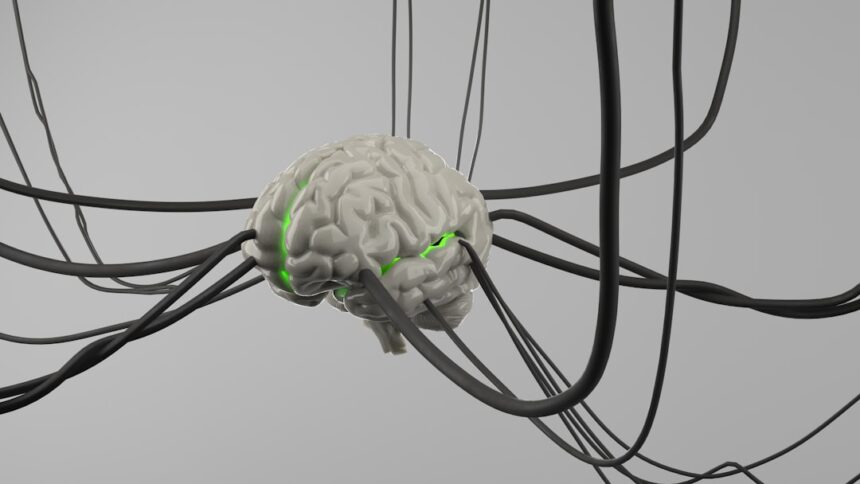
You’ve felt it, haven’t you? That persistent hum, that gnawing desire to achieve, to climb, to become something more. It’s ambition, a potent force that drives you to set goals, overcome obstacles, and strive for excellence. But what exactly is happening inside your brain when this drive sparks and propels you forward? Uncovering the neuroscience of your ambition circuit offers a fascinating glimpse into the intricate biological symphony that fuels your pursuits. This isn’t a simplistic switch; rather, it’s a complex interplay of brain regions, neurotransmitters, and genetic predispositions that work in concert to define and implement your aspirations.
Your ambition isn’t a monolithic entity generated in a single brain area. Instead, it emerges from the coordinated activity of several interconnected neural networks. Understanding these fundamental regions provides the bedrock for appreciating the biological underpinnings of your drive.
The Prefrontal Cortex: Your Executive Command Center
The most significant player in your ambition circuit, arguably, is your prefrontal cortex (PFC). This is the most anterior part of your frontal lobe, responsible for your highest cognitive functions: planning, decision-making, goal-directed behavior, working memory, and impulse control.
The Dorsolateral Prefrontal Cortex (DLPFC) and Goal Setting
Within the PFC, the dorsolateral prefrontal cortex (DLPFC) is heavily involved in the strategic aspects of ambition. It’s where you formulate your long-term objectives, break them down into manageable steps, and monitor your progress. When you set a ambitious goal, your DLPFC is actively engaged in envisioning the future state and devising the roadmap to get there. This involves abstract thinking and the ability to sustain a specific mental representation of your desired outcome.
Working Memory and Future Simulation
Your DLPFC relies on working memory to hold and manipulate information relevant to your goals. This allows you to consider various options, predict potential outcomes, and simulate future scenarios. If you’re planning a career change, your DLPFC is processing information about potential new roles, required skills, and the steps involved in the transition, all while keeping your ultimate career aspiration in focus.
The Orbitofrontal Cortex (OFC) and Reward Valuation
The orbitofrontal cortex (OFC), situated just above your eye sockets, plays a crucial role in evaluating the value of potential rewards associated with your ambitions. It processes the expected pleasure or satisfaction you anticipate from achieving your goals.
Associating Actions with Outcomes
The OFC helps you learn and remember the link between specific actions and their associated positive outcomes. If a particular study strategy led to a good grade in the past, your OFC reinforces that association, making you more likely to employ it again when aiming for academic success. This is a form of reinforcement learning, where the brain learns to associate voluntary actions with their consequences.
The neuroscience of the ambition circuit is a fascinating topic that delves into how our brain processes motivation and goal-setting. For those interested in exploring this subject further, a related article can be found at Productive Patty, which discusses the intricate connections between ambition, brain function, and personal productivity. This resource provides valuable insights into how understanding our brain’s wiring can enhance our drive to achieve our goals.
The Dopaminergic Highway: Fueling Your Motivation
Neurotransmitters are the chemical messengers of your brain, and among them, dopamine holds a prominent position in the realm of motivation and reward-driven behavior. Your ambition circuit is intrinsically linked to the dopaminergic system.
The Mesolimbic Pathway: The Pleasure and Reward Circuit
The mesolimbic pathway, originating in the ventral tegmental area (VTA) of the midbrain and projecting to the nucleus accumbens in the basal forebrain, is often referred to as the brain’s primary reward pathway. This system is heavily involved in pleasure, motivation, and addiction, and it plays a critical role in reinforcing your ambitious pursuits.
Dopamine Release and Anticipation
Dopamine isn’t solely released when you achieve a reward; it’s also released in anticipation of a reward. This anticipatory dopamine surge can be incredibly motivating, pushing you to work harder to attain that future gratification. When you envision achieving a promotion, the prospect of the increased salary, recognition, and responsibility can trigger dopamine release, fueling your efforts.
The Role of Novelty and Uncertainty
Your dopaminergic system is particularly responsive to novelty and uncertainty. This means that pursuing new ventures or tackling projects with unknown outcomes can provide a more significant dopamine boost, further incentivizing your ambition. The thrill of the unknown, coupled with the potential for a substantial reward, can be a powerful motivator.
The Nigrostriatal Pathway: Action and Planning
While the mesolimbic pathway is about reward and motivation, the nigrostriatal pathway, originating in the substantia nigra and projecting to the striatum (which includes the nucleus accumbens and the caudate nucleus), is more involved in motor control, habit formation, and reward-guided action selection.
Translating Desire into Action
This pathway helps translate your ambitious desires into concrete actions. It’s responsible for initiating and controlling voluntary movements necessary to pursue your goals. If your ambition is to run a marathon, your nigrostriatal pathway is crucial for coordinating the physical effort required, from the initial stride to the sustained endurance.
Habit Formation and Automaticity
As you repeat actions that lead to rewards, the nigrostriatal pathway, in conjunction with areas like the basal ganglia, can help form habits. This means that certain actions associated with your ambition can become more automatic, requiring less conscious effort. For instance, the habit of consistently working on a project can free up your cognitive resources for more strategic thinking.
The Amygdala and Emotion: The Emotional Underpinnings of Your Ambition

Ambition is not just a cognitive endeavor; it’s deeply intertwined with your emotional landscape. The amygdala, a small almond-shaped structure deep within your temporal lobes, plays a pivotal role in processing emotions, particularly fear and pleasure, and it significantly influences your motivational drive.
Fear of Failure and the Drive to Succeed
The amygdala is involved in your response to perceived threats, including the fear of failure. This fear, while potentially detrimental, can also act as a powerful motivator. The prospect of not achieving your goals can trigger an amygdala response, driving you to exert more effort to avoid that negative outcome.
The “Fight or Flight” Response in Goal Pursuit
In some instances, the amygdala’s activation can trigger a “fight or flight” response, which, when directed towards a goal, can manifest as heightened focus, determination, and a refusal to quit. This is particularly evident when you face significant setbacks; a resilient amygdala, working with other brain regions, can help you reframe the challenge and push forward.
The Drive for Social Recognition and Belonging
Beyond individual achievements, your ambition is often influenced by your desire for social recognition and a sense of belonging. The amygdala contributes to processing social cues and the emotional valence of social interactions, which can indirectly fuel your drive.
The Impact of Social Comparison
You are a social being, and comparisons with others can either dampen or ignite your ambition. The amygdala is involved in processing these social signals. Seeing others succeed, or conversely, experiencing social disapproval, can trigger emotional responses that either motivate you to strive harder or lead to demotivation.
The Role of Genetics and Environmental Influences

While your brain’s architecture and neurochemistry provide the framework for ambition, your genetic makeup and life experiences play significant roles in shaping its expression and intensity.
Heritability of Personality Traits Related to Ambition
Research suggests that personality traits associated with ambition, such as conscientiousness, drive, and resilience, have a heritable component. This means that you may be genetically predisposed to be more or less ambitious than others.
Specific Gene Variations and Dopamine Signaling
Certain gene variations can influence the efficiency of your dopaminergic system, impacting how your brain processes rewards and motivation. For example, variations in genes related to dopamine receptors or dopamine transporters can subtly alter your responsiveness to rewarding stimuli.
The Impact of Early Life Experiences and Learning
Your formative years and ongoing experiences profoundly shape your ambitious outlook. Early exposure to encouragement, opportunities for achievement, and role models can foster a more ambitious mindset.
Childhood Environment and Goal-Oriented Behavior
Growing up in an environment that encourages exploration, problem-solving, and persistence can wire your brain for greater ambition. Conversely, consistent failure or a lack of reinforcement for effort can lead to a more cautious or less driven approach.
The Power of Mentorship and Role Models
The influence of mentors and role models cannot be overstated. Observing individuals who demonstrate ambition and achieve their goals can provide a powerful template for your own aspirations and inspire you to set similar objectives.
Recent studies have shed light on the neuroscience of the ambition circuit, revealing how specific brain regions interact to fuel our drive and motivation. For a deeper understanding of this fascinating topic, you can explore a related article that delves into the mechanisms behind ambition and goal-setting. This article provides valuable insights into how our brain’s wiring influences our aspirations and achievements. To learn more, visit this insightful resource that expands on the connection between neuroscience and ambition.
Neuroplasticity and Cultivating Your Ambition Circuit
| Neuroscience of the Ambition Circuit | Explanation |
|---|---|
| Neurotransmitters | Dopamine, serotonin, and norepinephrine play a key role in motivation and goal-directed behavior. |
| Brain Regions | The prefrontal cortex, striatum, and amygdala are involved in decision-making, reward processing, and emotional regulation related to ambition. |
| Neural Pathways | The mesolimbic pathway, connecting the ventral tegmental area to the nucleus accumbens, is crucial for the experience of reward and reinforcement. |
| Neuroplasticity | The brain’s ability to reorganize itself and form new neural connections allows for the development and strengthening of ambitious behaviors and attitudes. |
The good news is that your brain is not static. Neuroplasticity, the brain’s ability to reorganize itself by forming new neural connections throughout life, means you can actively cultivate and strengthen your ambition circuit.
Deliberate Practice and Skill Development
Engaging in deliberate practice, a focused and systematic approach to improving a skill, is a powerful way to enhance the neural networks associated with your ambitions. This involves setting specific goals, receiving feedback, and making adjustments to your technique.
Strengthening Neural Pathways Through Repetition
Consistent practice strengthens the neural pathways involved in executing the behaviors necessary for your goals. For instance, if your ambition involves public speaking, repeated practice will refine the neural circuits related to speech production, memory recall, and emotional regulation during presentations.
Cognitive Reframing and Mindset Shifts
Your mindset plays a critical role in how you perceive challenges and opportunities, directly influencing your ambition. Cognitive reframing, the process of changing your perspective on a situation, can significantly impact your neural responses.
Embracing Challenges as Opportunities for Growth
Shifting from a fixed mindset to a growth mindset, where you view challenges as opportunities for learning and development, can lead to greater resilience and increased motivation to pursue difficult goals. This change in perspective can alter the way your amygdala and prefrontal cortex interact.
The Impact of Self-Efficacy on Motivation
Cultivating self-efficacy – your belief in your own ability to succeed – is a powerful tool for bolstering ambition. When you believe you are capable of achieving something, your brain is more likely to engage the motivational systems that drive you towards that goal. This can be nurtured through small successes and positive affirmations.
In conclusion, your ambition is a sophisticated interplay of neural architecture, neurochemistry, emotional processing, and environmental conditioning. By understanding the distinct roles of your prefrontal cortex, dopaminergic pathways, and amygdala, and by recognizing the influence of genetics and experience, you gain a more profound appreciation for this fundamental human drive. More importantly, by embracing the principles of neuroplasticity, you can actively nurture and strengthen the neural circuits that underpin your aspirations, empowering you to pursue your goals with greater clarity, determination, and resilience.
FAQs
What is the ambition circuit in the brain?
The ambition circuit in the brain is a network of interconnected regions that are involved in goal-directed behavior, motivation, and reward processing. It includes areas such as the prefrontal cortex, striatum, and dopamine pathways.
How does the ambition circuit influence behavior?
The ambition circuit influences behavior by regulating motivation, goal-setting, and decision-making processes. It helps individuals pursue and achieve their goals by integrating information about potential rewards and costs, and by guiding actions towards desired outcomes.
What role does dopamine play in the ambition circuit?
Dopamine is a neurotransmitter that plays a key role in the ambition circuit by signaling reward and reinforcing goal-directed behaviors. It is released in response to rewarding experiences and helps to motivate and drive individuals towards their goals.
How does the ambition circuit develop and change over time?
The ambition circuit undergoes significant development and changes over time, particularly during adolescence and young adulthood. During this period, the circuit becomes more sensitive to rewards and is highly influenced by social and environmental factors.
What are the implications of understanding the neuroscience of the ambition circuit?
Understanding the neuroscience of the ambition circuit has implications for various fields, including education, psychology, and mental health. It can inform strategies for enhancing motivation, goal-setting, and decision-making, as well as for addressing issues related to motivation and reward processing.