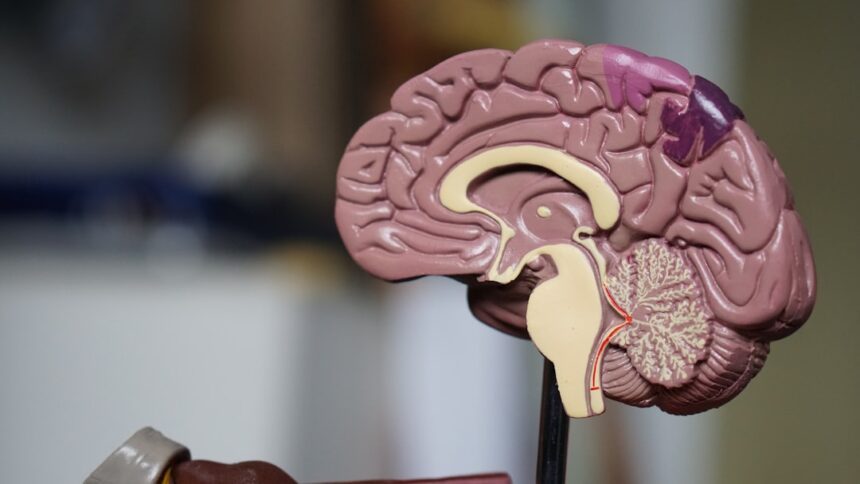
You, the reader, are about to embark on a journey into the intricate workings of your own brain, specifically focusing on two highly influential regions: the limbic system and the prefrontal cortex. These neural architects play critical, often opposing, roles in shaping your thoughts, emotions, decisions, and overall behavior. Understanding their interplay is not merely an academic exercise; it offers profound insights into why you feel what you feel, why you react the way you do, and how you can exert greater conscious control over your mental landscape. Consider this exploration a decoding of your internal operating system, revealing the fundamental components that drive your daily existence.
You might think of the limbic system as the ancient core of your brain, a vestige of your evolutionary past that prioritizes survival and immediate gratification. It’s a network of interconnected structures, not a single, isolated entity, all working in concert to orchestrate your fundamental emotions, motivations, and memories. Imagine it as the instinctual engine room, generating the raw power of your feelings and primal drives.
The Amygdala: Your Brain’s Alarm Bell
At the heart of the limbic system, you’ll find the amygdala, a pair of almond-shaped nuclei. This is your brain’s fear center and emotional alarm system. The amygdala processes emotional stimuli, particularly those related to fear, anger, and anxiety. If you’ve ever experienced an immediate, visceral reaction to a sudden loud noise, a startling image, or a perceived threat, that’s your amygdala in action. It quickly assesses potential dangers, triggering your fight-or-flight response before your conscious mind even fully comprehends the situation. Think of it as a highly sensitive motion detector, constantly scanning your environment for anything that could be a threat.
The Hippocampus: The Architect of Memory
Adjacent to the amygdala lies the hippocampus, a seahorse-shaped structure indispensable for the formation of new long-term memories. You might say it’s your brain’s memory factory, actively consolidating short-term experiences into lasting recollections. Without a functioning hippocampus, you would be unable to form new declarative memories (memories of facts and events), a condition famously observed in cases of anterograde amnesia. The hippocampus also plays a crucial role in spatial navigation, helping you to form mental maps of your surroundings. It’s not just about recalling past events; it’s about building a coherent narrative of your life and your place within it.
The Hypothalamus: The Body’s Internal Regulator
Below the thalamus, you’ll find the hypothalamus, a small but incredibly vital structure that acts as the control center for many essential bodily functions. It regulates hunger, thirst, sleep-wake cycles, body temperature, and even your sexual drive. The hypothalamus serves as a critical link between your nervous system and your endocrine system, releasing hormones that influence a wide array of physiological processes. If you’re feeling a sudden urge to eat or experiencing a hot flash, your hypothalamus is likely at the helm, striving to maintain your internal equilibrium. It’s the diligent maintenance crew, ensuring all essential systems are running smoothly.
The Thalamus: The Sensory Relay Station
Though not strictly considered part of the limbic system by all neuroanatomists, the thalamus is intimately linked to its functions. It acts as a central relay station for nearly all sensory information (except for smell) before it reaches the cerebral cortex. You can visualize the thalamus as a grand central station for sensory input, directing incoming signals to the appropriate regions of your brain for further processing. It filters and organizes the deluge of sensory data you experience every moment, allowing your limbic system to quickly discern emotional relevance and your prefrontal cortex to make sense of the world.
Understanding the differences between the limbic system and the prefrontal cortex is crucial for grasping how our emotions and decision-making processes interact. For a more in-depth exploration of these brain regions and their functions, you can refer to a related article on this topic at Productive Patty. This resource provides valuable insights into how the limbic system influences our emotional responses while the prefrontal cortex plays a key role in rational thinking and self-control.
The Executive Center: Understanding the Prefrontal Cortex
Now, shift your focus to the prefrontal cortex (PFC), the most anterior part of your frontal lobe. If the limbic system is the primal engine, the prefrontal cortex is the sophisticated control panel, the executive suite where complex thought, planning, and decision-making occur. It’s what truly sets you apart as a conscious, rational being. This region is a relatively recent evolutionary development, reaching its peak complexity in humans, allowing for abstract thought, impulse control, and the anticipation of future consequences.
Dorsolateral Prefrontal Cortex: The Logic Processor
Within the prefrontal cortex, the dorsolateral prefrontal cortex (dlPFC) is your brain’s primary engine for working memory, cognitive flexibility, and planning. When you are engaged in problem-solving, strategic thinking, or maintaining attention on a task, your dlPFC is heavily involved. It allows you to hold multiple pieces of information in mind, manipulate them, and use them to guide your behavior. Think of it as your brain’s internal whiteboard, where you jot down ideas, analyze options, and formulate plans. Damage to this area can lead to difficulties in organizing thoughts, making decisions, and adapting to new situations.
Ventromedial Prefrontal Cortex: The Emotional Regulator
The ventromedial prefrontal cortex (vmPFC) is crucial for integrating emotion into decision-making. It plays a significant role in ethical reasoning, social cognition, and regulating emotional responses originating from the limbic system. If you’ve ever felt a gut feeling guiding a difficult decision, or experienced empathy for another person, your vmPFC was likely active. It acts as a bridge between your raw emotional responses and your rational thought processes, helping you to make choices that are not only logical but also emotionally and socially appropriate. Consider it the emotional compass, helping you navigate complex social landscapes.
Orbitofrontal Cortex: The Value Assessor
The orbitofrontal cortex (OFC), located just above your eyes, is heavily involved in evaluating rewards and punishments, and in modifying behavior based on those evaluations. It helps you assess the value of different options and make choices that are likely to lead to desirable outcomes. The OFC plays a significant role in impulse control and in learning from your mistakes. If you learn to avoid a certain food because it made you sick, or to pursue a particular activity because it brings you joy, your OFC is involved in processing those learned associations. It’s the brain’s internal accountant, constantly weighing the pros and cons of your actions.
The Dynamic Interplay: A Constant Dialogue
You are not simply a collection of independent brain regions; your brain operates as a vast, interconnected network. The relationship between the limbic system and the prefrontal cortex is one of constant, often tension-filled, dialogue. Imagine it as a debate between a passionate, impulsive advocate (limbic system) and a cool, calculating judge (prefrontal cortex).
Bottom-Up Processing: When Emotions Take the Helm
When a sudden, threatening event occurs, your limbic system will often take precedence. This is known as “bottom-up” processing, where raw sensory information is quickly channeled to your amygdala, triggering an immediate emotional and physiological response. You might jump, gasp, or freeze before your prefrontal cortex has even had a chance to fully process what’s happening. In these moments, your survival instincts override rational thought. Think of a fire alarm blaring – the immediate, overwhelming response takes priority over calmly assessing the situation.
Top-Down Regulation: The Power of Conscious Control
Conversely, your prefrontal cortex exerts “top-down” control over your limbic system, particularly over your emotional responses. This is where conscious thought and rational evaluation can modulate, and sometimes even override, your primal urges. If you feel a surge of anger but choose to breathe deeply and respond calmly, your prefrontal cortex is actively regulating your limbic system. This executive control allows you to delay gratification, inhibit impulsive behaviors, and consider long-term consequences. It’s the experienced diver carefully controlling the submarine, preventing an immediate crash even when the currents are strong.
Addiction and Impulse Control: The Battleground
The struggle between the limbic system’s desire for immediate reward and the prefrontal cortex’s capacity for impulse control is vividly illustrated in conditions like addiction. The limbic system, particularly the reward pathways within it, can drive intense cravings for substances or behaviors that provide immediate pleasure. However, the prefrontal cortex, when functioning optimally, should be able to inhibit these urges by considering the negative long-term consequences. When the balance is disturbed, often due to chronic substance abuse or genetic predispositions, the limbic system can overpower the prefrontal cortex, leading to compulsive behaviors despite negative outcomes.
Shaping Your Brain: Neuroplasticity and Habit Formation

You are not a static entity; your brain is constantly changing and adapting, a phenomenon known as neuroplasticity. This means that the balance and interaction between your limbic system and prefrontal cortex can be influenced by your experiences, habits, and conscious efforts.
The Power of Practice: Strengthening Executive Function
Just as you can strengthen a muscle through exercise, you can enhance the capacity of your prefrontal cortex through deliberate practice. Activities that require focus, planning, and problem-solving, such as learning a new skill, playing strategic games, or engaging in mindful meditation, can strengthen the neural connections within your PFC. The more you consciously choose to override impulsive urges and engage in thoughtful decision-making, the more robust your top-down control becomes.
Breaking Bad Habits: Reining in the Limbic System
Conversely, repeated engagement in impulsive or emotionally-driven behaviors can reinforce limbic pathways, making it harder for your prefrontal cortex to exert control. This is the essence of habit formation, whether good or bad. Understanding this dynamic empowers you to consciously work on breaking undesirable habits. By creating friction for unwanted behaviors and rewarding desired ones, you can gradually rewire your brain’s responses and strengthen your prefrontal cortex’s ability to regulate your limbic urges. It’s like building a new, more efficient road around an old, congested highway.
Understanding the differences between the limbic system and the prefrontal cortex is crucial for grasping how our emotions and decision-making processes interact. The limbic system is primarily responsible for our emotional responses, while the prefrontal cortex plays a key role in higher-order thinking and self-regulation. For a deeper exploration of these brain regions and their functions, you can read more in this insightful article on the topic. Check it out here to enhance your knowledge about the intricate workings of the human brain.
Implications for Your Life: From Emotional Regulation to Decision-Making
| Feature | Limbic System | Prefrontal Cortex |
|---|---|---|
| Location | Deep within the brain, around the thalamus | Front part of the frontal lobes, anterior to the motor cortex |
| Main Functions | Emotion regulation, memory formation, motivation, and reward processing | Executive functions such as decision making, planning, impulse control, and social behavior |
| Key Structures | Hippocampus, amygdala, hypothalamus, cingulate gyrus | Dorsolateral prefrontal cortex, ventromedial prefrontal cortex, orbitofrontal cortex |
| Role in Emotion | Generates and processes emotional responses | Regulates and modulates emotional reactions |
| Developmental Timeline | Develops earlier in childhood | Develops later, continuing into early adulthood |
| Involvement in Disorders | Linked to anxiety, depression, PTSD | Associated with ADHD, schizophrenia, and impaired executive function |
| Neurotransmitters | Primarily involves dopamine, serotonin, and norepinephrine | Involves dopamine, glutamate, and GABA |
Recognizing the distinct roles and the dynamic interplay between your limbic system and prefrontal cortex has profound implications for how you navigate your daily life.
Enhancing Emotional Intelligence
By understanding that intense emotions often originate from your limbic system, you can learn to pause and allow your prefrontal cortex to engage before reacting. This critical pause allows for “emotional regulation,” where you can identify, interpret, and manage your feelings rather than being completely swept away by them. Developing this skill is a cornerstone of emotional intelligence, leading to more thoughtful responses and improved interpersonal relationships.
Improving Decision-Making
When faced with complex decisions, you can consciously engage your prefrontal cortex to weigh options, consider long-term consequences, and avoid impulsive choices driven solely by immediate gratification. By recognizing when your limbic system might be pushing for a quick, emotionally resonant answer, you can deliberately slow down and allow for more rational processing. This analytical approach can lead to more effective and beneficial outcomes in various aspects of your life, from financial planning to career choices.
Fostering Resilience and Stress Management
Understanding this neurobiological framework also offers tools for building resilience and managing stress. Chronic stress can negatively impact the prefrontal cortex, diminishing its ability to regulate the limbic system and leading to heightened anxiety and emotional reactivity. Implementing stress-reduction techniques, such as mindfulness, exercise, and adequate sleep, can help protect and strengthen your prefrontal cortex, enhancing your capacity to calmly confront challenges. You are, in essence, becoming the conscious architect of your own mental fortitude.
In conclusion, the limbic system and the prefrontal cortex are not adversaries but rather complementary forces, each vital to your existence. Your limbic system provides the emotional depth and primal drives that connect you to your evolutionary past, while your prefrontal cortex offers the executive functions that allow you to plan, reason, and adapt in a complex world. By understanding their individual strengths and their intricate dance, you gain invaluable insight into your own behavior and the power to consciously shape your internal landscape for greater well-being and effectiveness.
FAQs
What is the primary function of the limbic system?
The limbic system is primarily responsible for regulating emotions, memory, and certain aspects of behavior. It plays a key role in processing feelings such as fear, pleasure, and anger.
What role does the prefrontal cortex play in the brain?
The prefrontal cortex is involved in higher cognitive functions such as decision-making, planning, reasoning, and controlling social behavior. It helps regulate impulses and enables complex thought processes.
How do the limbic system and prefrontal cortex interact?
The limbic system and prefrontal cortex work together to balance emotional responses with rational thinking. While the limbic system generates emotional reactions, the prefrontal cortex helps evaluate and regulate these emotions to guide appropriate behavior.
Where are the limbic system and prefrontal cortex located in the brain?
The limbic system is located deep within the brain, surrounding the thalamus, whereas the prefrontal cortex is situated at the front part of the frontal lobes, just behind the forehead.
How do the functions of the limbic system and prefrontal cortex differ in decision-making?
The limbic system influences decision-making through emotional and instinctual responses, often driving quick, automatic reactions. In contrast, the prefrontal cortex contributes by analyzing information, considering consequences, and making reasoned, deliberate choices.