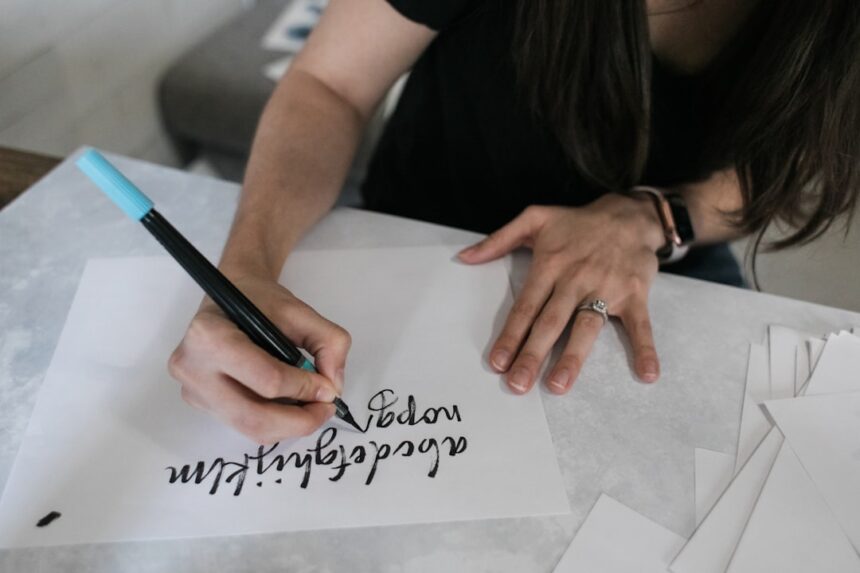
You sit before a blank page, or a blinking cursor, a vast, daunting expanse. The pressure to craft a perfect opening, a hook that snags your reader like a fisherman’s lure, is immense. This perceived necessity for immediate brilliance often becomes a concrete wall, impeding your progress before it even begins. You might stare at the screen for hours, words forming and dissolving in your mind, none quite meeting your internal standard of “good enough.” This paralysis, common among writers across all genres and experience levels, is a significant barrier to creative output.
You have likely internalized a particular expectation for your opening sentences. Perhaps you recall the literary masterpieces you’ve admired, their iconic first lines etched into your memory. _“It was the best of times, it was the worst of times.”_ _“Call me Ishmael.”_ These examples, and countless others, set a high bar, one that can feel insurmountable when you are merely trying to get your own narrative off the ground.
The Illusion of Instantaneous Genius
It is crucial to understand that many, if not most, of these celebrated first lines were not born perfectly formed. They are the result of meticulous revision, polishing, and refinement. Think of it as a sculptor’s process: the initial block of marble is rough, unyielding. The masterpiece emerges only after chipping away the unnecessary, shaping the form, and finally, burnishing the surface to a high sheen. Your first line is rarely the final, dazzling jewel; it is often the unpolished stone.
The Tyranny of Self-Censorship
When you strive for perfection from the outset, you engage in a powerful act of self-censorship. Your inner critic, that voice that whispers doubts and inadequacy, becomes your editor before you have even produced anything for it to edit. This internal censor can stifle your creativity, leading to procrastination and, ultimately, an empty page. You become trapped in a rhetorical cul-de-sac, unable to move forward because every potential opening feels flawed.
The Psychological Cost of Perfectionism
The psychological toll of this pursuit for immediate perfection is substantial. It can lead to frustration, burnout, and a diminished sense of self-efficacy. You begin to doubt your capabilities as a writer, believing that if you can’t even start, you can’t possibly finish. This negative feedback loop reinforces the very paralysis you are trying to overcome.
The “ugly first line” writing technique is an intriguing approach that challenges conventional storytelling by starting with a jarring or unconventional sentence to grab the reader’s attention. For those interested in exploring this technique further, you can read a related article that delves into its effectiveness and provides examples of how it can be applied in various writing contexts. Check out the article here: Related Article on Ugly First Line Writing Technique.
Embracing the “Ugly” First Line
The antidote to this creative paralysis is counterintuitive: consciously allow yourself to write an “ugly” first line. This isn’t about deliberately crafting bad prose; it’s about liberating yourself from the pressure of perfection.
Defining “Ugly”
An “ugly” first line is not necessarily grammatically incorrect or nonsensical. It is simply a line that serves its purpose: to get you started. It might be:
- Banal: “The man walked into the room.”
- Overly descriptive: “The tall, gaunt man with a crooked nose and eyes like chipped jade walked into the dimly lit, oak-paneled room, where a single, flickering candle cast long, dancing shadows.”
- Underwhelming: “Something happened.”
- A placeholder: “\[Protagonist’s name] did something important here.”
The key characteristic of an ugly first line is its lack of preciousness. You are free to discard it, rewrite it, or transform it entirely, because you never envisioned it as the final product.
The Power of Lowered Expectations
By consciously lowering your expectations for the initial sentence, you disarm your inner critic. You are no longer trying to prove your brilliance; you are merely trying to create a starting point. This shift in mindset is akin to loosening a tightly wound spring; it allows for a release of creative energy that was previously held captive by unrealistic demands.
Building Momentum from the Mundane
Think of writing as building a brick wall. You don’t start with an ornate keystone; you start with a single, simple brick. An ugly first line is that foundational brick. It provides a tangible starting point, a physical manifestation of your intention to write. Once that first brick is laid, you can add another, and another, until the wall begins to take shape. The momentum generated by simply beginning, regardless of the quality of that beginning, is invaluable.
Practical Strategies for Generating Ugly First Lines

You might find it challenging to deliberately write something “ugly” if your default is to strive for quality. Here are some strategies to help you overcome this mental hurdle and embrace the freedom of imperfection.
The “Brain Dump” Method
For your very first sentence, allow yourself a complete brain dump. Write down whatever comes to mind, no matter how unrefined or tangential.
- Example: If you’re writing a fantasy novel about a dragon, your brain dump might be: “Dragon fire is hot. Dragons are big. This dragon is grumpy. He lives in a cave. He has a treasure.”
- Application: From this initial mess, you can pick a starting point. For instance: “The dragon was grumpy.” It’s not stunning, but it’s a launchpad.
The “Tell, Don’t Show” Principle (Initially)
While you’ve likely been taught the maxim “show, don’t tell,” for ugly first lines, temporarily disregard it. Simply state facts or descriptions simply.
- Example: Instead of trying to craft a vivid scene depicting a character’s sadness, write: “She was sad.”
- Application: This directness bypasses the need for immediate poetic flair and gets the core idea down. You can layer in the evocative details later.
The Placeholder Approach
Sometimes, you don’t even have a clear idea for the first line. In these cases, use a placeholder.
- Examples: “\[Insert brilliant opening here.]” or “\[Character name] did something.” or “This story begins with a bang, but I haven’t written the bang yet.”
- Application: These placeholders serve as markers, indicating where your true beginning will eventually reside. They remove the pressure to conjure the perfect line on demand.
Start in the Middle of Action (Any Action)
Don’t feel obliged to set the scene or introduce characters perfectly. Just drop your reader (and yourself) into an arbitrary moment or action.
- Example: Instead of “Sarah woke up feeling groggy, the morning sun streaming through her window,” try “Sarah spilled her coffee on the cat.”
- Application: This immediately creates a point of engagement, even if it’s not the ultimate opening you envision. It forces you to write what happens next.
Embrace the Cliché
Cliches are often reviled in writing, but for an ugly first line, they can be remarkably effective. They are readily available and require little mental effort to conjure.
- Example: “It was a dark and stormy night.”
- Application: While you will almost certainly replace this later, it serves its purpose: to get words on the page.
The Transformative Power of Revision
The “ugly” first line is not a permanent fixture. It is a Chrysalis, a temporary shell from which something beautiful can emerge. The true magic happens in revision.
From Seed to Sapling
Consider your ugly first line as a seed. It may not look like much, but it contains the potential for growth. Once you have several sentences, paragraphs, and even chapters, you will have a clearer understanding of your story’s tone, themes, and characters. This holistic view will inform how your beginning should truly feel.
The Backwards Engineering Approach
Often, the best way to write your opening is to write it last. After you’ve completed a significant portion of your draft, or even the entire draft, you’ll possess a deep understanding of your narrative. You’ll know:
- The central conflict: What is the core problem your characters face?
- The tone: Is it humorous, serious, suspenseful, melancholy?
- The main characters: Who are they, and what drives them?
- The overall message or theme: What are you trying to convey?
With this knowledge, you can then craft an opening that resonates perfectly with the story that follows. You are no longer guessing; you are building from a foundation of certainty. This is why many professional writers often find their “perfect” first line during the editing process.
The Scaffolding Metaphor
Think of an ugly first line as scaffolding around a building under construction. The scaffolding isn’t part of the final structure; it’s a temporary support system that allows the true building to be erected. Once the building is complete and sturdy, the scaffolding is removed, revealing the finished product. Your ugly first line serves the same purpose: it supports your initial writing efforts until the core of your story can stand on its own.
The “ugly first line” writing technique can be a powerful tool for capturing readers’ attention right from the start. For those interested in exploring this concept further, you might find the insights in the article on Productive Patty particularly enlightening. By embracing unconventional openings, writers can create a sense of intrigue that encourages readers to continue engaging with the text. This approach not only challenges traditional writing norms but also invites creativity and authenticity into the writing process.
Moving Beyond the First Line: Maintaining Momentum
| Metric | Description | Typical Value/Range | Impact on Writing Process |
|---|---|---|---|
| Time Spent on First Line | Average time writers spend crafting the first line | 5-15 minutes | Reduced by using ugly first line technique, allowing faster drafting |
| Revision Frequency | Number of times the first line is revised before moving on | 3-7 times | Decreased as ugly first line encourages moving forward without perfection |
| Writer’s Confidence Level | Self-reported confidence in starting a story | Low to Medium initially | Improves as ugly first line reduces pressure to be perfect |
| Draft Completion Rate | Percentage of writers completing first draft after initial line | Increases by 20-30% | Higher completion rates due to reduced initial hesitation |
| Creativity Flow | Subjective measure of creative momentum after first line | Improved in 70% of cases | Ugly first line helps overcome writer’s block and boosts flow |
The challenge doesn’t end with the first line. The next line, the next paragraph, and the subsequent chapters all present their own hurdles. The philosophy of embracing imperfection, however, can be applied throughout your writing process.
Permission to Write a “Ugly” First Draft
Extend the principle of the ugly first line to your entire first draft. Give yourself permission for it to be messy, incoherent, and full of flaws. This “zero draft” or “discovery draft” is not meant for public consumption; it is for your eyes only, a space for exploration and experimentation.
The Generative Power of Imperfection
When you release the pressure to be perfect, you unlock a powerful generative capacity. Ideas flow more freely, connections are made more readily, and your overall output increases. This is because your cognitive resources are directed towards creation rather than self-monitoring and criticism.
Developing Your Internal Editor (Later)
You might worry that embracing ugly first lines will lead to consistently bad writing. This is not the case. Your internal editor, the critical voice that seeks quality and refinement, has its place. Its place, however, is not at the very beginning of the creative process. It belongs in the later stages, during revision and editing.
- The Bouncer Metaphor: Imagine your inner critic as a bouncer at a club. For the initial writing phase, you tell the bouncer to take a break. Let everyone in, no matter how wild or unpolished. Once the party is in full swing and you’ve generated enough content, you call the bouncer back to curate, refine, and ensure that only the best bits remain.
You, the writer, are the architect of your narrative. You hold the power to shape worlds, craft characters, and evoke emotions. Do not let the illusion of the perfect first line paralyze that power. Embrace the ugly, the unrefined, the imperfect. For it is from this raw, unpolished beginning that your most brilliant writing will truly emerge. Your blank page is not a void to be filled with immediate brilliance, but a fertile ground where even the simplest seed can grow into a magnificent story, provided you have the courage to plant it.
▶️ WARNING: Why Your Brain Treats “Future You” Like A Stranger
FAQs
What is the “ugly first line” writing technique?
The “ugly first line” writing technique involves starting a story or article with a deliberately awkward, unpolished, or unconventional opening sentence. This approach aims to grab the reader’s attention by breaking traditional expectations and creating curiosity.
Why do writers use the ugly first line technique?
Writers use this technique to stand out and engage readers immediately. An unusual or “ugly” first line can provoke interest, set a unique tone, or introduce a character or situation in a memorable way, encouraging readers to continue.
Does the ugly first line technique mean the writing is bad?
No, the term “ugly” refers to the intentional roughness or unconventional style of the opening line, not poor writing quality. The technique is a creative choice designed to evoke a specific effect rather than indicate a lack of skill.
Can the ugly first line technique be used in all genres?
Yes, the ugly first line technique can be applied across various genres, including fiction, non-fiction, and creative writing. However, its effectiveness depends on the context and the writer’s ability to maintain reader interest beyond the initial line.
How can writers effectively implement the ugly first line technique?
Writers can implement this technique by crafting an opening sentence that is surprising, awkward, or strikingly honest, while ensuring it aligns with the story’s tone and purpose. It’s important to follow up with engaging content to keep readers invested.