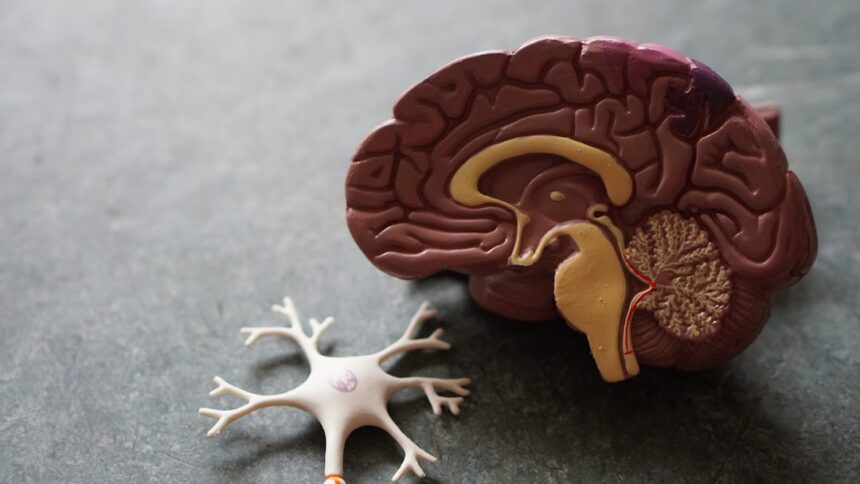
You’ve set a goal. Perhaps it was to learn a new language, finally organize that chaotic closet, or embark on a fitness journey. You felt the initial surge of motivation, the clear vision of success. Yet, here you are, weeks or months later, staring at the same unmet aspiration. The vibrant picture in your mind has faded, replaced by the dull ache of what could have been. Why does this happen? Your brain, a marvel of biological engineering, is a key player in this drama of aspiration and abandonment. Understanding the science behind your goal failures can turn the tide.
That initial spark of motivation, the one that had you creating intricate plans and buying all the necessary equipment, is a powerful, albeit transient, force. It’s often fueled by the anticipation of reward, the dopamine hit you imagine receiving upon completion. Your brain, specifically the mesolimbic pathway, lights up, associating the goal with pleasure.
The Dopamine Dance: A Short-Lived Symphony
When you vividly imagine achieving your goal – the feeling of accomplishment, the admiration of others, the tangible results – your brain releases dopamine. This neurotransmitter is a crucial part of your reward system, driving you towards actions that promise pleasure or relief from discomfort. Think of dopamine as the initial cheerleader, enthusiastically shouting your name and painting a picture of a triumphant finish line. This surge is potent, making the goal seem not only achievable but also incredibly desirable. However, the brain’s reward system is sophisticated. It’s designed to maintain equilibrium, and prolonged, intense dopamine release from anticipation can lead to a phenomenon known as hedonic adaptation or, more colloquially, habituation.
- Anticipation vs. Realization: The pleasure you derive from anticipating a reward is often far greater than the pleasure you experience from the reward itself once it’s attained. This is why the thrill of buying a new gadget fades after a few days, or why the excitement of starting a new diet wanes once the initial novelty wears off. Your brain becomes accustomed to the stimulus, and the dopamine signal diminishes. Your goal’s initial allure is a bright, fast-burning flame.
- The Novelty Effect: New goals represent novelty. Your brain is wired to pay attention to new and potentially rewarding stimuli. This novelty provides a powerful, albeit temporary, boost. Once the task becomes routine, or the challenges become more apparent, the novelty wears off, and the dopamine rush subsides. The initial excitement is like the captivating trailer for a movie; the full film, while still potentially good, may not produce the same level of immediate exhilaration.
The Role of Extrinsic vs. Intrinsic Motivation
Your motivation can stem from two primary sources: extrinsic and intrinsic. Understanding the difference is crucial for sustained effort.
- Extrinsic Motivation: This comes from external rewards or pressures. For example, you might start learning a language for a promotion at work (extrinsic) or to impress someone (extrinsic). While effective in getting you started, extrinsic motivators are often less sustainable. When the external pressure is removed, or the reward is no longer a significant factor, the motivation tends to vanish. Imagine building a house of cards based on external validation; once the validation dries up, the structure is likely to collapse.
- Intrinsic Motivation: This arises from internal rewards – the inherent satisfaction, enjoyment, or sense of purpose you derive from the activity itself. Learning a new language because you genuinely love the culture and enjoy the process of acquiring new words and grammar is intrinsically motivated. This type of motivation is far more resilient. It’s the fuel that keeps you going when the external cheerleaders have gone home.
Understanding why our brains are wired to fail at goals can be further explored in the insightful article available at Productive Patty. This resource delves into the psychological and neurological factors that contribute to our struggles with goal achievement, offering practical strategies to overcome these challenges. By examining the science behind motivation and habit formation, readers can gain valuable insights into how to better align their goals with their brain’s natural tendencies, ultimately enhancing their chances of success.
The Battle for Attention: Your Brain’s Selective Focus
In today’s world, your attention is a precious commodity. Your brain is constantly bombarded with stimuli, and it has developed sophisticated mechanisms to filter what it deems important. This selective attention can often work against your long-term goals.
The Prefrontal Cortex: The Executive Controller
Your prefrontal cortex, located at the very front of your brain, is the seat of higher-level cognitive functions. It’s responsible for planning, decision-making, impulse control, and working memory – essentially, your brain’s executive director. This region is crucial for goal pursuit because it allows you to override immediate impulses in favor of long-term objectives. However, the prefrontal cortex is also metabolically expensive to run and can be easily overloaded.
- Executive Dysfunction: When your prefrontal cortex is fatigued or overwhelmed, your self-control diminishes. You become more susceptible to distractions and less able to resist immediate gratification. Think of it as your executive director needing a coffee break; during that break, the office can descend into chaos. Stress, lack of sleep, and mental fatigue all impair prefrontal cortex function.
- The Stroop Effect as an Analogy: Consider the Stroop effect, where you’re asked to name the color of a word that is itself a color (e.g., the word “red” printed in blue ink). Your brain is almost forced to process both pieces of information, creating a mental conflict. Similarly, your goal often competes with immediate, attention-grabbing stimuli, and your brain has to work harder to prioritize your goal.
Distraction: The Siren Song of Novelty
The digital age has ushered in an era of unprecedented distraction. Social media notifications, email alerts, and the endless scroll of information are designed to capture your attention. Your brain, particularly its ancient reward pathways, is easily drawn to novelty and immediate stimulation.
- The Attention Economy: Many online platforms are built on the “attention economy.” They thrive by keeping you engaged for as long as possible, employing algorithms that learn what captures your interest and serving up more of it. This constant stream of novel, often emotionally charged, content can hijack your focus, pulling you away from the more deliberate and less immediately gratifying tasks associated with your goals. Your smartphone is like a slot machine, designed to offer intermittent rewards that keep you pulling the lever.
- The Cost of Context Switching: Every time you switch your attention from your goal to a distraction, your brain incurs a cost. It takes time and mental energy to disengage from one task and re-engage with another. Frequent context switching leads to reduced productivity, increased errors, and a feeling of being constantly busy but not actually accomplishing anything. It’s like trying to build a complex Lego structure while someone keeps handing you random, unrelated bricks.
The Habitual Brain: The Power of Routine and Resistance to Change

Your brain is a master of efficiency, and it achieves this through the formation of habits. Habits are automated behavioral patterns that require minimal conscious effort. While beneficial for routine tasks, this ingrained tendency can also be a significant obstacle to achieving new goals that require breaking old patterns.
The Basal Ganglia: The Habit Engine
The basal ganglia, a group of structures deep within your brain, play a pivotal role in habit formation. Once a behavior becomes habitual, it’s largely controlled by these circuits, bypassing much of the conscious deliberation of the prefrontal cortex. This makes habits incredibly difficult to break.
- The “Set It and Forget It” Mechanism: Habits are your brain’s way of conserving energy. When you perform a task repeatedly, the connections between neurons involved in that task are strengthened. This creates a neural pathway that becomes automatic. Think of it as carving a well-worn path through a forest; it’s much easier to walk the established path than to forge a new one.
- Cue-Routine-Reward Loop: Habits operate on a loop: a cue triggers a routine, which leads to a reward. For example, the cue might be feeling stressed, the routine might be reaching for a cigarette, and the reward is a temporary reduction in stress. To change a habit, you need to disrupt or modify this loop, which is a significant undertaking for your brain.
The Inertia of Existing Routines
Your life is a tapestry woven from countless routines. These established patterns of behavior create a sense of order and predictability. Introducing a new goal that requires deviating significantly from these routines can feel like trying to reroute a mighty river.
- Resistance to Disruption: Your brain prefers stability. When a new goal demands a fundamental shift in your daily schedule, your social interactions, or your consumption patterns, it can trigger an internal resistance. This resistance isn’t necessarily a conscious choice; it’s an automatic response to the perceived disruption of your established equilibrium. Imagine trying to change the course of a well-established bureaucracy; it’s not impossible, but it certainly requires significant effort and persistence.
- The Comfort Zone: Existing routines often reside within your comfort zone. Stepping outside this zone to pursue a new goal can evoke feelings of anxiety and uncertainty. Your brain, wired to seek safety and minimize risk, may interpret these feelings as signals to retreat back to the familiar. The comfort zone is a warm, cozy blanket, but it can also be a barrier to growth.
The Brain’s Aversion to Discomfort: Seeking Predictability and Avoiding Pain

Your brain is inherently designed to seek pleasure and avoid pain. This fundamental drive can lead you to shy away from the very discomfort that often accompanies the pursuit of significant goals.
The Amygdala: The Fear and Threat Detector
The amygdala, a small almond-shaped structure in your brain, is your internal alarm system. It’s responsible for processing emotions, particularly fear and threat. When you encounter something that your amygdala perceives as potentially harmful, it triggers a cascade of physiological responses designed to get you out of danger.
- Perceived Threats: Pursuing a new goal often involves stepping into the unknown. This can trigger your amygdala’s threat response, leading to feelings of anxiety, self-doubt, and a general reluctance to proceed. The fear of failure, of judgment, or of the unknown can be powerful inhibitors. Your amygdala is like a vigilant guard dog, constantly scanning for potential dangers.
- The Fight-or-Flight Response: Faced with a perceived threat, your amygdala can activate the “fight-or-flight” response. This prepares your body to either confront the danger or escape from it. While useful for genuine threats, this response can be triggered by the psychological discomfort of pursuing a challenging goal, leading you to abandon the pursuit rather than face the perceived risk.
The Hedonic Treadmill: The Pursuit of More
Even when you achieve a goal, your brain’s pursuit of pleasure and avoidance of discomfort doesn’t simply switch off. This can lead to the phenomenon known as the hedonic treadmill, where you constantly adapt to new levels of happiness and require increasingly greater stimuli to feel the same level of satisfaction.
- The Adaptation of Happiness: Imagine getting a raise at work. Initially, you feel a significant boost in happiness. However, over time, you adapt to this new income level. Your desires and expectations rise, and you may find yourself seeking another raise just to feel that same initial level of satisfaction. Your brain is like a sophisticated thermostat, constantly recalibrating your comfort levels.
- The Goal-Adjustment Cycle: This constant adaptation means that once you achieve a goal, your brain quickly adjusts, and you begin to desire something new or “better.” This can create a perpetual cycle of wanting, where you’re always chasing the next high, potentially failing to fully appreciate the accomplishments you’ve already made. This is like trying to outrun your own shadow; you can keep moving, but true contentment might lie elsewhere.
Understanding why your brain is wired to fail at goals can be quite enlightening, and it often relates to the psychological barriers we face. For a deeper exploration of this topic, you might find it helpful to read an insightful article that discusses the cognitive patterns that lead to self-sabotage. This article delves into the science behind our decision-making processes and how they can hinder our progress. To learn more about these fascinating concepts, check out this related article that offers valuable strategies for overcoming these mental obstacles.
The Nuances of Planning: When Clarity Becomes Rigidity
| Reason | Description | Impact on Goal Achievement | Example |
|---|---|---|---|
| Instant Gratification Bias | The brain prefers immediate rewards over long-term benefits. | Leads to procrastination and abandoning long-term goals. | Choosing to watch TV instead of working on a project. |
| Overestimating Willpower | Belief that motivation alone can sustain effort indefinitely. | Results in burnout and giving up when motivation wanes. | Starting a strict diet without planning for challenges. |
| Negativity Bias | The brain focuses more on failures than successes. | Discourages persistence after setbacks. | Dwelling on a missed workout and skipping the next one. |
| Lack of Clear Feedback | Goals without measurable progress are hard to track. | Decreases motivation due to unclear progress. | Setting vague goals like “get fit” without milestones. |
| Default to Familiar Habits | The brain prefers routine and resists change. | Difficulty in adopting new behaviors required for goals. | Returning to old eating habits after a diet. |
Effective planning is essential for goal achievement, but your brain’s inherent tendencies can also make rigid adherence to plans a stumbling block.
The Problem of Over-Planning: When Detail Becomes Paralysis
While detailed plans can be helpful, an excessive focus on minute details can be counterproductive. Your brain can become so engrossed in the planning phase that it struggles to move into the execution phase, a form of procrastination.
- Analysis Paralysis: You might get stuck in a loop of constantly refining your plan, rereading instructions, and second-guessing your strategy. This “analysis paralysis” prevents you from taking action, as the perceived need for perfect preparation becomes insurmountable. Imagine someone meticulously drawing blueprints for a house but never actually laying the first brick.
- The Illusion of Control: Over-planning can also create an illusion of control. You feel like you’re making progress by planning, even if you’re not actually doing anything to achieve the goal. This can be a coping mechanism to avoid the actual work and potential failures.
The Importance of Flexibility: Adapting to the Unexpected
Life is rarely a straight line. Unexpected obstacles, changing circumstances, and new information are inevitable. Your brain’s ability to adapt and remain flexible is crucial for navigating these challenges.
- The Dynamic Nature of Reality: Your initial plan is based on your current understanding of the situation. As you move forward, you gain new insights and encounter unforeseen variables. Sticking rigidly to an outdated plan can lead you down a path that is no longer optimal, or even feasible. Think of a ship captain who refuses to change course because their original navigation chart is still on the table, even though a storm has appeared.
- Learning from Setbacks: Flexibility allows you to view setbacks not as failures, but as opportunities for learning and adjustment. By being open to modifying your approach, you can overcome obstacles and ultimately move closer to your goal. This adaptive mindset is like a skilled martial artist, able to redirect an opponent’s force rather than simply resisting it.
Understanding these wired tendencies of your brain is not about excusing inaction or predicting inevitable failure. Instead, it’s about developing a scientific literacy of your own internal landscape. By recognizing the dopamine dance, the siren song of distraction, the power of habits, the aversion to discomfort, and the need for flexibility, you can begin to build strategies that work with your brain, rather than against it. This knowledge empowers you to become a more effective architect of your own aspirations.
FAQs
Why does the brain struggle with achieving long-term goals?
The brain is wired to prioritize immediate rewards over long-term benefits due to the way the dopamine system functions. This makes it challenging to stay motivated for goals that require sustained effort without instant gratification.
How does procrastination relate to brain wiring and goal failure?
Procrastination is linked to the brain’s tendency to avoid discomfort and seek pleasure. The prefrontal cortex, responsible for planning and self-control, can be overridden by the limbic system, which drives impulsive behavior, leading to delays in goal-directed actions.
What role does willpower play in the brain’s ability to achieve goals?
Willpower is a limited cognitive resource managed by the prefrontal cortex. When depleted, it becomes harder to resist temptations and maintain focus on goals, which can result in failure to follow through on intentions.
Can setting specific goals help overcome the brain’s wiring to fail?
Yes, setting clear, specific, and achievable goals can help by providing concrete targets that engage the brain’s reward system more effectively, increasing motivation and the likelihood of success.
How does the brain’s reward system impact goal-setting and achievement?
The brain’s reward system releases dopamine in response to perceived rewards, reinforcing behaviors. When goals are too distant or abstract, the reward system is less activated, making it harder to stay motivated and increasing the chance of goal failure.