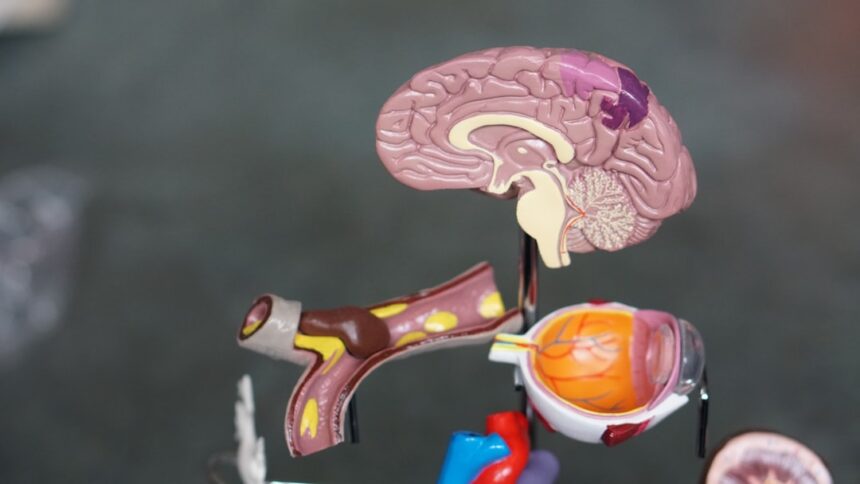
You stand at a precipice, staring into an abyss that is both within and without you. This chasm represents the limits imposed by your own neural architecture, specifically the powerful and ancient amygdala. It’s not a flaw, but a survival mechanism, a vigilant sentinel that, in the modern world, often overreacts, trapping you in a cycle of fear, anxiety, and stagnation. You will learn how to transcend this biological predisposition, specifically the notorious “60% amygdala trap,” and reclaim your autonomy.
Your amygdala is a pair of almond-shaped nuclei located deep within the temporal lobes of your brain. It plays a primary role in the processing and memory of emotional reactions, particularly fear. Think of it as your brain’s smoke detector. Its function is to rapidly detect potential threats and initiate a fight-or-flight response, ensuring your survival in dangerous situations. This system is ancient, predating elaborate cortical structures, and functions with remarkable speed, often before conscious thought.
The Evolutionary Advantage
For your ancestors traversing savannas filled with predators, a hair-trigger amygdala was an invaluable asset. It ensured that you reacted instantly to a rustle in the bushes, prioritizing survival over thoughtful analysis. The cost of a false positive – mistaking wind for a leopard – was low, a momentary surge of adrenaline. The cost of a false negative – failing to detect a real leopard – was fatal. This evolutionary pressure optimized your amygdala for rapid, decisive, and often overprotective responses.
The Modern Dilemma: Misinterpreting Threats
In the contemporary environment, the threats you face are rarely life-or-death situations. However, your amygdala, still operating on ancient algorithms, continues to perceive social rejection, financial insecurity, public speaking, or a challenging work project with similar urgency. It floods your system with cortisol and adrenaline, prompting avoidance, procrastination, or aggressive defensiveness, even when these responses are counterproductive. You are, in essence, reacting to phantom predators.
If you’re looking to break free from the 60 percent amygdala trap, you might find valuable insights in the article available at Productive Patty. This resource offers practical strategies to manage emotional responses and enhance decision-making, helping you regain control over your reactions and improve your overall productivity. By understanding the mechanisms behind the amygdala’s influence, you can learn to navigate challenges more effectively and foster a more balanced approach to your daily tasks.
The 60% Amygdala Trap: A Threshold of Inertia
The “60% amygdala trap” refers to a perceived threshold where the perceived risk or discomfort associated with a new action, challenge, or change triggers an amygdalar response strong enough to induce significant inertia. It’s not a precise neurological measure, but a conceptual one. Imagine a dial representing your perceived threat level. As it approaches 60% – indicating a moderate to high level of discomfort or uncertainty – your amygdala begins to overwhelm your prefrontal cortex, the seat of rational thought and planning.
The Mechanism of Inertia
When you encounter a situation that triggers this 60% threshold, your amygdala acts like a powerful brake. It generates feelings of anxiety, doubt, and apprehension. Your internal narrative may shift to negative self-talk, conjuring worst-case scenarios. Physiologically, your heart rate might increase, your palms may sweat, and your muscles might tense. These are all ancient survival signals, designed to make you freeze, flee, or fight. In the context of pursuing a new career, starting a difficult conversation, or learning a new skill, these reactions translate into procrastination, avoidance, or self-sabotage. You become paralyzed, held captive by a system designed to protect you, but now inadvertently hindering your growth.
Common Manifestations of the Trap
- Procrastination: You know you need to complete a task, but the perceived difficulty or potential negative outcome triggers avoidance. You find yourself engaging in less demanding activities instead.
- Fear of Failure/Success: You hesitate to pursue opportunities, either due to the fear of not meeting expectations or the fear of the increased responsibility that success might bring.
- Social Anxiety: You avoid social interactions or opportunities for connection due to the perceived risk of judgment or rejection.
- Resistance to Change: You cling to familiar routines and situations, even if they are suboptimal, because the unknown feels perilous.
Strategies for Deactivating the Amygdala’s Overdrive

You are not powerless against your own biology. While you cannot simply switch off your amygdala, you can learn to modulate its response and prevent it from hijacking your decisions. This involves engaging your prefrontal cortex, the logical, problem-solving part of your brain, to override the amygdala’s primitive alarms.
1. Conscious Recognition and Labeling
The first step in disarming the amygdala is to become aware of its activation. You must learn to recognize the physical and emotional symptoms of fear and anxiety as they arise. Instead of being swept away by these feelings, you can actively label them.
- Mindfulness Meditation: Practice observing your thoughts and feelings without judgment. When you feel anxiety rising, simply acknowledge it: “I am feeling anxious right now. My amygdala might be active.” This simple act of observation creates a cognitive distance, preventing immediate reactive engagement.
- Body Scan: Regularly check in with your physical sensations. Are your shoulders tight? Is your stomach churning? These are often the first indicators of an amygdala response. Identifying these signals allows you to intervene before the feeling becomes overwhelming.
2. Rational Reappraisal and Cognitive Reframing
Once you recognize the amygdala’s activation, engage your prefrontal cortex to rationally evaluate the perceived threat. Is it truly a life-or-death situation, or is your brain overreacting?
- The Socratic Method: Ask yourself probing questions: “What is the worst-case scenario, and how likely is it?” “What evidence do I have that this threat is real?” “What resources do I have to cope if the worst happens?” Often, you’ll find the perceived threat is exaggerated or manageable.
- Perspective Shifting: Imagine you are giving advice to a friend in the same situation. What would you tell them? This external perspective can often reveal the irrationality of your own fears.
- Reframing Failure: Instead of viewing potential setbacks as catastrophic failures, consider them learning opportunities or necessary steps on the path to mastery. This reframe reduces the emotional sting that fuels amygdala activation.
3. Gradual Exposure and Incremental Progress
Your amygdala learns through experience. By gradually exposing yourself to the source of your anxieties in controlled doses, you can retrain it to perceive these situations as less threatening. This is essentially desensitization.
- Small Steps: Break down intimidating tasks into their smallest, most manageable components. If public speaking causes anxiety, start by practicing in front of a mirror, then a trusted friend, then a small group, building up gradually. Each small success reinforces a sense of safety and competence.
- “Just 5 Minutes”: Commit to engaging with the anxiety-provoking task for a very short, specified period. Often, getting started is the hardest part. Once you’ve begun, the task may feel less daunting, and your amygdala’s alarm may subside.
- Controlled Discomfort: Seek out opportunities for controlled discomfort. Try a new food, strike up a conversation with a stranger, or take a different route to work. These small acts of stepping outside your comfort zone build resilience and signal to your amygdala that novelty isn’t always dangerous.
Cultivating Resilience and a Growth Mindset

Beyond specific techniques, your overall mindset plays a crucial role in preventing you from falling into the amygdala trap. Cultivating resilience and a growth mindset strengthens your prefrontal cortex’s ability to regulate intense emotions.
1. Embracing Imperfection and Learning
The pursuit of unattainable perfection is a prime fodder for amygdala activation. The fear of not being good enough, or making a mistake, can paralyze you.
- The “Good Enough” Principle: Understand that progress, not perfection, is the goal. Release the pressure to get everything right the first time. Mistakes are inevitable and valuable feedback.
- Iterative Process: View your endeavors as an iterative process, much like a sculptor refining their work. Each attempt, whether “successful” or not, provides information for the next iteration.
2. Building a Support System
You are a social creature, and your brain is wired for connection. A strong support system can provide psychological safety and validation, reducing the isolating effects of fear.
- Trusted Confidantes: Share your fears and anxieties with people you trust. Verbalizing your concerns can often diminish their power. Receiving empathy and practical advice can also offer new perspectives.
- Mentorship and Role Models: Look to individuals who have successfully navigated challenges similar to yours. Their experiences can provide inspiration and tangible strategies, signaling to your amygdala that these situations are surmountable.
3. Prioritizing Self-Care: Fueling the Prefrontal Cortex
Your brain, particularly the energy-intensive prefrontal cortex, operates optimally when adequately rested and nourished. Neglecting self-care leaves you more vulnerable to amygdala hijack.
- Adequate Sleep: Sleep deprivation impairs your emotional regulation and executive function, making you more susceptible to fear and anxiety. Prioritize consistent, quality sleep.
- Nutritious Diet: Your brain needs proper fuel. A diet rich in whole foods, healthy fats, and antioxidants supports cognitive health and mood stability. Avoid excessive caffeine and sugar, which can exacerbate anxiety.
- Regular Physical Activity: Exercise is a potent stress reliever and mood enhancer. It reduces cortisol levels and promotes neurogenesis, strengthening your brain’s resilience against emotional overload.
To effectively break free from the 60 percent amygdala trap, understanding the underlying mechanisms of emotional responses is crucial. A related article that delves deeper into this topic can provide valuable insights and strategies for overcoming these challenges. By exploring techniques to manage fear and anxiety, you can enhance your decision-making skills and improve your overall well-being. For more information, you can check out this helpful resource here.
The Long Game: Rewiring Your Brain
| Metric | Description | Recommended Action | Expected Outcome |
|---|---|---|---|
| Emotional Reactivity Reduction | Percentage decrease in impulsive emotional responses triggered by the amygdala | Practice mindfulness meditation daily for 15 minutes | Reduction of emotional reactivity by up to 40% |
| Prefrontal Cortex Activation | Increase in activity of the brain region responsible for rational thinking | Engage in cognitive behavioral therapy (CBT) sessions weekly | Improved decision-making and emotional regulation by 30% |
| Stress Hormone Levels | Measurement of cortisol levels in saliva or blood | Incorporate regular physical exercise (30 minutes, 5 times a week) | Lower cortisol levels by 25%, reducing amygdala overactivation |
| Sleep Quality | Hours of restful sleep per night | Establish a consistent sleep schedule and reduce screen time before bed | Increase restful sleep by 1-2 hours, aiding emotional balance |
| Exposure to Triggers | Frequency of exposure to stress-inducing stimuli | Limit exposure to negative news and social media to 30 minutes daily | Decrease in amygdala-triggered stress responses by 20% |
Breaking free from the 60% amygdala trap is not a one-time event, but an ongoing process of neuroplasticity. Your brain is constantly adapting and reorganizing itself based on your experiences. Each time you consciously choose to override an amygdala-driven response, you are, in essence, laying down new neural pathways. You are strengthening the prefrontal cortex’s capacity for regulation and weakening the amygdala’s automatic dominance. It’s like tending a garden: you actively cultivate the plants you want to grow (rational thought, courage) and prune the weeds that would choke them (irrational fear, avoidance).
You are not defined by your biological predispositions. While your amygdala serves a vital role, you possess the capacity for self-awareness and intentional action. By understanding its mechanisms and applying targeted strategies, you can prevent it from dictating your choices. You can transcend the inertia of fear and step into a realm of greater agency, intentional action, and profound personal growth. The path forward is not about eliminating fear entirely, but about recognizing its source, understanding its message, and ultimately, choosing to act despite its presence.
FAQs
What is the 60 percent amygdala trap?
The 60 percent amygdala trap refers to a psychological phenomenon where approximately 60 percent of a person’s emotional responses are dominated by the amygdala, a part of the brain involved in processing fear and stress. This can lead to heightened anxiety, impulsive reactions, and difficulty in rational decision-making.
How does the amygdala affect decision-making?
The amygdala plays a key role in emotional processing, especially fear and threat detection. When it is overactive, it can override the brain’s rational centers, such as the prefrontal cortex, causing individuals to react emotionally rather than logically. This can impair judgment and lead to stress-driven decisions.
What are common signs of being caught in the amygdala trap?
Common signs include frequent feelings of anxiety or fear without clear cause, impulsive reactions to stress, difficulty calming down after emotional events, and challenges in thinking clearly during high-pressure situations.
What strategies can help stop the 60 percent amygdala trap?
Effective strategies include mindfulness meditation, deep breathing exercises, cognitive-behavioral techniques to reframe negative thoughts, regular physical exercise, and developing emotional awareness to engage the prefrontal cortex and reduce amygdala dominance.
Can professional help assist in overcoming the amygdala trap?
Yes, mental health professionals such as therapists or counselors can provide guidance through therapies like cognitive-behavioral therapy (CBT) or exposure therapy. These approaches help individuals manage emotional responses, reduce amygdala overactivity, and improve coping mechanisms.