
You’re contemplating the burgeoning field of deep-sea mining, a frontier brimming with both promise and peril. As the United States eyes this vast, largely unexplored realm, you find yourself at a policy crossroads. The most significant hurdle, perhaps, is the absence of your nation’s ratification of the United Nations Convention on the Law of the Sea (UNCLOS). This fundamental disconnect profoundly shapes your approach to deep-sea mining, creating a labyrinth of challenges that demand careful navigation.
You stand at a peculiar juncture regarding deep-sea mining. While the international community, through the International Seabed Authority (ISA) established by UNCLOS, has been diligently crafting regulations for the exploitation of polymetallic nodules, sulfides, and cobalt-rich crusts in the international seabed, the United States is not an enshrined participant. This is a critical omission, impacting your ability to shape, influence, and even fully engage with the global framework governing this nascent industry.
Divergent Legal Frameworks: A Nation Apart
Your nation’s refusal to ratify UNCLOS creates a stark divergence in your legal standing concerning deep-sea resources. While other nations are bound by its provisions, including the principle of the “common heritage of mankind” for the seabed beyond national jurisdiction, you operate under a different set of assumptions and interpretations. This means your domestic legislation and policy decisions regarding deep-sea mining, particularly beyond your Exclusive Economic Zone (EEZ), must contend with this fundamental legal divide.
Navigating the “Twilight Zone”: Unclaimed Territories or Legal Gaps?
Consider the area just beyond your EEZ. For UNCLOS-ratifying states, this “Area” is governed by the ISA. However, for you, the legal status of these regions can feel like uncharted territory, or at least a landscape with significant legal ambiguity. Without being a party to UNCLOS, your claims and interests in these areas lack the explicit international legitimacy and protection afforded to signatories. This can lead to uncertainty about what rights and responsibilities you possess, and how effectively you can assert them against other international actors.
The ISA’s Preeminence and Your Limited Voice
The ISA bears the primary responsibility for organizing, regulating, and controlling all mineral-related activities in the international seabed. As a non-party, your ability to directly influence the ISA’s deliberations, regulations, and decision-making processes is significantly curtailed. While you can engage as an observer, your input carries less weight than that of a full member state. This leaves you in a position of potentially reacting to, rather than proactively shaping, the global rules of deep-sea mining.
The “Common Heritage of Mankind” Dilemma
A cornerstone of UNCLOS is the principle that the deep seabed and its resources are the “common heritage of mankind.” This means that their exploitation should benefit all states, not just those with the technological or financial capacity to engage in mining. Your non-ratification, and therefore your detachment from this principle, raises questions about your commitment to equitable resource distribution and your alignment with the global vision for the deep sea. This can create diplomatic friction and complicate your engagement with nations that fully embrace this concept.
The ongoing discussions surrounding United States deep sea mining policy have sparked considerable interest, particularly in the context of environmental sustainability and resource management. An insightful article that delves into these issues can be found at Productive Patty, which explores the implications of U.S. policies on deep sea mining without the framework of the United Nations Convention on the Law of the Sea (UNCLOS). This article provides a comprehensive overview of the challenges and opportunities that arise from the U.S. approach to deep sea resource extraction, highlighting the need for a balanced strategy that considers both economic benefits and ecological preservation.
Domestic Policy Without the International Anchor: Crafting Rules in a Vacuum
The absence of UNCLOS ratification forces you to construct your domestic policy framework for deep-sea mining on a more isolated foundation. While you can certainly develop regulations for activities within your national waters (your EEZ), extending your reach and influence into international waters becomes considerably more complex without the established legal architecture UNCLOS provides.
The Challenge of Defining Jurisdiction
Your most immediate challenge is clearly defining the scope of your jurisdiction over deep-sea mining activities. Within your 200-nautical-mile EEZ, you possess sovereign rights for exploration and exploitation of natural resources. However, what about operations that extend beyond this, or that may have cascading environmental impacts on areas potentially considered the “Area”? Without UNCLOS, there’s a lack of a universally accepted framework for drawing these lines and addressing transboundary issues.
The “De Facto” vs. “De Jure” Authority
You might find yourself operating on a “de facto” basis in certain international seabed areas, particularly if your companies are the first to express interest or conduct preliminary explorations. However, this is a far less stable and secure position than one built on recognized international legal rights and obligations. Your actions might be viewed with suspicion or even challenged by states that are parties to UNCLOS, creating potential for disputes.
Environmental Protection: A Fragmented Approach
One of the most significant areas of concern within deep-sea mining is its potential environmental impact. UNCLOS, through the ISA, mandates stringent environmental impact assessments, monitoring, and mitigation measures. Without being a party, you are not directly bound by these specific ISA requirements. This presents a challenge in ensuring that your domestic policies, or the policies of your companies, align with the evolving global standards for environmental stewardship of the deep seabed.
The Risk of the Race to the Bottom
There is a tangible risk that in the absence of robust international oversight and shared commitments, a “race to the bottom” scenario could emerge. Companies operating under less stringent national regulations might be tempted to prioritize rapid extraction over comprehensive environmental protection. This could lead to irreparable damage to fragile deep-sea ecosystems, a loss that would be borne by the global community, including your nation.
Competing Interests: Navigating a Crowded Seabed Landscape
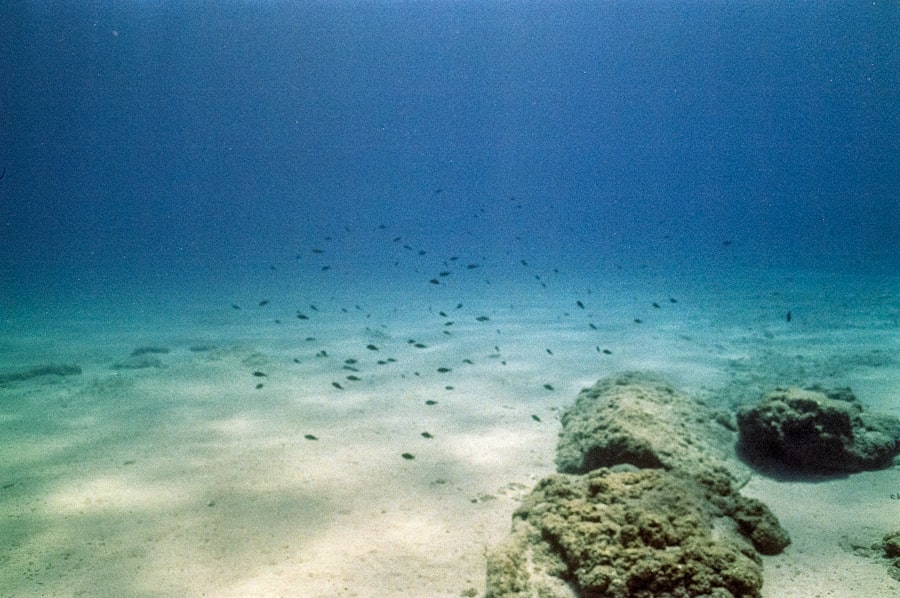
Your deep-sea mining ambitions will inevitably intersect with the interests of other nations and stakeholders. The lack of UNCLOS ratification can complicate the resolution of potential conflicts and create an environment where competing claims are more difficult to reconcile.
International Cooperation: A Conditional Alliance
While you may seek international cooperation on scientific research, environmental monitoring, or even shared technological development related to deep-sea mining, your non-party status to UNCLOS can make these partnerships more conditional. Other nations may be hesitant to fully integrate you into sensitive discussions or joint ventures if you are not formally committed to the established international legal framework.
The Pragmatic Ambassador vs. The Binding Delegate
You can send ambassadors to international forums, participate in discussions, and advocate for your national interests. However, without UNCLOS ratification, your delegates are essentially pragmatic observers, capable of speaking but not of casting a vote that binds your nation to the consensus. This difference in authority can diminish your leverage and influence in steering the global narrative and regulatory direction.
Resource Ownership and Benefit Sharing: Unanswered Questions
The concept of deep-sea resources as the “common heritage of mankind” is intrinsically linked to the idea of benefit sharing. As a non-party, you are outside the established mechanism designed to ensure that the wealth generated from these resources is distributed equitably. This raises questions about how your nation would approach this issue in the absence of UNCLOS, and whether your domestic policies would adequately address the ethical and economic implications of unilateral exploitation.
The Individual vs. The Collective Good
Your national interests in securing mineral resources are undeniably important. However, the deep seabed represents a global commons. Your detachment from UNCLOS can create the perception that you are prioritizing individual national gain over the collective good of humanity and the preservation of a shared global resource. This perception can lead to diplomatic isolation and hinder your ability to foster trust and collaboration with other maritime nations.
Technological Advancement and the Regulatory Lag: A Widening Chasm

The pace of technological innovation in deep-sea mining is rapid. You are at the forefront of developing many of these technologies, but the regulatory frameworks governing their application often lag behind. The absence of UNCLOS ratification exacerbates this issue, leaving you with a potential mismatch between your capabilities and the established international norms.
Innovation Outpacing Governance: The Unforeseen Consequences
Your nation’s cutting-edge technologies for exploration, extraction, and processing of deep-sea minerals are impressive. However, without a robust and universally recognized regulatory framework, the application of these technologies can occur in a vacuum. This means that potential unforeseen environmental consequences, safety risks, and ethical dilemmas may arise without adequate foresight or established protocols for mitigation.
The Ethics of Unfettered Exploration
When your technological prowess allows for deeper and more efficient extraction, there’s a temptation to push the boundaries of exploration and exploitation. Without the guiding principles and oversight mechanisms of UNCLOS, this push could be driven more by immediate economic incentives than by a comprehensive understanding of long-term ecological impacts.
The Precautionary Principle: A Matter of Interpretation
The precautionary principle, which advocates for taking preventive action in the face of potential harm even if scientific certainty is lacking, is a crucial element in environmental regulation. UNCLOS incorporates this principle in its approach to deep-sea mining. Without your formal adherence to UNCLOS, the application of the precautionary principle in your domestic policy and corporate practices regarding deep-sea mining might be less robust or interpreted differently, potentially leading to greater environmental risks.
The Burden of Proof: Who Guards the Unknown?
In the context of deep-sea mining, the burden of proof regarding environmental safety often falls on those seeking to exploit the resources. However, the deep sea is largely unknown, making it difficult to definitively prove that an activity will not cause harm. Your non-ratification of UNCLOS could lead to a scenario where the burden of proof is shifted, or where the scientific understanding needed to establish such proof is not adequately pursued prior to or during mining operations.
The United States has been exploring its deep sea mining policy in recent years, particularly in light of the growing demand for rare minerals essential for technology and renewable energy. An insightful article discusses the implications of this policy outside the framework of the United Nations Convention on the Law of the Sea (UNCLOS), highlighting the challenges and opportunities that arise from such an approach. For more details, you can read the full article here. This exploration is crucial as it shapes the future of marine resource management and environmental protection.
The Future of Your Deep-Sea Mining Policy: A Path Forward?
| Aspect | Details |
|---|---|
| Regulatory Framework | Lacks a comprehensive regulatory framework for deep sea mining activities. |
| Environmental Impact Assessment | There are no specific guidelines for conducting environmental impact assessments for deep sea mining projects. |
| Resource Management | There is no clear strategy for the management of deep sea mineral resources. |
| International Cooperation | Relies on bilateral agreements and informal cooperation with other countries for deep sea mining activities. |
As you look towards the future of deep-sea mining, the question of UNCLOS ratification remains a significant, albeit complex, consideration. While you possess considerable technological and economic power, your long-term success and responsible engagement with this frontier will likely be profoundly influenced by your approach to international law and cooperation.
The Strategic Decision: Ratification or Continued Autonomy?
You face a strategic decision: pursue ratification of UNCLOS to gain a stronger voice and a more stable legal footing in international deep-sea mining discussions, or continue to operate under your current framework, potentially facing greater diplomatic friction and regulatory uncertainty. Each path has its own set of advantages and disadvantages, and the choice has significant implications for your national interests and your role in the global governance of the oceans.
Weighing Sovereignty Against Influence
Ratifying UNCLOS would mean accepting certain international obligations and potentially compromising some degree of absolute national autonomy in certain domains. However, it would also grant you significant influence within the ISA and a stronger hand in shaping the future of deep-sea mining for the benefit of all. You must weigh the perceived loss of sovereignty against the enhanced global influence and the stability that international law provides.
Environmental Stewardship and International Responsibility
Ultimately, your approach to deep-sea mining policy, irrespective of UNCLOS ratification, will be scrutinized for its commitment to environmental stewardship and international responsibility. The deep sea is a shared resource, and its sustainable exploitation, or lack thereof, will have consequences far beyond your national borders. Your decisions today will shape the legacy of your nation’s engagement with this last frontier.
The Long-Term Vision: Exploitation or Preservation?
Your current policies and future intentions regarding deep-sea mining will undoubtedly reflect your long-term vision for this critical ecosystem. Will you prioritize rapid resource acquisition, potentially at the expense of long-term ecological health? Or will you adopt a more cautious and science-driven approach, guided by principles of precaution and the need for robust international cooperation? The path you choose, with or without UNCLOS, will define your contribution to the future of the deep sea.
FAQs
What is the current United States deep sea mining policy without UNCLOS?
The United States does not have a specific deep sea mining policy in place without being a party to the United Nations Convention on the Law of the Sea (UNCLOS). However, the U.S. has jurisdiction over its Exclusive Economic Zone (EEZ) and can issue permits for deep sea mining activities within this zone.
How does the United States regulate deep sea mining without UNCLOS?
The United States regulates deep sea mining activities through existing laws and regulations, such as the Outer Continental Shelf Lands Act and the Deep Seabed Hard Mineral Resources Act. These laws provide a framework for permitting and regulating deep sea mining activities within the U.S. EEZ.
What are the potential environmental impacts of deep sea mining in the United States without UNCLOS?
Potential environmental impacts of deep sea mining in the United States without UNCLOS include habitat destruction, disturbance of marine ecosystems, and the release of sediment plumes that can affect marine life. There are also concerns about the potential for chemical and metal pollution from mining activities.
What are the economic implications of deep sea mining in the United States without UNCLOS?
Deep sea mining in the United States without UNCLOS could have economic implications in terms of resource extraction, job creation, and revenue generation. However, there are also uncertainties regarding the long-term economic viability of deep sea mining and the potential costs of environmental mitigation and remediation.
What are the international implications of the United States’ deep sea mining policy without UNCLOS?
The United States’ deep sea mining policy without UNCLOS may have international implications in terms of its relationship with other countries and international organizations. It could also impact discussions and negotiations related to deep sea mining regulations and governance at the international level.