
Your eyes are in constant motion, even when you believe them to be still. This incessant, imperceptible tremor is largely due to micro-saccades, tiny, involuntary eye movements that occur several times per second. While seemingly insignificant, these micro-saccades play a crucial role in visual perception, preventing retinal adaptation and ensuring continuous input to the brain. However, an excess or erratic pattern of micro-saccades can disrupt focus, induce cognitive strain, and contribute to eye fatigue. Mastering calm focus, therefore, involves understanding and, to some extent, modulating these microscopic visual tremors. This article will explore the neurophysiological basis of micro-saccades, their impact on cognitive function, and practical strategies for reducing their erratic occurrences to enhance sustained attention and visual comfort.
The Neurophysiology of Micro-Saccades
To fully grasp the implications of micro-saccades on your focus, it is essential to understand their underlying neurophysiological mechanisms. These movements are not random noise but rather a finely tuned component of your oculomotor system.
Retinal Stabilization and Perceptual Flickering
When your gaze is fixed on a target, a phenomenon known as retinal adaptation can occur. If an image were to remain perfectly stationary on your retina, the photoreceptor cells would eventually cease to respond to the constant stimulation, and the image would literally fade from your perception, much like a scent becomes imperceptible after prolonged exposure. Micro-saccades prevent this by constantly shifting the image across different photoreceptors. Think of it as a subtle, continuous refreshing of the visual input, ensuring that the neural signals remain active. This “perceptual flickering” is vital for maintaining a vivid and detailed visual experience. Without micro-saccades, your visual world would become a series of disappearing acts.
Brainstem and Cortical Control
The generation of micro-saccades involves intricate neural circuits spanning the brainstem and the cerebral cortex. While largely involuntary, their frequency and amplitude can be indirectly influenced by your attentional state and cognitive load. The superior colliculus, a midbrain structure, plays a significant role in generating these movements, receiving input from various cortical areas involved in attention and visual processing. When you are deeply focused, the brain’s “neural spotlight” tends to narrow, and this narrowing can, in turn, subtly influence the characteristics of your micro-saccades. Conversely, a wandering mind or a state of high anxiety can lead to more frequent and less organized micro-saccades, reflecting a less stable attentional state.
Relationship to Larger Saccades
Micro-saccades can be considered the miniature cousins of larger saccades, which are rapid, ballistic eye movements that shift your gaze from one point to another – across a line of text, for example. While both are involuntary to some degree, micro-saccades serve the purpose of maintaining fixation, whereas larger saccades are for shifting fixation. However, research suggests a hierarchical relationship. The neural pathways that generate micro-saccades are partially shared with those responsible for larger saccades, indicating a continuous spectrum of oculomotor control. Understanding this interconnectedness helps you appreciate the complexity of your visual system and why disruptions in micro-saccades can have broader visual and cognitive consequences.
The Impact of Erratic Micro-Saccades on Focus
While essential for visual perception, an increased frequency or irregularity of micro-saccades can be detrimental to sustained attention and cognitive performance. Your eyes, like a jittery camera, struggle to keep a steady shot.
Cognitive Workload and Mental Fatigue
Every eye movement, no matter how small, requires neural processing. When micro-saccades become erratic or excessively frequent, it necessitates increased neural effort to stabilize the visual input and interpret it coherently. This elevated cognitive workload acts as a subtle but persistent drain on your mental resources. Imagine trying to read perfectly still text on a screen that is constantly vibrating minimally; the effort to parse each word would be significantly higher. Over time, this cumulative effort contributes to mental fatigue, making it harder to concentrate on complex tasks and reducing your overall cognitive endurance. You might find yourself re-reading sentences or losing your train of thought more easily.
Reading Efficiency and Comprehension
For tasks like reading, steady visual input is paramount. Erratic micro-saccades can disrupt the smooth flow of information from the page to your brain. This can manifest as difficulty tracking lines of text, an increased number of regressions (re-reading segments), and a general reduction in reading speed and comprehension. Your brain is expending valuable resources trying to stabilize the visual input rather than dedicating its full capacity to decoding meaning. Think of it as static on a radio; while you can still discern the music, the quality is diminished, and you have to work harder to hear the melody clearly. This subtle “visual static” can severely impact your ability to absorb and retain information from written material.
Role in Attentional Lapses and Distraction
Micro-saccades are not just a consequence of attentional state but can also influence it. When your mind wanders or you are internally distracted, your micro-saccades tend to become less precise and more frequent. This creates a feedback loop: the erratic eye movements signal to your brain a lack of stable fixation, which can further contribute to attentional lapses. In essence, your eyes are mirroring the state of your mind, and in turn, influencing it. By learning to calm your micro-saccades, you are effectively calming a portion of your internal visual noise, which can help to anchor your attention more firmly.
Factors Influencing Micro-Saccade Characteristics
Numerous factors, both internal and external, can influence the frequency and stability of your micro-saccades. Recognizing these influences is the first step towards gaining a degree of control over them.
Stress and Anxiety
High levels of stress and anxiety are well-documented contributors to increased physiological arousal, which extends to the oculomotor system. When you are anxious, your body enters a “fight or flight” state, characterized by heightened vigilance and increased physiological activity. This can manifest as more frequent and sometimes larger micro-saccades, as your eyes are constantly “scanning” for potential threats or changes in your environment, even if unconsciously. This agitated state of your visual system makes sustained calm focus incredibly challenging. Observing your micro-saccades could, in principle, serve as a physiological indicator of your stress levels.
Cognitive Load and Task Difficulty
The demands of a task profoundly impact micro-saccade patterns. When engaging in cognitively demanding tasks, such as solving complex problems or learning new information, your brain is actively working to process and integrate information. This increased cognitive load can sometimes lead to an initial decrease in micro-saccade frequency as your brain attempts to achieve stable fixation to maximize input. However, as fatigue sets in or if the task becomes overwhelming, micro-saccades may increase in frequency as a sign of struggling attention and a need to “refresh” the visual scene. The relationship is often curvilinear: too little stimulation leads to wandering, too much leads to overload.
Environmental Stimuli and Visual Clutter
Your visual environment plays a crucial role in how your eyes behave. A visually cluttered environment, filled with distractors and competing stimuli, can make it harder for your brain to maintain a stable point of fixation. Your eyes are constantly being drawn to new information, even subconsciously, leading to more frequent and often larger micro-saccades as your system tries to process the overwhelming visual input. Conversely, a clean, organized, and visually harmonious environment facilitates calmer and more stable eye movements, as there are fewer competing elements to draw your attention away from your primary focus. Think of trying to read a book in a library versus a bustling marketplace; the latter demands far more oculomotor effort.
Strategies for Cultivating Calm Focus
Understanding the mechanisms and influences of micro-saccades is the foundation for implementing practical strategies to modulate them. While you cannot directly command your individual photoreceptors, you can influence the overall state of your oculomotor system.
Mindfulness and Meditation Practices
Mindfulness and meditation are powerful tools for cultivating a state of calm and focused attention, which directly translates to a calmer visual system. By consciously slowing your breathing, bringing your awareness to the present moment, and practicing non-judgmental observation of your thoughts and sensations, you reduce overall physiological arousal. This reduction in stress and anxiety can directly decrease the frequency and erratic nature of your micro-saccades. Techniques such as focused attention meditation, where you gently bring your attention back to your breath whenever your mind wanders, can train your brain to sustain focus, thereby promoting more stable eye movements. Think of it as gently guiding a restless animal toward stillness.
Optimizing Your Visual Environment
Creating an optimal visual environment is a fundamental step in promoting calm focus. This involves minimizing distractions and maximizing visual clarity. Ensure adequate and evenly distributed lighting to reduce eye strain. Position your monitor at an appropriate distance and height to prevent excessive neck and eye movement. Declutter your workspace to remove unnecessary visual stimuli that might subconsciously draw your gaze. Utilize visual cues, such as a designated focal point or a minimalist background, to help your eyes remain fixed without undue effort. A serene visual environment is like a calm lake surface, allowing for clearer reflections.
Targeted Eye Gaze Training and Biofeedback
While you cannot directly control individual micro-saccades, you can train your eye gaze to be more stable and sustained. This involves exercises designed to improve your ability to fixate on a target for extended periods. One simple exercise is to focus intently on a small object, such as a dot on a wall, for several minutes, paying attention to the subtle sensations of your eyes. As you practice, you may notice a reduction in involuntary eye movements. Advanced techniques, such as eye-tracking biofeedback, use specialized equipment to monitor your eye movements in real-time. This provides immediate feedback on your micro-saccade patterns, allowing you to learn to consciously adjust your attentional and physiological state to achieve calmer fixation. This real-time feedback helps you implicitly discover the conditions under which your eyes are most stable.
The Long-Term Benefits of Micro-Saccade Modulation
Cultivating a calmer and more focused visual system through the modulation of micro-saccades offers a range of long-term benefits extending beyond mere visual comfort. This subtle mastery can enhance various aspects of your cognitive and psychological well-being.
Enhanced Cognitive Endurance and Productivity
By reducing the cognitive workload associated with erratic eye movements, you free up valuable mental resources. This means you can sustain high levels of concentration for longer periods, reducing mental fatigue and increasing your overall cognitive endurance. Imagine a car running with minimal friction versus one struggling against constant resistance; the former is far more efficient. This increased efficiency translates directly into enhanced productivity across academic, professional, and personal pursuits. You will find yourself completing tasks more effectively and with less effort, leading to a greater sense of accomplishment.
Improved Learning and Memory Retention
Stable visual fixation is a cornerstone of effective learning. When your eyes are calm and focused, your brain receives clearer, more consistent information, which is then more easily processed, encoded, and stored in long-term memory. Erratic micro-saccades act like a persistent disruption during the encoding process, making it harder for your brain to form robust memory traces. By optimizing your visual input, you create a more fertile ground for learning, allowing you to absorb new information more efficiently and retain it for longer periods. This is particularly crucial for students and professionals who rely heavily on learning and information processing.
Reduced Eye Strain and Visual Fatigue
A significant benefit of calming your micro-saccades is a substantial reduction in both eye strain and general visual fatigue. The constant, subtle muscular adjustments required to counteract erratic eye movements contribute significantly to discomfort. By training your eyes to move more smoothly and steadily, you reduce the workload on your ocular muscles and the neural systems that control them. This translates to less burning, dryness, and general discomfort often associated with prolonged visual tasks. You will find that you can work or read for longer without experiencing the customary feelings of visual exhaustion, leading to a more comfortable and sustainable engagement with visual information.
Mastery over your internal visual landscape, beginning with the often-unseen micro-saccades, is a journey towards profound calm focus. By understanding their function, acknowledging their influencers, and implementing deliberate strategies, you are not just improving your vision but enhancing your cognitive prowess and overall well-being. Embrace this subtle dance, and unlock a clearer, more focused you.

STOP Your Dopamine Drain: The 24-Hour Reset
FAQs
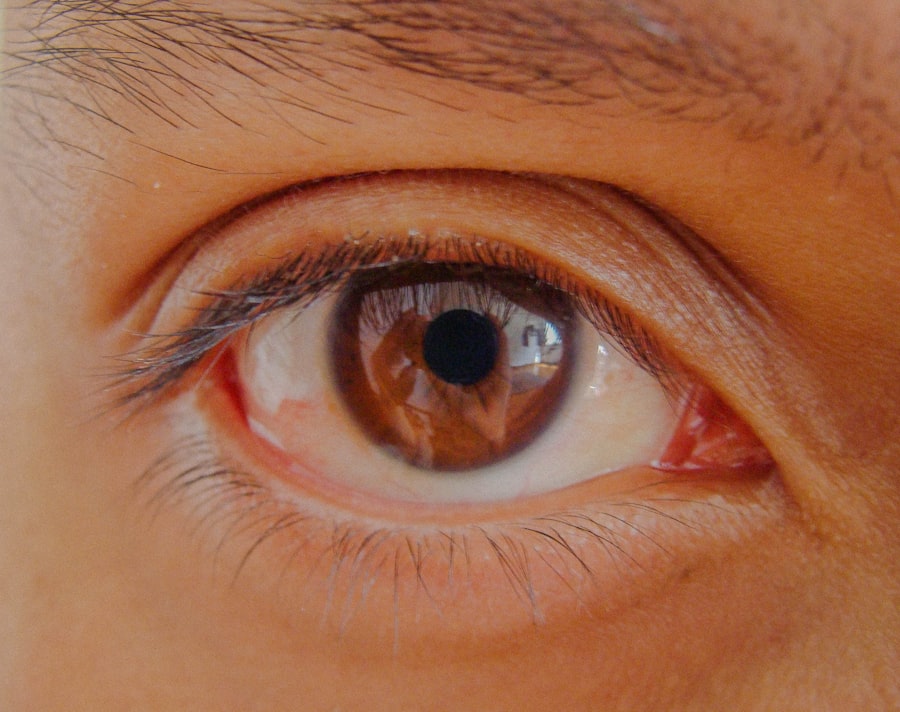
What are eye micro-saccades?
Eye micro-saccades are tiny, involuntary eye movements that occur when you try to maintain a steady gaze. They help prevent visual fading by constantly refreshing the image on the retina.
Why is reducing eye micro-saccades important for calm focus?
Reducing excessive micro-saccades can help improve visual stability and concentration, leading to a calmer and more focused mental state, especially during tasks that require sustained attention.
What techniques can help reduce eye micro-saccades?
Techniques such as mindful breathing, regular eye breaks, focused gaze exercises, and practicing relaxation methods can help minimize micro-saccades and promote calm focus.
Can eye strain increase micro-saccades?
Yes, eye strain from prolonged screen time or poor lighting can increase the frequency of micro-saccades, making it harder to maintain calm and steady focus.
Are there any lifestyle changes that support reducing micro-saccades?
Maintaining good sleep hygiene, staying hydrated, managing stress, and ensuring proper lighting and ergonomics during visual tasks can support reducing micro-saccades and enhancing calm focus.