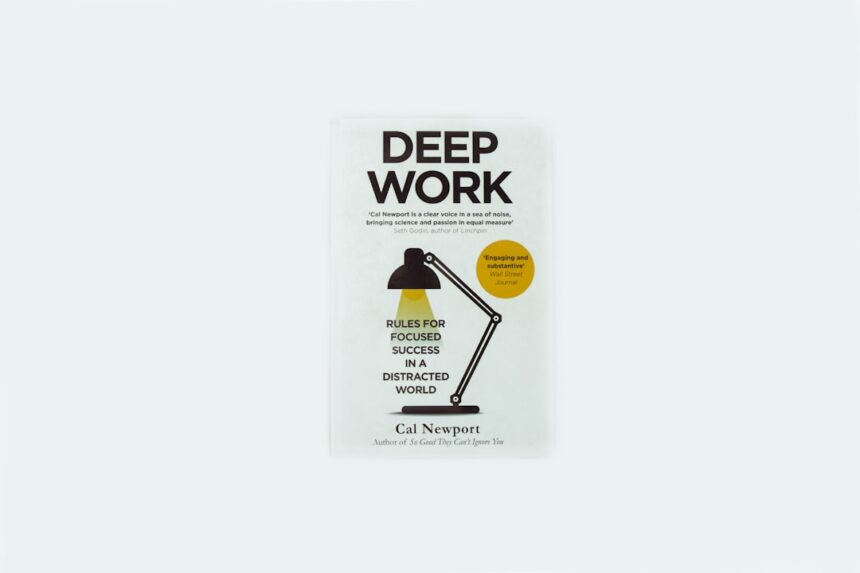
You’re probably familiar with the paralyzing feeling. You know you need to dive into that complex project, that demanding piece of work that will truly move the needle. But before you even sit down, the mental clutter begins. Your inbox beckons, social media notifications flash their siren song, and a thousand tiny, insignificant tasks clamor for your attention. This is the antithesis of deep work, Cal Newport’s concept of focused, distraction-free concentration that allows you to push your cognitive capabilities to their limit, creating new value, improving your skills, and producing high-quality output. And the key to unlocking this state, perhaps more than any other single habit, is the “Single Input Start.”
Understanding the Deep Work Landscape
Before we dissect the Single Input Start, it’s crucial to understand why deep work is so elusive and yet so vital. In our hyper-connected world, shallow work – the logistical-style, often performative tasks like responding to emails, scheduling meetings, and answering routine questions – has become the default. This isn’t inherently bad; these tasks are necessary for the functioning of most organizations. However, when shallow work encroaches upon the time and mental energy required for deep work, your potential for significant contribution stagnates. You become a highly efficient processor of the trivial, rather than a creator of the meaningful.
The Erosion of Focus
Our digital environment is engineered for distraction. Notifications are designed to interrupt, algorithms are built to capture your attention, and the constant availability of information creates a perpetual sense of urgency. This erosion of focus makes sustained concentration incredibly difficult. Your brain, accustomed to rapid context switching, struggles to re-engage with complex problems after even brief interruptions.
The Myth of Multitasking
You might believe you’re adept at multitasking, gracefully juggling numerous demands. Research, however, consistently shows that multitasking is largely a myth of efficiency. When you “multitask,” you’re actually rapidly switching your attention between tasks, which incurs a cognitive cost. Each switch requires mental effort to disengage from one task and re-engage with another. This leads to decreased accuracy, longer completion times, and increased stress.
The Value of Deliberate Practice
Deep work is the engine of deliberate practice. This is the concept popularized by Anders Ericsson, which emphasizes focused, goal-oriented training that pushes you beyond your current abilities. It’s not about simply putting in hours; it’s about engaging with challenging material in a way that highlights and addresses your weaknesses. Without deep work, deliberate practice becomes impossible. You can’t engage in meaningful skill development if your attention is constantly fragmented.
Identifying Your Deep Work Pillars
To prioritize deep work, you need to identify what constitutes “deep” for you. What are the tasks that genuinely require your highest cognitive faculties? What are the activities that will lead to the most impactful outcomes for your career, your projects, or your personal development? These could be writing code, conducting strategic analysis, crafting persuasive arguments, developing innovative solutions, or mastering a complex artistic skill. Once you identify these pillars, you can begin to structure your life to accommodate them.
For those interested in enhancing their focus and productivity through deep work techniques, a related article can be found at Productive Patty. This resource offers valuable insights and strategies for maximizing concentration and minimizing distractions, making it an excellent complement to the concept of single input start for deep work. By exploring these ideas, readers can better understand how to implement effective practices in their daily routines.
The Single Input Start: Your Gateway to Flow
The Single Input Start is a deceptively simple yet profoundly effective strategy for overcoming the inertia of distraction and entering a state of deep work. At its core, it means eliminating all potential decision points before you begin your deep work session. You pre-determine the exact task you will work on and the singular resource (the “input”) you will need to commence.
Eliminating the “What Next?” Paralysis
The most significant barrier to starting deep work isn’t a lack of desire, but the overwhelming mental burden of deciding what to do next. When you sit down at your desk, faced with a blank screen or a pile of documents, your brain immediately starts scanning for the easiest, most familiar path. This often leads to the activation of shallow work habits. The Single Input Start bypasses this entirely.
The Power of Pre-Decision
By deciding beforehand what your deep work session will entail, you remove the cognitive overhead associated with this crucial initial step. You’ve already done the thinking about what needs to be done. Now, all you need to do is execute. This pre-decision phase is critical and should be treated with the same seriousness as the deep work session itself.
Curating Your Sanctuary
The “input” in the Single Input Start isn’t just the task; it’s also the environment and the tools you need. This involves creating a dedicated space and time where distractions are minimized and all necessary resources are readily accessible. This might mean shutting off notifications, closing unnecessary tabs, putting your phone on silent, and gathering all the documents, links, or software you’ll require.
The Ritual of Preparation
The Single Input Start often involves a pre-work ritual. This ritual isn’t about being overly elaborate; it’s about signaling to your brain that a period of focused work is imminent. This could be as simple as brewing a specific cup of tea, putting on noise-canceling headphones, or taking a few deep breaths. This ritual creates a mental transition, helping you shed the demands of the outside world and prepare for the task at hand.
Implementing the Single Input Start: Practical Steps
Transitioning to a deep work rhythm isn’t an overnight transformation. It requires conscious effort and the implementation of practical strategies. The Single Input Start is your first, most crucial step in this process.
Pre-Scheduling Your Deep Work Blocks
Just as you schedule meetings, you need to schedule your deep work. Treat these blocks with the same importance. Block out specific times in your calendar for intense focus. During these blocks, the Single Input Start becomes your immediate action.
The “If-Then” Planning Framework
To ensure you stick to your pre-scheduled deep work, employ “if-then” planning. For example: “If it’s 9 AM and my calendar shows a deep work block, then I will immediately open [specific document/project] and begin writing.” This removes the need for on-the-spot decision-making and builds a consistent habit.
Identifying and Preparing Your Single Input
This is the heart of the strategy. Before your deep work session begins, you need to identify the one thing you will engage with. For example, if you’re a writer, your single input might be the manuscript you are editing. If you’re a programmer, it might be a specific code file or a bug report.
The “Ready to Go” Principle
Your single input should be in a state where you can immediately begin working with it. If it’s a document, have it open and ready. If it’s a set of research papers, have them downloaded and organized. The goal is to minimize any friction between the decision to start and the actual commencement of work.
Creating a Distraction-Free Environment
Your deep work environment is your sanctuary. This means actively engineering it to be free from interruptions. This is where the Single Input Start truly shines, as it necessitates a clear understanding of what constitutes an interruption.
The Digital Detox Protocol
For extended periods of deep work, a digital detox protocol is essential. This means closing email clients, silencing your phone, and even disconnecting from the internet if your task doesn’t require it. The Single Input Start prompts you to establish these boundaries before you begin.
Overcoming Common Obstacles to Single Input Starts
Even with the best intentions, you’ll encounter roadblocks. Understanding these common obstacles and having strategies to overcome them is vital for sustained success.
The Allure of Urgent-But-Not-Important Tasks
You might sit down for your deep work session, only to be pulled by the siren song of urgent emails or immediate requests. These are often shallow tasks that feel important because of their perceived urgency.
The “Doorway” Strategy
Imagine your deep work session as a closed door. Anyone or anything that hasn’t been pre-approved to enter is kept outside. The “doorway” strategy involves clearly defining what is allowed to interrupt your deep work (very little) and what is not. The Single Input Start reinforces this separation.
Forgetting or Neglecting the Pre-Work
It’s easy to get caught up in the day-to-day and forget to prepare for your deep work. This leads to the initial paralysis when you finally sit down.
The Daily/Weekly Deep Work Review
Incorporate a brief daily or weekly review of your upcoming deep work tasks. This ensures that your single inputs are identified and ready. This proactive approach prevents the “what do I do now?” panic.
The Temptation to “Just Check”
The insidious habit of “just checking” email or social media can derail even the most disciplined efforts. This small act of shallow consumption can break your focus and make it difficult to return to your deep work.
The Power of Scheduled Breaks
Instead of succumbing to the “just check” temptation, schedule dedicated breaks for shallow work. This allows you to address your communication needs without compromising your deep work blocks. During your deep work, however, the Single Input Start dictates that your sole focus is on the pre-determined task and its input.
For those looking to enhance their focus and productivity, the concept of single input start for deep work can be incredibly beneficial. This approach allows individuals to concentrate on one task at a time, minimizing distractions and maximizing efficiency. If you’re interested in exploring this topic further, you might find the insights in this article on deep work strategies particularly helpful. By implementing these techniques, you can cultivate a more productive work environment and achieve your goals more effectively.
The Long-Term Benefits of Consistent Single Input Starts
The rewards of consistently applying the Single Input Start extend far beyond immediate productivity gains. They ripple outward, transforming your approach to work and your overall career trajectory.
Enhanced Skill Development
By dedicating uninterrupted time to challenging tasks, you facilitate deliberate practice. This means you’re not just doing the work; you’re actively improving your skills, becoming more adept, and increasing your expertise.
The Compound Effect of Focus
Consistent deep work, initiated by the Single Input Start, leads to a compound effect. Each focused session builds upon the last, accelerating your learning and mastery. This is how true expertise is cultivated, not by spreading yourself thin across many mediocre efforts.
Increased Output Quality and Innovation
When you’re not constantly switching contexts or battling distractions, your cognitive resources are fully available for problem-solving and creative thinking. This leads to higher-quality output and a greater capacity for innovation.
Breaking Through Creative Blocks
The sustained attention fostered by deep work, initiated by a clear Single Input Start, is often what allows you to break through creative blocks. You can immerse yourself in the problem, explore different angles, and uncover novel solutions that might have remained hidden amidst daily distractions.
Greater Job Satisfaction and Meaning
There’s a profound sense of accomplishment that comes from engaging in deep, meaningful work. The Single Input Start, by enabling this engagement, contributes significantly to your job satisfaction and overall sense of purpose.
The Fulfillment of Mastery
The pursuit of mastery is inherently fulfilling. By consistently engaging in deep work, you are actively on a path to becoming a master of your craft. This journey, facilitated by the simplicity of the Single Input Start, is one of the most rewarding aspects of a professional life.
Cultivating a Deep Work Lifestyle
The Single Input Start is not a standalone tactic; it’s a foundational element of a broader deep work lifestyle. Integrating it into your daily routines will lead to a transformation in how you approach your work and your life.
Designing Your Deep Work Schedule
Consider how deep work fits into your overall weekly schedule. Are there certain days or times when you are naturally more focused? Can you block out larger chunks of time, or are shorter, more frequent sessions more feasible?
The “Deep Work Sprint” Concept
If longer blocks are challenging, consider implementing “deep work sprints” – shorter, highly focused sessions of 60-90 minutes. Each sprint begins with your Single Input Start and is followed by a dedicated break.
The Importance of Reflection and Adjustment
No system is perfect from the outset. Regularly reflect on your deep work sessions. What went well? What were the challenges? Did your Single Input Start work as intended?
Iterative Improvement of Your Process
Use your reflections to adjust your approach. Perhaps you need to refine your pre-work ritual, better curate your input, or create a more robust distraction-free environment. The Single Input Start is a practice that benefits from continuous refinement.
Protecting Your Deep Work Time
Your deep work time is a valuable resource. Learn to protect it fiercely. This may involve communicating your boundaries to colleagues, delegating shallow tasks, or even setting expectations about your availability.
The Art of Saying “No”
A crucial element of protecting your deep work time is learning to say “no” to requests that will pull you away from your focus. The Single Input Start empowers you to do this, as you have a clear and pre-defined objective for your focused time.
In conclusion, the Single Input Start is your fundamental tool for unlocking the power of deep work. By consciously eliminating the initial decision paralysis and setting yourself up for immediate engagement with your most important tasks, you pave the way for sustained concentration, enhanced skill development, and ultimately, more meaningful and impactful work. It’s not about flashy techniques; it’s about the disciplined, deliberate reduction of friction before embarking on your most cognitively demanding endeavors. Master this simple yet profound principle, and you’ll find yourself consistently achieving the deep focus that separates the merely busy from the truly accomplished.
FAQs
What is a single input start for deep work?
A single input start for deep work is a method of beginning a deep work session by focusing on a single task or input, such as a specific project or a particular piece of information. This approach helps to minimize distractions and allows for better concentration and productivity.
How does a single input start differ from other methods of starting deep work?
Unlike other methods that may involve multiple inputs or tasks, a single input start for deep work emphasizes the importance of focusing on just one thing at the beginning of a work session. This helps to reduce cognitive load and decision fatigue, allowing for better mental clarity and sustained focus.
What are the benefits of using a single input start for deep work?
Using a single input start for deep work can lead to improved productivity, better quality of work, and a greater sense of accomplishment. By eliminating the need to make decisions about what to work on, individuals can dive into their deep work more quickly and efficiently.
How can someone implement a single input start for deep work?
To implement a single input start for deep work, individuals can begin by identifying a specific task or project to focus on at the start of each work session. This could involve setting clear goals and priorities for the session and eliminating potential distractions.
Are there any potential drawbacks to using a single input start for deep work?
While a single input start for deep work can be effective for many people, it may not be suitable for everyone. Some individuals may prefer a more flexible approach to starting their deep work sessions, or they may find that focusing on a single input limits their creativity or ability to switch between tasks.