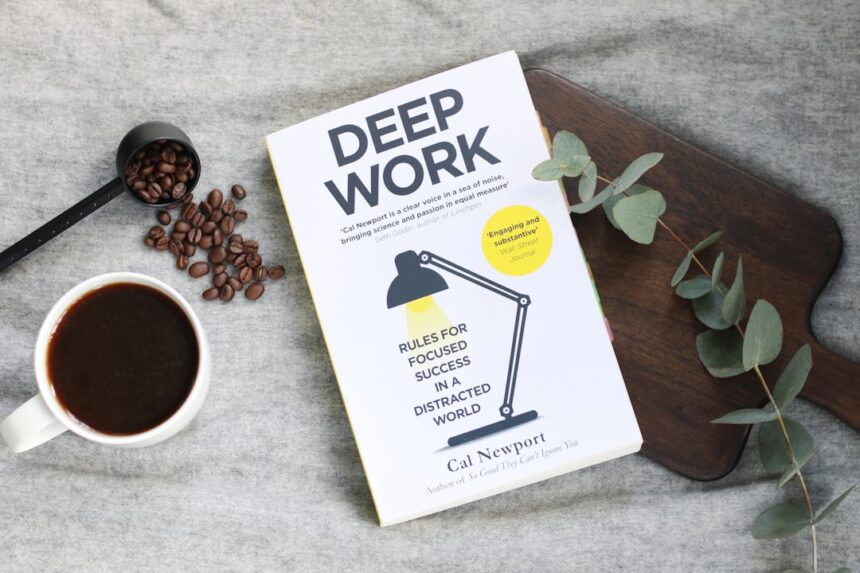
Imagine a world where your most complex tasks are not a source of dread, but a canvas for your cognitive prowess. This is the promise of deep work, a state of focused concentration that allows you to push your intellectual capabilities to their limit. Navigating the modern landscape, you are bombarded by an incessant stream of information and demands. To truly excel, you must learn to carve out sanctuaries of uninterrupted focus. This article will guide you through the principles and practices of mastering deep work, enabling you to unplug from distractions, cultivate profound focus, and achieve unparalleled productivity.
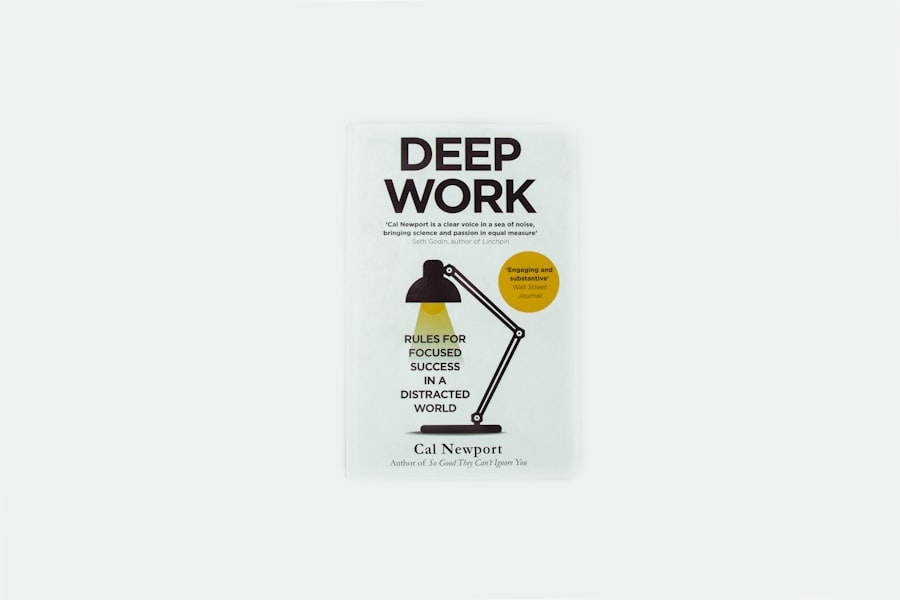
Before you can master deep work, you must understand what it entails. Deep work, as coined by Cal Newport, is the ability to focus without distraction on a cognitively demanding task. It’s an act of diving deep into a subject, allowing your intellect to grapple with its intricacies, and producing high-quality output in a fraction of the time it would take under fragmented attention.
Differentiating Deep Work from Shallow Work
It is crucial for you to distinguish between deep work and shallow work. Shallow work consists of non-cognitively demanding tasks, often performed while distracted. These include responding to emails, participating in casual meetings, and scrolling through social media. While necessary, they rarely contribute to significant intellectual growth or groundbreaking achievements. Deep work, conversely, is where genuine value is created, where innovation flourishes, and where true mastery is forged. Consider shallow work as tending to the garden path, while deep work is cultivating a rare and complex orchid.
The Scarcity of Deep Work in the Modern Era
You exist in an environment actively designed to pull your attention in multiple directions. The constant buzz of notifications, the allure of social media, and the open-plan office layouts all conspire against sustained concentration. This scarcity of deep work is precisely why those who master it gain a significant competitive advantage. You are not just competing with others for jobs; you are competing for your own attention.
In exploring the importance of visual cues for enhancing deep work, you may find the article on Productive Patty particularly insightful. It delves into various strategies for creating an environment conducive to focus and productivity, emphasizing how visual elements can significantly impact our ability to concentrate. For more information, you can read the full article here: Productive Patty.
Cultivating a Deep Work Environment: Your Sanctum of Focus
The physical and digital environments you inhabit play a critical role in your ability to engage in deep work. You must intentionally design your surroundings to minimize distractions and promote uninterrupted focus.
The Physical Workspace: An Oasis of Tranquility
Your physical workspace is a direct reflection of your cognitive landscape. A cluttered desk often signifies a cluttered mind. To foster deep work, you need to create an environment that supports sustained concentration.
Minimalist Design for Maximum Focus
Embrace minimalism. Clear your desk of unnecessary items. Each object is a potential distraction, a small gravitational pull on your attention. Only the essentials for your current task should be within arm’s reach. Think of your workspace as a laboratory, where every instrument has a purpose.
Sensory Input Control
Consider how sensory input affects your concentration. Visual clutter, incessant noise, and even uncomfortable temperatures can chip away at your focus. Implement strategies such as noise-canceling headphones, a “do not disturb” sign, and optimal lighting to create an environment conducive to deep work. You are shielding your mind from the external cacophony, much like a lighthouse protects a ship from the turbulent sea.
The Digital Workspace: Taming the Digital Beast
Your digital environment is often a more insidious source of distraction than your physical space. You must actively manage your digital tools to prevent them from hijacking your attention.
Digital Detox Protocols
Implement specific digital detox protocols before and during your deep work sessions. This might involve disabling notifications, closing unnecessary browser tabs, and even disconnecting from the internet if your task permits. Treat your internet connection like a powerful tool, not a constant companion.
Leveraging Technology for Focus, Not Distraction
Paradoxically, technology can also be a powerful ally in your quest for deep work. Utilize focus-enhancing applications that block distracting websites, manage your time, or create white noise environments. These tools act as digital gatekeepers, protecting your cognitive space.
Strategic Scheduling: Architecting Your Focus Blocks

Deep work does not happen spontaneously; it is a deliberate act of scheduling and commitment. You must intentionally carve out significant blocks of uninterrupted time for your most demanding tasks.
The Four Deep Work Philosophies: Find Your Rhythm
Cal Newport identifies four common approaches to scheduling deep work. Understanding these will help you tailor a strategy that aligns with your personality and professional demands.
Monastic Philosophy: Retreat for Maximum Immersion
The monastic philosophy involves periods of complete isolation from external distractions, often for extended durations. This approach is best suited for individuals with significant autonomy and a need for highly focused, long-term projects, such as writers or researchers. Imagine sequestering yourself in a mental monastery, dedicating days or weeks solely to one pursuit.
Bimodal Philosophy: Balancing Deep and Shallow
The bimodal philosophy involves dedicating specific, extended periods (days or weeks) to deep work, while allowing for shallow work during other times. This approach offers flexibility while still providing ample time for significant intellectual output. Picture yourself alternating between the intense work of an artisan and the necessary tasks of a merchant.
Rhythmic Philosophy: Building a Consistent Habit
The rhythmic philosophy emphasizes the establishment of a consistent, daily deep work habit. This involves scheduling specific time blocks for deep work each day, treating them as non-negotiable appointments. This method is often the most practical for individuals with regular work schedules, fostering a sustainable routine. You are building a mental muscle through regular, targeted exercise.
Journalistic Philosophy: Seizing Opportunities as They Arise
The journalistic philosophy involves seizing any available window of opportunity for deep work, even if it is brief. This approach is suitable for individuals with unpredictable schedules or those who need to integrate deep work into a highly dynamic environment. While demanding, it allows you to capitalize on unforeseen pockets of focus. Think of yourself as a deep-sea diver, ready to plummet into the depths of thought at a moment’s notice.
The Power of Rituals: Signaling Your Brain
Before embarking on a deep work session, establish clear rituals. These rituals act as a signal to your brain that it is time to shift into a focused state.
Pre-Deep Work Routines
Your pre-deep work routine might involve making a cup of tea, reviewing your objectives for the session, or performing a short mindfulness exercise. These small, consistent actions prepare your mind for the intensity ahead. This ritual is like the overture to a grand opera, preparing the audience for the performance.
Post-Deep Work Wind-Downs
Similarly, establish a post-deep work wind-down routine to help transition out of intense concentration. This could involve reviewing your progress, planning your next deep work session, or engaging in a light, restorative activity. This helps prevent mental fatigue and ensures you don’t carry the cognitive residue of deep work into other activities.
Honing Your Focus: The Art of Undivided Attention
The ability to sustain focus in the face of internal and external temptations is a learned skill. You must actively train your attention to resist distraction and maintain a single-minded engagement with your task.
Embracing Positive Boredom
In a world of constant stimulation, you have developed a low tolerance for boredom. However, true focus often requires embracing periods of positive boredom, where your mind is not constantly seeking novelty. Allow your mind to wander productively, without immediately reaching for your phone or a new tab.
Deliberate Discomfort and Cognitive Resilience
Deep work is inherently challenging. You must cultivate a tolerance for deliberate discomfort, pushing past the initial urge to switch tasks or seek easier gratification. This builds cognitive resilience, strengthening your ability to sustain effort. View this discomfort as the resistance you experience during a workout, knowing it leads to greater strength.
The Role of Deliberate Practice in Focus
Just like any skill, focus improves with deliberate practice. You must consciously train your attention by engaging in activities that require sustained concentration, even outside of your work.
Single-Tasking as a Foundational Skill
Multitasking is a myth; you are simply rapidly switching between tasks, incurring a significant cognitive cost each time. Practice single-tasking in all areas of your life, from eating a meal to engaging in a conversation. This strengthens your ability to dedicate your full attention to one thing at a time.
Mindful Activities for Attention Training
Engage in activities that inherently require focused attention, such as reading complex texts, playing a musical instrument, or practicing meditation. These activities act as mental calisthenics, enhancing your overall capacity for concentration.
In the pursuit of enhancing focus and productivity, understanding the role of visual cues in deep work can be incredibly beneficial. A related article on this topic can be found at Productive Patty, where various strategies are discussed to create an environment that minimizes distractions and promotes sustained concentration. By implementing these visual cues, individuals can significantly improve their ability to engage in deep work and achieve their goals more effectively.
The Payoff: Unlocking Unprecedented Productivity and Fulfillment
| Visual Cue | Description | Purpose | Effectiveness Rating (1-5) | Example |
|---|---|---|---|---|
| Desk Sign | A small sign placed on the desk indicating “Do Not Disturb” or “Deep Work in Progress” | Signals to others to avoid interruptions | 4 | Red “Do Not Disturb” sign |
| Closed Door | Physically closing the office or room door | Visual barrier indicating unavailability | 5 | Closed office door |
| Headphones | Wearing noise-cancelling or large headphones | Non-verbal cue that the person is focused and not to be disturbed | 4 | Over-ear headphones |
| Timer or Clock | Visible timer counting down a deep work session | Helps maintain focus and signals session duration | 3 | Pomodoro timer on desk |
| Workspace Arrangement | Minimalist and organized desk setup | Reduces distractions and visually cues readiness for deep work | 3 | Clear desk with only essential items |
Mastering deep work is not merely about increasing your output; it is about transforming your approach to your work and enriching your life.
Higher Quality Output and Accelerated Learning
When you engage in deep work, your brain is operating at its peak. This leads to higher quality output, more innovative solutions, and a deeper understanding of complex subjects. You are building mental models with greater clarity and precision, allowing you to learn and adapt more quickly. Your work becomes a finely crafted sculpture rather than a hastily assembled edifice.
Increased Job Satisfaction and Professional Growth
The satisfaction derived from producing significant, high-quality work is immense. Deep work allows you to feel a sense of accomplishment and mastery, leading to greater job satisfaction and a stronger sense of purpose. You are not just going through the motions; you are actively shaping your professional trajectory.
Preventing Burnout and Enhancing Well-being
Paradoxically, engaging in deep work can actually prevent burnout. By intentionally focusing for concentrated periods, you are also implicitly creating boundaries for shallow work and constant connectivity. This allows for genuine recovery and recharge, improving your overall well-being. Think of deep work as a controlled burn, clearing away the underbrush of trivialities to allow for healthy growth.
In conclusion, the path to mastering deep work is a conscious journey of intentional design, strategic scheduling, and relentless attention training. You must actively resist the currents of distraction that define the modern world and instead carve out your own path of concentrated effort. By doing so, you will not only elevate your productivity and the quality of your output but also cultivate a deeper sense of fulfillment and mastery in your professional and personal life. Embrace the challenge, for the rewards of deep work are profound and enduring.
FAQs
What are visual cues for deep work?
Visual cues for deep work are specific visual signals or environmental elements designed to help individuals focus and enter a state of deep concentration, minimizing distractions and enhancing productivity.
How can visual cues improve concentration during deep work?
Visual cues can improve concentration by signaling to the brain that it is time to focus, reducing cognitive load from decision-making, and creating a consistent environment that supports sustained attention and minimizes interruptions.
What are some common examples of visual cues used for deep work?
Common visual cues include a dedicated workspace, minimalistic desk setup, use of noise-canceling headphones, specific lighting conditions, and visual reminders like “Do Not Disturb” signs or timers.
Can changing visual cues help in transitioning into deep work?
Yes, changing visual cues such as adjusting lighting, clearing clutter, or putting on headphones can act as triggers that help the brain shift from a distracted state to focused deep work mode.
Are visual cues effective for everyone in promoting deep work?
While visual cues can be highly effective for many people, their impact varies depending on individual preferences and work habits. It is important to experiment with different cues to find what best supports one’s concentration and productivity.