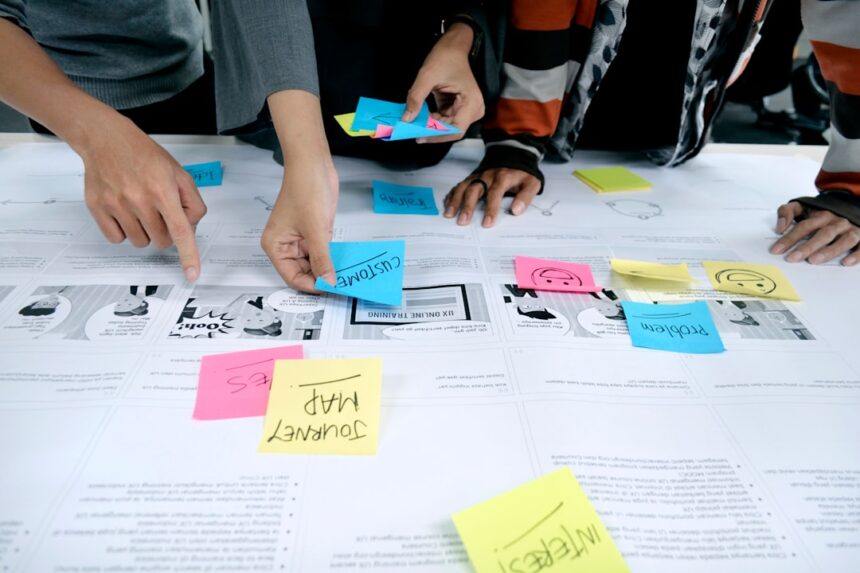
You’ve likely encountered it. That nagging feeling that you should be moving forward, but somehow, you’re just… not. You’re not failing, not actively struggling, but the momentum you anticipate is absent. You’re stuck in what can be characterized as the Avoidance Trap, and ironically, your diligent planning might be the very mechanism keeping you there. This isn’t about laziness; it’s about a subtle, often unconscious, redirection of energy away from action and towards the illusion of progress.
Planning is, without question, a cornerstone of effective action. It allows you to dissect complex goals, allocate resources, and chart a course. However, when the act of planning begins to supersede the purpose of planning – which is to facilitate action – a problem arises. You find yourself endlessly refining your strategy, tweaking the Gantt chart, or researching every conceivable contingency, all while the actual task remains untouched.
The Never-Ending Research Phase
You might tell yourself you need more information. You’re not ready to commit to an action until you understand every facet, every potential pitfall. This can lead to an interminable research phase. You bookmark articles, save podcasts, and join online forums, accumulating a vast repository of knowledge that never quite coalesces into a decision to do something. The perceived wisdom gained from this research feels like progress, but it’s a form of intellectual hoarding, keeping you safe from the messy reality of execution.
The Siren Song of “Just One More Thing”
There’s always another book to read, another expert to consult, another article to skim. This “just one more thing” mentality acts as a comfortable deferral. It allows you to feel productive without the risk of making a mistake or facing a temporary setback. You’re so focused on gathering the perfect ammunition that you forget the battle itself requires engagement.
The “What If” Spiral
The more you plan, the more potential problems you can identify. This is, in theory, a good thing. However, for some, it can trigger a “what if” spiral, where each identified risk generates further scenarios and necessitates further planning for those hypothetical situations. This can quickly escalate into an unmanageable web of contingencies, making the initial undertaking seem so fraught with peril that it’s easier to simply keep planning rather than to start.
The Comfort of the Hypothetical
An advantage of planning is that it exists entirely in the realm of the hypothetical. You can construct ideal scenarios, meticulously outline perfect execution, and imagine seamless outcomes. This is far more comfortable than the tangible, often imperfect, reality of attempting something. The planning stage offers a potent illusion of control, allowing you to feel a sense of mastery over a future that hasn’t yet unfolded, without the anxieties of dealing with unforeseen obstacles.
The Deferral of Discomfort
Facing a new task, especially one that feels challenging or uncertain, can evoke discomfort. This discomfort might stem from the fear of failure, the potential for criticism, or simply the effort involved. Planning becomes a convenient way to postpone this discomfort. You’re actively engaged, but the engagement is with the idea of the task, not the task itself, thereby delaying the emotional and mental strain that comes with execution.
The Perfectionist’s Playground
For the perfectionist, planning can be a playground. Every detail can be scrutinized, every angle considered. This pursuit of flawlessness, while admirable in some contexts, can become paralyzing in others. The project can never be “ready” because it’s never “perfect.” The desire to avoid any imperfection in the execution can lead to an indefinite postponement of the initiation.
Planning can often serve as a convenient form of avoidance, allowing individuals to feel productive while sidestepping the actual tasks at hand. This phenomenon is explored in detail in the article “The Illusion of Productivity: How Planning Can Be a Form of Avoidance” on Productive Patty’s website. The piece delves into the psychological aspects of planning and how it can create a false sense of accomplishment, ultimately hindering progress. For more insights on this topic, you can read the article here: The Illusion of Productivity: How Planning Can Be a Form of Avoidance.
The Paralysis of Analysis: When Information Overload Derails Action
You’ve gathered all the information, created the perfect plan, and even outlined the first three steps. Yet, you’re still not doing it. This isn’t a lack of understanding; it’s a case of paralysis of analysis. The sheer volume of information, or the weight of meticulously constructed possibilities, can become so overwhelming that it prevents you from taking the decisive step needed to move forward.
The Tyranny of Too Many Options
In modern life, you are often presented with an overwhelming number of choices, even for seemingly simple tasks. This abundance, while seemingly beneficial, can lead to decision fatigue and a procrastination of commitment. You might spend an inordinate amount of time evaluating different software, different approaches, or different vendors, convinced that the “best” choice is critical, when in reality, any reasonable choice would allow you to start.
The Fear of Missing Out (FOMO) on the “Optimal” Path
This relates to the tyranny of too many options. You’re not just choosing a path; you’re choosing the path. The fear of choosing a suboptimal route, and consequently underperforming, can lead to an extended period of evaluation. You convince yourself that painstaking deliberation is necessary to avoid a less-than-ideal outcome, but it often results in no outcome at all.
The Decision Quicksand
Each decision you make during the planning phase, even seemingly small ones, can create a ripple effect. These ripples can lead to further decisions, further considerations, and a descent into decision quicksand. You become so bogged down in the minutiae of selecting a specific font for your presentation or a particular brand of paper for your printed materials that the actual creation of the presentation or the writing of the report is indefinitely delayed.
The Mental Gymnastics of Contingency Planning
You have planned for success, but have you meticulously planned for every possible failure? For some, the emphasis on contingency planning becomes an excuse to avoid the initial action. Each potential obstacle identified is not just noted; it is meticulously dissected, with elaborate fallback strategies devised. This can transform a straightforward task into a complex strategic simulation, where the focus shifts from doing to managing hypothetical negative outcomes.
The Over-Engineering of Solutions
You encounter a potential problem, and instead of addressing it as it arises or with a simple, practical solution, you over-engineer a complex system to prevent it from ever occurring. This can lead to plans that are so elaborate and intricate that they become unwieldy and impractical to implement, ultimately serving as a barrier to starting.
The “What If It All Goes Wrong?” Loop
This is a particularly insidious form of analysis paralysis. Your mind fixates on worst-case scenarios. While a degree of risk assessment is healthy, an obsessive focus on calamity can lead to an overwhelming sense of dread, making the prospect of starting the task seem utterly daunting. The planning then becomes an exercise in trying to build an impenetrable shield against every conceivable disaster, a futile endeavor that breeds inaction.
The Displacement Activity: Planning as a Substitute for Doing

Perhaps the most deceptive aspect of the Avoidance Trap is how effectively planning can masquerave as productive work. You’re busy, you’re engaged, you’re doing something. But that something isn’t the core task. It’s a displacement activity, a substitute that feels legitimate but ultimately serves to keep you from what truly needs to be done.
The Allure of Organization
There’s a certain satisfaction in creating orderly systems. Color-coding your notes, alphabetizing your files, or setting up elaborate project management software can provide a sense of accomplishment. While organization is important, when it becomes the primary focus, it can displace the actual work that needs to be organized. You’re tidying the workshop instead of building the furniture.
The “Organizing for Tomorrow” Syndrome
You meticulously organize your workspace, your digital files, or your to-do lists with the express purpose of being more efficient tomorrow. The current day, however, remains largely unproductive. You’re preparing to work, perpetually on the cusp of action, but never quite arriving.
The Aesthetics of Productivity
Sometimes, the appeal isn’t just in the order but in the visual representation of it. A neatly formatted spreadsheet, a visually appealing mind map, or a color-coded calendar can give the impression of progress, even if no substantive work has been completed. You’re investing in the appearance of productivity rather than the substance of it.
The Comfort of “Preparation”
You tell yourself you’re not procrastinating; you’re preparing. This could involve scheduling meetings to discuss the project, setting up communication channels, or drafting preliminary agendas. These are all valid steps in a process, but when they become the only steps you take, they become a form of avoidance. The real work—the creation, the execution, the problem-solving—remains perpetually in the future.
The Perpetual “Pre-Production” Phase
In creative fields, this might manifest as an endless pre-production phase. You storyboard, you scout locations, you cast actors, but you never shoot the film. In a business context, it could be endless brainstorming sessions, market research, and proposal drafting, without ever launching the product or service.
The Illusion of Momentum Gained Through Discussion
You engage in numerous discussions and meetings about the task at hand. While collaboration is valuable, if these discussions are not leading to concrete actions or decisions, they can become a substitute for taking initiative. You’re spinning your wheels in conversation, mistaking the exchange of ideas for the generation of results.
The Fear of Imperfection: The Striving for Flawless Execution
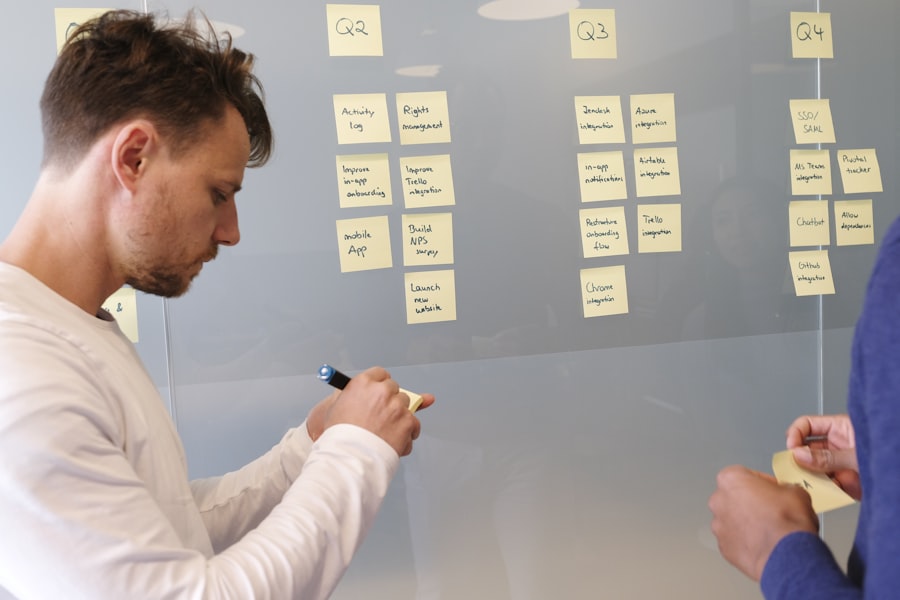
A significant driver behind the avoidance trap is the fear of imperfection. You see the potential for mistakes, for missteps, for outcomes that are less than ideal. This fear can lead you to meticulously plan every detail to eliminate any possibility of error, paradoxically preventing you from ever taking the risk of starting.
The Critique-Proofing of Your Work
You invest excessive time in making your plan and your potential output absolutely critique-proof. This involves anticipating every possible criticism and preemptively addressing it in your planning. While foresight is valuable, this can lead to over-analysis and a paralysis of decisiveness, as you try to eliminate all potential avenues for negative feedback before you’ve even begun.
The “What Would They Think?” Obstacle
Your planning is heavily influenced by an imagined audience. You envision how colleagues, superiors, or even strangers might react to your work. This external validation-seeking can lead to endless revisions and a reluctance to finalize anything, as you strive to meet perceived, and often inaccurate, expectations.
The Ghost of Past Failures
If you’ve experienced significant failures in the past, the fear of repeating them can be a powerful motivator for meticulous, almost obsessive, planning. You aim to create a foolproof strategy, to leave no room for the kind of errors that led to past disappointments. However, this can lead to an overly cautious approach that stifles innovation and prevents you from taking the necessary risks to move forward.
The Pursuit of the “Perfect” First Draft
You hold an unrealistic expectation for your initial output. You believe the first attempt should be polished, coherent, and impactful. This mindset prevents you from embracing the iterative nature of most creative and productive endeavors. The concept of a “rough draft” or a “beta version” is often dismissed in favor of an unattainable standard of immediate perfection.
The “It’s Not Ready Yet” Excuse as a Defense Mechanism
This is a common refrain born from the fear of imperfection. You use “it’s not ready yet” as a protective shield. It allows you to avoid external judgment and internal dissatisfaction by delaying engagement. The readiness is perpetually deferred, preventing you from ever exposing your work to the assessment that is necessary for improvement.
The Avoidance of Feedback
The fear of imperfection is intrinsically linked to the fear of feedback. If you don’t start, if you don’t produce anything, you can’t receive criticism. Planning becomes a way to prolong the period of unassessed effort, delaying the moment when your work will be subjected to external scrutiny, which you perceive as inherently negative.
Many individuals find themselves caught in the cycle of over-planning, which can often serve as a form of avoidance rather than a productive strategy. This behavior can stem from a fear of failure or uncertainty about the future, leading people to create elaborate plans that ultimately distract them from taking action. A related article discusses this phenomenon in depth, highlighting how excessive planning can hinder progress and encourage procrastination. For more insights on this topic, you can read the article here. Understanding the balance between planning and action is crucial for personal and professional growth.
Breaking Free from the Planning Peril: Embracing Action Over Analysis
| Reasons | Explanations |
|---|---|
| Fear of Failure | Planning can be a way to delay taking action due to fear of making mistakes or failing. |
| Perfectionism | Some individuals use planning as a way to strive for perfection, leading to procrastination. |
| Overwhelm | Planning can become a way to avoid feeling overwhelmed by breaking tasks into smaller, more manageable steps. |
| Uncertainty | Planning can provide a sense of control in uncertain situations, leading to avoidance of taking action. |
Recognizing the Avoidance Trap is the first step. The next is actively dismantling its mechanisms. This involves a conscious shift in mindset and a deliberate embrace of action, even when the plan feels incomplete or the outcome uncertain. Learning to differentiate between planning that facilitates action and planning that supplants it is crucial.
Embracing the “Good Enough” Mindset
You don’t need a perfect plan; you need a functional one. The goal is to move forward, not to achieve an abstract ideal of perfect preparation. Striving for “good enough” allows you to make progress without getting bogged down in the minutiae. It’s about making decisions and taking steps even when all variables are not perfectly aligned or understood.
The Iterative Approach to Planning and Execution
Understand that planning and execution are not sequential, mutually exclusive activities. They are intertwined. You can and should plan, execute, learn, and then replan and re-execute. Embrace the idea that your initial plan is a starting point, not a rigid blueprint, and that adjustments will be necessary as you gain practical experience.
Setting Time Limits for Planning Stages
Implement strict time limits for each planning phase. If you’ve allotted yourself two weeks to research, then at the end of those two weeks, you must move to the next stage, regardless of whether you feel you’ve exhausted every possible avenue. This artificial constraint forces you to prioritize and make decisions based on available information.
Prioritizing Action Over Analysis
Consciously shift your focus from analyzing potential problems to actively solving them as they arise. This involves a willingness to embrace uncertainty and to trust your ability to adapt and problem-solve in real-time. The most effective plans are often those that are tested and refined through actual implementation.
The “Just Start” Imperative
Sometimes, the only way to overcome the inertia is to simply begin. Take the first small, manageable step. The act of starting often generates its own momentum and clarity, revealing insights and solutions that detailed planning alone cannot provide. Don’t wait for the perfect moment; create it by acting.
The Practice of Small Wins
Break down your large goals into smaller, achievable milestones. Focus on completing these smaller tasks, celebrating each small win. This builds confidence, momentum, and a tangible sense of progress, making the larger undertaking feel less daunting and reducing the temptation to remain in the planning stage indefinitely.
By understanding the subtle ways planning can lead you into an avoidance trap, you can begin to identify when your diligence is becoming a detriment. The key is to recognize that while planning provides a roadmap, it is the act of walking the path that ultimately leads to your destination. Your ability to move forward hinges not just on how well you plan, but on how effectively you transition from planning to doing.
FAQs
1. What is the concept of planning as a form of avoidance?
Planning as a form of avoidance refers to the tendency of individuals to engage in excessive planning as a way to procrastinate or avoid taking action on important tasks or goals.
2. How does planning as a form of avoidance manifest in individuals?
Individuals may engage in planning as a form of avoidance by spending excessive time creating detailed plans, lists, and schedules without actually taking concrete steps towards implementing those plans.
3. What are the potential negative consequences of using planning as a form of avoidance?
Using planning as a form of avoidance can lead to missed opportunities, increased stress and anxiety, and a lack of progress towards achieving goals. It can also result in a cycle of perpetual planning without meaningful action.
4. What are some strategies to overcome the tendency to use planning as a form of avoidance?
Strategies to overcome planning as a form of avoidance include setting specific deadlines for tasks, breaking down goals into smaller, manageable steps, and focusing on taking action rather than perfecting plans.
5. How can individuals strike a balance between planning and taking action?
Individuals can strike a balance between planning and taking action by setting aside dedicated time for planning, while also committing to taking consistent and deliberate steps towards implementing those plans. This can help prevent planning from becoming a form of avoidance.