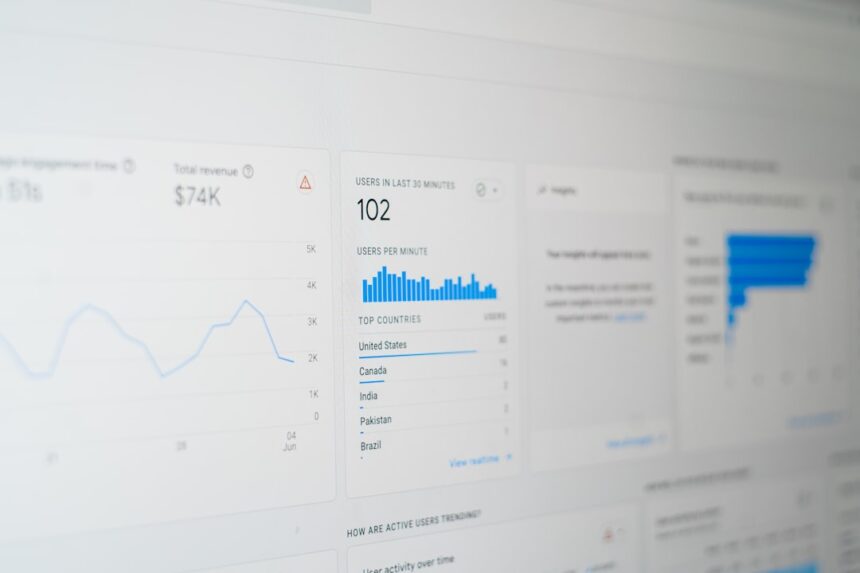
You know the feeling. That elusive state of flow, where hours melt away and your mind is fully immersed in a challenging task. It’s the bedrock of deep work, the engine of meaningful progress and innovation. Yet, you also know the creeping dread of a notification ping, a blinking cursor on a dashboard, or the urge to “just check” a few metrics. This is the insidious downside of analytics, a powerful tool that, when wielded carelessly, can systematically erode your ability to achieve that precious deep work focus.
Analytics, in its purest form, promises insight. It offers understanding, predictive power, and the ability to optimize. You’re told that data is the antidote to guesswork, the driver of informed decisions. And there’s truth to that. The ability to measure user engagement, track conversion rates, or monitor system performance can undeniably lead to improvements. However, this constant influx of data, or more accurately, the perceived need for constant data, can become a relentless distraction.
The Illusion of “Staying Informed”
You’re probably accustomed to it now: the quick glance at your email, the scroll through your social media feeds, the mandatory check-in on your project management tool’s analytics dashboard. Each of these actions, at a superficial level, feels like you’re staying informed, keeping your finger on the pulse. You might tell yourself it’s necessary to be responsive, to be aware of any potential issues before they escalate. But the reality is far less productive.
The Erosion of Attention Span
Every time you break your focus to check a metric, you’re not just losing a few seconds. You’re incurring a cognitive cost, a mental re-wiring that makes it harder to re-enter that deep, concentrated state. Think of it like a runner trying to maintain a steady pace, but repeatedly stopping to check their watch. The rhythm is broken, the momentum dissipates. Your brain, constantly being pulled towards these small, bite-sized pieces of information, starts to favor shallow, fragmented tasks over sustained concentration. This isn’t about personal willpower; it’s a systemic consequence of a data-saturated environment.
The Tyranny of Real-Time Metrics
The push for real-time analytics, while offering immediate feedback, can be a significant drain on your focus. Seeing a dip in a key performance indicator (KPI) in real-time can trigger an immediate, often reactive, response. You feel compelled to investigate, to troubleshoot, to do something. This immediate pressure, however, often bypasses the more strategic, thoughtful analysis that might be needed. The fire alarm goes off, and you rush to put out what might be a small, temporary flame, neglecting the larger, more complex structures that require careful planning.
The Gamification of Work
Many analytics platforms are designed with engagement in mind. They present data in visually appealing ways, often using charts, graphs, and progress bars that resemble game mechanics. While this can make the data more digestible, it also taps into your innate desire for feedback and reward. You might find yourself chasing “streaks,” aiming for specific numerical targets, or celebrating incremental improvements in a way that feels more like scoring points than achieving substantive goals.
The Shift from Intrinsic to Extrinsic Motivation
When your primary motivation for engaging with data becomes the visual representation of progress or the achievement of a numerical target, you’re gradually shifting from intrinsic motivation – the satisfaction of mastering a skill or solving a complex problem – to extrinsic motivation. This reliance on external validation, delivered through dashboards and notifications, can make deeply engaging work feel less rewarding in itself. The intrinsic joy of creating, learning, or problem-solving can be overshadowed by the pursuit of vanity metrics.
The Temptation of Micro-Optimizations
The availability of granular data encourages micro-optimizations. You might spend hours tweaking a button color, adjusting the wording of a call to action, or experimenting with different email subject lines, all based on potentially marginal gains identified through analytics. While these small adjustments can sometimes lead to improvements, they often come at the cost of time and mental energy that could have been dedicated to larger, more impactful initiatives. It’s like spending your entire afternoon meticulously polishing every single grain of sand on a beach instead of building a sandcastle.
Checking analytics can significantly disrupt your deep work focus, as highlighted in a related article on the importance of maintaining concentration for productivity. The constant urge to monitor performance metrics can lead to fragmented attention and hinder the ability to engage in meaningful, uninterrupted work. For more insights on this topic, you can read the article at Productive Patty, which discusses strategies to minimize distractions and enhance your focus.
The Dashboard as a Black Hole of Attention
Your analytics dashboard, intended to be a source of insight, can quickly morph into a black hole for your attention. The sheer volume of data, the multitude of metrics, and the constant updates create a compelling, almost gravitational pull, drawing you away from your primary responsibilities. You might find yourself habitually opening these dashboards, even when you have no specific question to answer, driven by a vague sense of unease or a desire to see what’s happening.
The Trap of “Just Checking”
This is perhaps the most insidious aspect. The phrase “just checking” is the gateway to distraction. You tell yourself it will only take a moment. You’ll glance at the top-level numbers, confirm everything is ticking along, and then return to your important work. But what happens? You see a slight anomaly. Curiosity piqued, you click to investigate. Then you notice another related metric that also seems a bit off. Before you know it, twenty minutes have evaporated, and you’re no closer to completing the task that truly matters.
The Context Switching Cost
Every time you switch contexts – from writing a complex piece of code to analyzing a user behavior spike – you incur a “context switching cost.” Your brain needs to disengage from one set of thoughts, retrieve information relevant to the new task, and then re-engage. This process is mentally taxing and significantly reduces your overall efficiency and the depth of your concentration. Repeated context switching, fueled by frequent dashboard checks, creates a fragmented mental landscape.
The Reinforcement of Superficial Engagement
By habitually checking your dashboards, you are constantly reinforcing a behavior loop that prioritizes superficial engagement with data over deep, focused work. This creates a self-perpetuating cycle where you become accustomed to short bursts of attention rather than sustained concentration. It’s like exercising your mind with constant, low-intensity stimulation, which hinders your ability to engage in the high-intensity, sustained effort required for deep work.
The Over-Emphasis on Quantifiable Outcomes
Analytics excels at measuring quantifiable outcomes. It can tell you how many users clicked a button, how much revenue was generated, or how quickly a page loaded. This is invaluable. However, not all valuable work is easily quantifiable. The creative process, the brainstorming phase, the strategic thinking that lays the foundation for future success – these are often difficult to capture with a neat number. When your focus is solely on what analytics can measure, you risk devaluing and neglecting the essential, unquantifiable aspects of your work.
The Neglect of Qualitative Insights
The emphasis on quantitative data can lead to the neglect of qualitative insights. You might have rich, anecdotal information from customer interviews, user feedback sessions, or internal discussions that provides crucial context, but doesn’t fit neatly into a spreadsheet or a graph. When your analytics dashboard becomes the primary lens through which you view your work, these richer, more nuanced understandings can be easily overlooked, leading to blind spots in your decision-making.
The Devaluation of Intangible Contributions
Your creativity, your problem-solving ingenuity, your ability to foster collaboration – these are intangible contributions that are difficult to measure with standard analytics. If your work is solely evaluated by numerical outputs, these vital, albeit less quantifiable, aspects of your performance may be undervalued. This can lead to a frustrating environment where genuine innovation and critical thinking are implicitly discouraged in favor of easily tracked, surface-level achievements.
The Illusion of Control Through Data

In a complex and often unpredictable world, the promise of understanding and control offered by analytics can be incredibly alluring. You see the data, you analyze the trends, and you feel like you have a firm grasp on the situation. This illusion of control, however, can be a dangerous distraction from the proactive, immersive work that actually drives progress.
The Detachment from the “Real” Work
When you are constantly immersed in analyzing data about your work, you can become detached from the actual execution of that work. You’re looking at the map of the journey, but you’re not actually walking the path. This creates a disconnect where your decisions are informed by representations of reality rather than by direct experience and deep engagement with the task at hand.
The Analysis Paralysis Trap
The abundance of data can lead to analysis paralysis. Instead of making a decision and moving forward, you find yourself continually gathering more data, running more reports, and refining your analysis. This indecision, driven by a fear of making the wrong choice based on incomplete or imperfect information, prevents you from taking action and moving your projects forward. The data, meant to inform action, becomes an excuse for inaction.
The Displacement of Intuition and Experience
While data is crucial, it should not entirely supplant human intuition and experience. Years of practice and deep understanding can provide valuable insights that may not be immediately apparent in the data. When you rely too heavily on analytics, you risk ignoring the honed instincts and lived experience that can often guide you towards more effective solutions, particularly in novel or rapidly evolving situations.
The Reactive vs. Proactive Mindset
Analytics often fosters a reactive mindset. You see a metric change, and you react. This is efficient for immediate problem-solving, but it can detract from the proactive, anticipatory thinking that is essential for true innovation and long-term success. Reacting to data trends is different from strategically shaping the future based on a deep understanding of underlying principles and potential trajectories.
The Focus on Short-Term Wins
The immediate feedback loop of many analytics platforms encourages a focus on short-term wins. You can quickly see the impact of a small change on a key metric. This can be motivating, but it can also lead to prioritizing incremental improvements over the more challenging, long-term strategic shifts that can have a much larger impact. You become adept at optimizing the current state without necessarily charting a course for a dramatically different future state.
The Loss of Strategic Vision
When your days are consumed by monitoring and reacting to data, the time and mental space required for developing and maintaining a strategic vision can be severely compromised. Developing a compelling long-term vision requires stepping back, thinking broadly, and envisioning possibilities that are not immediately evident in current data points. If you’re constantly looking down at your feet (the data), you’re unlikely to see the horizon.
The Unintended Consequences of Data-Driven Cultures

The widespread adoption of data-driven cultures, while well-intentioned, can inadvertently create environments that are antithetical to deep work. The relentless pursuit of measurable outcomes can stifle creativity and discourage the kind of focused, uninterrupted effort that leads to genuine breakthroughs.
The Pressure to Perform Measurable Tasks
In a data-driven environment, there can be an unspoken pressure to engage in tasks that are easily measurable. If your performance is primarily assessed by the metrics you move, you will naturally gravitate towards activities that directly impact those metrics, even if they are not the most intellectually engaging or strategically important. This can lead to a form of “performance theater” where the appearance of progress is prioritized over substantive achievement.
The Marginalization of “Slow” Innovation
True innovation often takes time. It involves experimentation, iteration, and periods of deep contemplation, none of which are easily quantifiable in the short term. A culture overly focused on immediate, measurable results can marginalize these “slower” forms of innovation, leading to a stagnant environment lacking in genuine originality.
The Reinforcement of Bureaucracy
The need to collect, report, and analyze data can also contribute to an increase in bureaucratic processes. Creating reports, attending data review meetings, and justifying every decision with reams of figures can divert significant time and energy away from the actual work of creating value. This administrative overhead, driven by the data mandate, consumes precious cognitive resources needed for deep work.
The Erosion of Trust and Autonomy
When every aspect of your work is meticulously tracked and analyzed, it can erode trust and autonomy. You might feel like you’re constantly under surveillance, with your every action scrutinized. This can lead to a demotivating environment where individuals are hesitant to take risks or explore unconventional approaches for fear of negatively impacting their metrics.
The Fear of Experimentation
If the expectation is to maintain or improve specific metrics, the natural inclination is to avoid anything that might jeopardize those numbers. This leads to a fear of experimentation and a preference for sticking to proven, albeit perhaps less innovative, methods. The freedom to try new things and to fail productively, a cornerstone of deep work and innovation, is suppressed.
The Micromanagement Through Data
Ironically, analytics, which is often promoted as a tool for empowerment, can become a tool for micromanagement. Managers, armed with detailed data, can scrutinize individual performance at a granular level, leading to a feeling of constant oversight and a lack of personal agency. This can be incredibly demotivating and detrimental to the focused, self-directed effort that deep work demands.
Checking analytics frequently can significantly disrupt your deep work focus, as it pulls your attention away from meaningful tasks and creates a cycle of distraction. In a related article, the author discusses how constant interruptions from notifications and the urge to monitor performance metrics can hinder productivity and creativity. By understanding the detrimental effects of these habits, you can better protect your concentration and enhance your workflow. For more insights on this topic, you can read the article here.
Reclaiming Your Focus: A Path Forward
| Reasons | Impact |
|---|---|
| Constant Interruptions | Decreases productivity |
| Loss of Concentration | Impairs deep work focus |
| Time Wastage | Reduces time for deep work tasks |
| Increased Stress | Impacts mental well-being |
The challenge you face is not to abandon analytics altogether. That would be a disservice to the progress it can enable. Instead, it’s about cultivating a more mindful and intentional approach to its use, one that prioritizes deep work rather than allowing it to be undermined.
Establishing Clear Boundaries and Intentions
The first step is to acknowledge the problem and commit to a more deliberate approach. This means setting clear boundaries around your use of analytics.
Scheduled Data Review Sessions
Instead of constant, ad-hoc checking, schedule specific times for reviewing analytics. Treat these sessions like any other important meeting – come prepared with specific questions and a clear objective. Outside of these times, keep dashboards closed and notifications silenced.
Defined Goals for Analytics Use
Every time you access analytics, ask yourself: “What specific question am I trying to answer?” or “What decision am I trying to inform?” If you don’t have a clear answer, you likely don’t need to check the data at that moment. This forces intentionality and prevents aimless browsing.
Prioritizing Deep Work Time
Actively protect your deep work time as a non-negotiable part of your schedule. This may mean blocking out calendar slots, communicating your availability to colleagues, and creating an environment conducive to uninterrupted concentration.
Batching Shallow Tasks
Group all your shallow, data-checking tasks into specific blocks of time. When you’re in your “shallow work” block, you can efficiently process emails, respond to messages, and review your analytics dashboards. This prevents these tasks from encroaching on your dedicated deep work periods.
Creating “No-Analyze” Zones
Designate specific times or projects as “no-analyze” zones. During these periods, commit to working without constant metric monitoring. This allows for focused immersion and the development of a more intuitive understanding of your work.
Cultivating a Balanced Perspective
Recognize that data is a tool, not the entirety of your work. Foster a healthy skepticism and a balanced perspective on what analytics can and cannot tell you.
Valuing Qualitative and Intuitive Insights
Make a conscious effort to seek out and value qualitative data, anecdotal evidence, and your own intuition. These forms of insight are crucial for a comprehensive understanding and can often spark innovative ideas that raw data might not reveal.
Focusing on the “Why” Behind the Numbers
When you do review analytics, go beyond simply observing the numbers. Ask yourself: “Why is this happening?” Dig into the underlying causes and contributing factors. This encourages deeper thinking and moves you beyond superficial observations.
The journey to reclaiming your deep work focus in an analytics-saturated world is an ongoing one. It requires discipline, intentionality, and a conscious effort to push back against the seductive pull of constant data. By understanding the pitfalls and implementing strategies to mitigate them, you can harness the power of analytics without letting it dismantle the very foundation of your most productive and meaningful work.
FAQs
1. What is deep work focus?
Deep work focus refers to the ability to concentrate on cognitively demanding tasks without distraction. It involves sustained attention and the ability to enter a state of flow, allowing for high-quality, meaningful work to be produced.
2. What are analytics and how do they relate to deep work focus?
Analytics refer to the collection and analysis of data, often used to track and measure various metrics such as website traffic, user engagement, and performance. Checking analytics can be a distraction from deep work focus as it interrupts the flow of concentration and can lead to task-switching and decreased productivity.
3. How does checking analytics impact deep work focus?
Checking analytics can disrupt deep work focus by pulling attention away from the task at hand and causing a shift in mental energy towards analyzing data and making decisions based on the information. This can lead to a loss of momentum and hinder the ability to engage in deep, concentrated work.
4. What are the potential consequences of frequently checking analytics while trying to maintain deep work focus?
Frequently checking analytics while trying to maintain deep work focus can lead to decreased productivity, increased stress, and a reduced ability to produce high-quality work. It can also contribute to a sense of overwhelm and hinder the ability to enter a state of flow.
5. How can individuals minimize the impact of checking analytics on their deep work focus?
To minimize the impact of checking analytics on deep work focus, individuals can establish specific times for reviewing analytics data, limit the frequency of checking, and utilize tools or techniques to help maintain focus and minimize distractions during deep work sessions. Additionally, setting clear boundaries and prioritizing deep work can help mitigate the negative effects of frequent analytics checking.