
You’re staring at the blank document, the cursor blinking impatiently. That important project, the one with the looming deadline, feels miles away, yet simultaneously suffocating. You know you should start, that the longer you delay, the more pressure will mount. But instead, you find yourself scrolling through social media, or perhaps organizing your already impeccably clean desk. This is procrastination, a familiar foe, and understanding its roots in your brain, particularly through the lens of social comparison, can offer a more nuanced perspective than simple willpower arguments.
Your brain is not a passive recipient of information. It is a dynamic organ, constantly evaluating and interpreting your surroundings, and a significant part of that interpretation involves understanding your place within social hierarchies. This innate drive to compare yourself to others is not necessarily a flaw; it’s a fundamental aspect of your neurobiology, honed over millennia to facilitate survival and social integration.
The Amygdala’s Role in Threat and Reward
At the core of your emotional processing lies the amygdala, a small, almond-shaped structure deep within your temporal lobes. When you encounter information that could impact your social standing, whether it’s seeing a peer’s seemingly effortless success or a perceived failure, your amygdala is activated.
Detecting Potential Threats to Status
The amygdala acts as an early warning system. If your social comparison suggests you are falling behind, or your efforts are insufficient relative to others, it can signal potential threats to your social status or self-esteem. This can trigger a cascade of neurochemical responses, including the release of stress hormones like cortisol. This isn’t about overt danger in the evolutionary sense, but rather a psychological threat to your sense of belonging and competence.
The Pursuit of Social Rewards
Conversely, social comparison can also be linked to rewards. Observing someone you perceive as superior excel might, paradoxically, activate reward pathways if it serves as a source of inspiration or if your brain interprets it as positive social learning. However, the more common experience when faced with seemingly insurmountable achievements of others is often not elation, but a feeling of inadequacy.
The Prefrontal Cortex: Decision-Making and Executive Functions
Tasked with higher-level cognitive functions, your prefrontal cortex (PFC) plays a crucial role in managing these social comparisons and translating them into actions, or indeed, inactions. This is where the complex interplay between your emotional responses and your ability to plan and execute tasks unfolds.
Evaluating Social Information and Self-Perception
The ventromedial prefrontal cortex (vmPFC), in particular, is involved in integrating emotional and cognitive information to guide decisions. When you process social comparisons, your vmPFC helps you evaluate how that information affects your self-perception. Is that colleague’s promotion a sign of your own shortcomings, or simply a reflection of their specific circumstances? Your vmPFC wrestles with these interpretations.
The Executive Control of Behavior
The dorsolateral prefrontal cortex (dlPFC) is the conductor of your executive functions – attention, planning, working memory, and impulse control. When your amygdala signals distress or inadequacy due to social comparison, your dlPFC is challenged to override those immediate emotional responses and focus on the task at hand. This is where the battle against procrastination truly takes place. The capacity of your dlPFC to exert top-down control is a significant factor in whether you will move forward or succumb to the urge to delay.
In exploring the intricate relationship between neurobiology, social comparison, and procrastination, a fascinating article can be found on the Productive Patty website. This resource delves into how our brain’s response to social stimuli can influence our motivation and productivity levels, shedding light on the underlying mechanisms that drive procrastination in social contexts. For more insights on this topic, you can read the article here: Productive Patty.
The Procrastination Paradox: Avoiding the Sting of Social Judgment
Procrastination, when viewed through the lens of social comparison, often isn’t about idleness; it’s a complex coping mechanism aimed at avoiding perceived negative social outcomes. The anticipation of judgment, the fear of not measuring up, can be a powerful deterrent to action.
The Dopamine System and Immediate Gratification
Your brain’s reward system, heavily influenced by dopamine, plays a significant role in motivating behavior. While dopamine is often associated with pleasure, it’s also crucial for seeking and approaching rewards. In the context of procrastination, the allure of immediate, low-effort gratification can temporarily outweigh the promise of a future reward associated with completing a challenging task.
The Allure of Novelty and Distraction
Social media, instant messaging, and endless streams of online content provide readily available, novel stimuli. These activities offer quick hits of dopamine, a temporary escape from the mental exertion and potential social anxiety associated with your task. Your brain, seeking to alleviate discomfort, gravitates towards these easier, more immediately rewarding pathways.
The Delayed Reward Dilemma
The rewards for completing a difficult task – achievement, recognition, a sense of accomplishment – are often delayed and less certain. Your brain, particularly under stress, can struggle to prioritize these future, abstract rewards over the immediate, concrete pleasures of distraction. This is exacerbated when social comparison has lowered your perceived self-efficacy, making the future reward seem even more unattainable.
Self-Efficacy and the Fear of Failure
Your belief in your own ability to succeed, or self-efficacy, is a powerful mediator of behavior. When social comparison leads to a diminished sense of self-efficacy, the fear of failure becomes amplified, and procrastination can emerge as a strategy to avoid that perceived failure.
The “Failure to Launch” Syndrome
If your internal narrative, influenced by constant comparison, suggests that you are unlikely to produce work that meets your own or others’ standards, then starting the task becomes a direct invitation to confirm those negative beliefs. Procrastination, in this scenario, becomes a shield. By not starting, you delay not only the work but also the potential confirmation of your inadequacy. The task remains an abstract possibility, untainted by the reality of your perceived limitations.
The Impact of Perfectionism
Perfectionism and social comparison are often intertwined. When you hold yourself to impossibly high standards, fueled by observing the seemingly flawless achievements of others, the thought of tackling a task can be paralyzing. The expectation is that anything less than perfect is unacceptable, and the effort required to achieve such perfection seems overwhelming.
Social Comparison: The Double-Edged Sword of Motivation
While social comparison can be a source of anxiety and a driver of procrastination, it also possesses the potential to be a powerful motivator. Understanding how this mechanism operates allows you to leverage it more effectively.
Upward vs. Downward Social Comparison
The direction of your comparison matters significantly. Comparing yourself to those you perceive as superior (upward comparison) can be demotivating, while comparing yourself to those you perceive as less fortunate (downward comparison) can sometimes boost your mood and sense of accomplishment. However, the pursuit of negative downward comparisons can also be a problematic shortcut.
The Inspirational Potential of Upward Comparison
When viewed constructively, observing others’ success can serve as inspiration and a benchmark for what is possible. For example, seeing a peer master a new skill might motivate you to invest more effort in your own learning. This process involves the prefrontal cortex evaluating the observed success not as a personal indictment, but as valuable data for self-improvement.
The Pitfalls of Constant Upward Comparison
The danger lies in constant, unfiltered upward comparison. Social media feeds, in particular, are curated highlight reels, presenting an often unrealistic portrayal of others’ lives and achievements. This can lead to a distorted perception of reality and a perpetual feeling of falling short, directly feeding into avoidance behaviors.
The Reinforcing Loop: Procrastination Begets More Comparison
The act of procrastinating itself can create further opportunities for negative social comparison, thus reinforcing the cycle. As deadlines approach and stress mounts, you might find yourself desperately seeking validation or trying to catch up, often leading to further engagement with social media to quell anxiety or seek quick answers.
The “Busyness” Olympics
Observing others who appear to be productively working can amplify your own feelings of inadequacy. This can lead to a “busyness olympics” where individuals feel compelled to project an image of constant productivity, even if it’s superficial. Your brain registers this perceived productivity of others and contrasts it with your own state of inaction, increasing the pressure.
The Echo Chamber of Self-Doubt
When you’re procrastinating, you might fall into an echo chamber of self-doubt. Each moment of inaction is interpreted as further evidence of your inability to perform, and you might seek out information or engage with content that reinforces this negative self-perception, inadvertently fueling more social comparison.
Neurochemical Pathways: Orchestrating Your Response to Social Cues
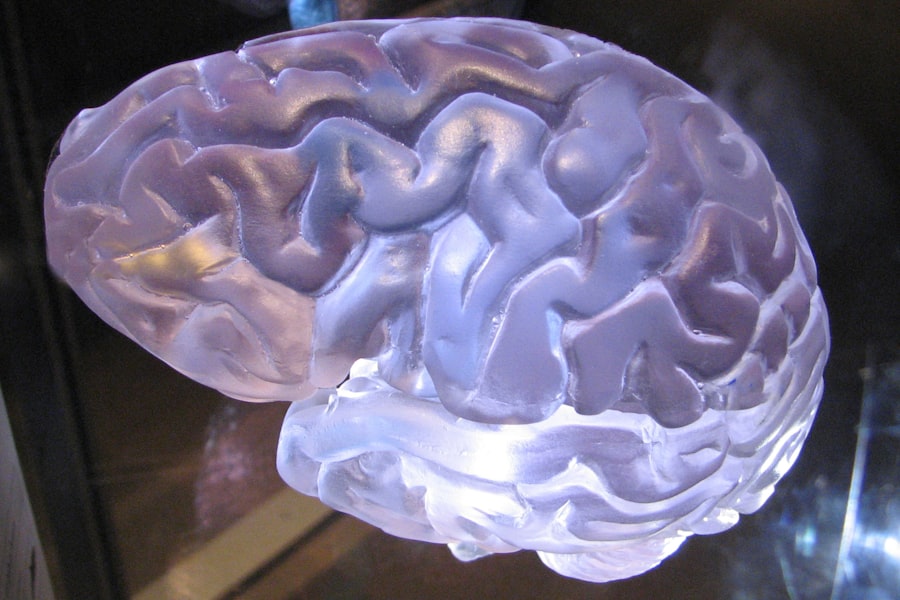
The neurochemical landscape of your brain is intricately linked to how you experience and respond to social comparison and, consequently, how you engage in or avoid tasks.
Cortisol and the Stress Response
When social comparison triggers feelings of inadequacy or threat, your hypothalamic-pituitary-adrenal (HPA) axis is activated, leading to the release of cortisol, the primary stress hormone. Chronic elevation of cortisol can have detrimental effects on cognitive function, including executive control and memory, making it harder to focus and initiate tasks.
The Cycle of Anxiety and Avoidance
Elevated cortisol can create a vicious cycle. The anxiety it produces makes the task at hand feel even more daunting, increasing the urge to procrastinate. This avoidance, in turn, can lead to guilt and further stress, perpetuating the elevated cortisol levels. Your brain is stuck in a feedback loop of perceived threat and an inability to effectively address the source of that threat.
Impact on Cognitive Flexibility
High cortisol levels can impair cognitive flexibility, making it harder for your brain to shift between tasks or adapt to changing demands. This can lead to a rigid adherence to procrastination-based behaviors, even when you logically understand the negative consequences.
Serotonin and Mood Regulation
Serotonin, a neurotransmitter associated with mood regulation, feelings of well-being, and social behavior, also plays a role. Lower levels of serotonin have been linked to increased anxiety, irritability, and a tendency towards rumination, all of which can exacerbate the negative effects of social comparison and contribute to procrastination.
The “Negative Emotional Contagion”
If you are constantly exposed to what you perceive as the superior lives of others, and your serotonin levels are suboptimal, you might be more susceptible to “negative emotional contagion.” This is when you internalize the perceived negativity or shortcomings in yourself in relation to others, leading to a further dip in mood and an increased desire to disengage.
The Role of Serotonin in Social Processing
Serotonin helps regulate how you process social information. When serotonin is low, your brain might be more inclined to interpret ambiguous social cues in a negative light, amplifying the impact of social comparison. This can make it harder to see the positive aspects of your own progress or potential.
Recent studies have explored the intricate relationship between the neurobiology of social comparison and procrastination, shedding light on how our brain processes social feedback and its impact on motivation. For a deeper understanding of these dynamics, you can read an insightful article that delves into the psychological mechanisms at play. This research highlights how the desire to measure up to others can lead to avoidance behaviors, such as procrastination, which ultimately affects productivity. To learn more about this fascinating topic, check out the article here: neurobiology of social comparison.
Strategies for Navigating the Social Comparison-Procrastination Nexus
| Study | Findings |
|---|---|
| Neurobiological basis of social comparison | Activation in the medial prefrontal cortex and ventral striatum |
| Impact of social comparison on procrastination | Increased activity in the amygdala and insula |
| Neurotransmitters involved | Dopamine, serotonin, and norepinephrine |
| Brain regions associated with procrastination | Amygdala, anterior cingulate cortex, and dorsolateral prefrontal cortex |
Understanding the neurobiology of social comparison and procrastination offers a roadmap for developing more effective strategies to overcome avoidance. It’s not about eradicating social comparison, which is a fundamental human drive, but about managing its impact and reframing your responses.
Cultivating Self-Compassion
The antidote to harsh self-judgment, often fueled by social comparison, is self-compassion. This involves treating yourself with the same kindness and understanding you would offer a friend facing similar challenges.
Acknowledging Common Humanity
Recognizing that struggles and imperfections are part of the human experience, rather than unique personal failings, can diminish the isolating effects of social comparison. When you see a peer struggle, you likely offer them empathy; extending that same empathy to yourself when you notice your own difficulties is crucial.
Mindful Self-Awareness
Developing mindful self-awareness allows you to observe your thoughts and feelings without judgment. This means noticing when you are engaging in social comparison, identifying the emotions it triggers, and recognizing the urge to procrastinate without automatically acting on it. It’s about stepping back and observing your internal processes.
Reframing Social Comparisons
Actively working to reframe your social comparisons can shift their impact from demotivating to constructive. This involves conscious effort and a deliberate change in perspective.
Focusing on Effort and Process, Not Just Outcome
Instead of fixating on others’ finished products, try to focus on the effort and process they likely undertook to achieve them. This shifts the emphasis from an unattainable outcome to an observable, and potentially imitable, journey. You can learn from their dedication, their problem-solving, their persistence.
Seek “Peer” Comparisons and Celebrate Small Wins
Where possible, seek out comparisons with peers who are at a similar stage in their journey. This can provide more realistic benchmarks. Furthermore, make a conscious effort to acknowledge and celebrate your own small wins, no matter how insignificant they may seem. This reinforces positive behavioral patterns and builds self-efficacy.
Strengthening Executive Functions
Targeted strategies can help bolster the executive functions of your prefrontal cortex, giving you greater control over your impulses and the ability to initiate and sustain effort.
Time Blocking and Task Chunking
Breaking down large, overwhelming tasks into smaller, manageable chunks can reduce the perceived magnitude of the task and make it feel less daunting. Time blocking, dedicating specific periods to focused work, also helps create structure and reduce the opportunity for distraction. This allows your dlPFC to engage with a clear, achievable goal rather than being overwhelmed by the abstract.
Mindfulness and Meditation Practices
Regular mindfulness and meditation practices have been shown to enhance the functioning of the prefrontal cortex, improving attention, focus, and emotional regulation. By training your brain to be more present and less reactive to internal and external stimuli, you can build resilience against the triggers of social comparison and procrastination. This can improve your ability to resist the pull of immediate gratification and direct your attention towards your goals.
By understanding the intricate neurobiological underpinnings of how you compare yourself to others and how this influences your tendency to procrastinate, you can begin to approach these challenges with greater insight and develop more effective, brain-informed strategies for overcoming them. It’s a journey of self-discovery, and one that can ultimately lead to more productive and fulfilling engagement with your goals.
FAQs
What is social comparison?
Social comparison is the process of evaluating one’s own abilities, opinions, and emotions by comparing oneself to others. This can occur in various aspects of life, such as appearance, intelligence, success, and social status.
What is procrastination?
Procrastination is the act of delaying or postponing tasks or decisions, often leading to negative consequences such as stress, anxiety, and decreased productivity. It is a common behavior that affects individuals in various areas of their lives.
How does social comparison relate to procrastination?
Research in the neurobiology of social comparison and procrastination suggests that individuals may engage in procrastination as a result of comparing themselves to others. This comparison can lead to feelings of inadequacy or low self-esteem, which may contribute to procrastination as a coping mechanism.
What are the neurobiological mechanisms involved in social comparison and procrastination?
Neurobiological studies have shown that social comparison and procrastination involve the activation of brain regions associated with reward processing, self-evaluation, and emotion regulation. These processes can influence decision-making and behavior related to procrastination.
How can understanding the neurobiology of social comparison and procrastination help individuals?
Understanding the neurobiology of social comparison and procrastination can provide insights into the underlying mechanisms of these behaviors, potentially leading to the development of targeted interventions and strategies to help individuals overcome procrastination and improve their well-being.