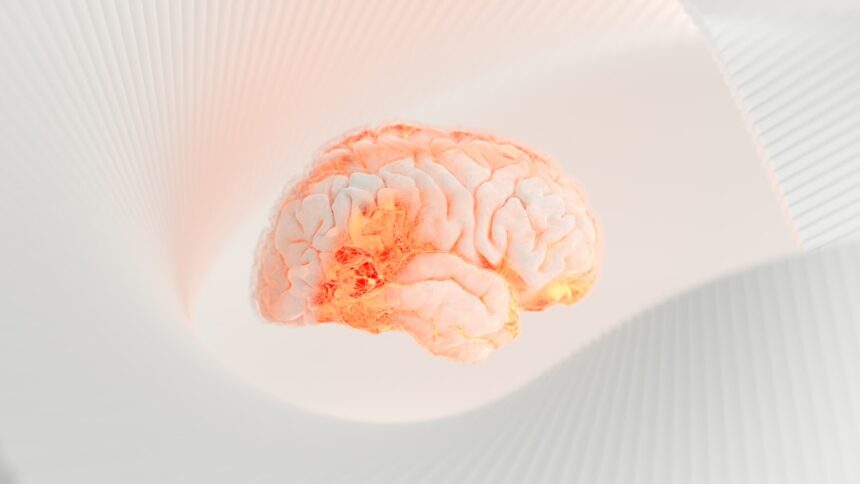
Your brain is a remarkable survival machine. From the moment you are born, and arguably even before, it has been tirelessly working to keep you safe. This is achieved through a sophisticated internal alarm system – your threat monitoring system – and a dynamic spotlight – your attentional focus. Understanding how these two processes interact can illuminate why you react the way you do in perceived danger and how you can consciously direct your mental resources.
Imagine your brain as a vast, bustling metropolis. Within this city, there are specialized districts dedicated to keeping the peace. The threat detection network is akin to your city’s advanced surveillance system, constantly scanning for anything that might disrupt the harmony or pose a danger to its citizens. This network is not a single, monolithic entity but a distributed system involving several interconnected brain regions.
The Amygdala: The Fear’s Ignition Key
At the core of your threat detection system lies the amygdala, a pair of almond-shaped structures deep within your temporal lobes. Think of the amygdala as the primal alarm bell, the first responder to any potential threat. It receives sensory information from all your senses – what you see, hear, smell, taste, and touch – and rapidly assesses its potential danger.
Subconscious Scans: The Speed of Perception
The amygdala’s processing is incredibly fast, often operating on a subconscious level. This means it can trigger a fear response before your conscious mind even registers what’s happening. This is crucial for survival; a split-second decision to flee from a rustling bush, which might turn out to be a harmless animal, is far better than being caught unprepared by a genuine predator. You might feel a jolt of fear, your heart rate might spike, all before you’ve even consciously identified the source of the perceived threat. This rapid, almost instinctual reaction is a testament to the amygdala’s evolutionary role.
Associative Learning: The Scar Tissue of Experience
The amygdala is also a powerful learning center, particularly for fear-related memories. If you have a negative experience associated with a particular stimulus, your amygdala will form a strong association. Later, encountering that stimulus, even in a milder form, can trigger a similar fear response. This is how phobias develop. Your amygdala, attempting to protect you, has learned to associate a relatively harmless object, like a spider or a high place, with extreme danger. This learned fear can be a strong anchor, influencing your future behavior and requiring conscious effort to re-evaluate and modify.
The Prefrontal Cortex: The Rational Evaluator
While the amygdala is the rapid alarm, the prefrontal cortex (PFC), the executive control center at the front of your brain, acts as the more deliberate supervisor. This is where rational thought, decision-making, and the modulation of emotional responses take place. The PFC works to contextualize the amygdala’s alarm, to determine if the threat is real and how best to respond.
The Pause Button: Suppressing Impulsive Reactions
The PFC can act as a “pause button” for the amygdala’s impulses. It can reason with the alarm, considering whether the perceived threat warrants the intense physiological and emotional response. For instance, if the amygdala signals danger from a loud, sudden noise, your PFC can quickly determine it’s just a car backfiring and not a threat, thus dampening the initial fear response. This interplay between the amygdala and the PFC is a constant negotiation, a back-and-forth between immediate instinct and reasoned evaluation.
Contextualizing Danger: Understanding the Nuances
The PFC provides the critical context that the amygdala often lacks. It can assess the environment, your personal history, and potential consequences. A dark alley at night might trigger a strong amygdala response, but your PFC can weigh that against your knowledge of the neighborhood, the presence of others, or your intention to simply walk through it. This ability to contextualize allows for more nuanced and adaptive responses to perceived threats.
The Insula: The Body’s Internal Compass
The insula, another deep brain structure, plays a crucial role in interoception – your awareness of your internal bodily states. It receives signals from your body about things like your heart rate, breathing, muscle tension, and gut feelings. The insula then integrates these signals to create a subjective feeling of emotion, including fear.
Gut Feelings: The Embodied Wisdom of Threat
Your “gut feeling” is often mediated by the insula. When your body experiences physiological changes associated with fear – a racing heart, sweaty palms, a knot in your stomach – the insula registers these sensations and contributes to your overall conscious experience of being threatened. This embodiment of threat is a powerful signal, informing your perception of danger.
Empathy and Social Threat: Feeling Another’s Fear
The insula is also involved in processing social threats and understanding the emotions of others. If you witness someone else in distress, your insula can activate, allowing you to vicariously experience their fear or pain. This capacity for empathy is essential for social bonding and cooperation but can also make you vulnerable to the distress of others, influencing your own threat monitoring system.
Recent research in the neuroscience of threat monitoring and focus has shed light on how our brains prioritize potential dangers in our environment, influencing our attention and decision-making processes. A related article that delves deeper into this fascinating topic can be found at Productive Patty, where the interplay between neural mechanisms and behavioral responses to perceived threats is explored. This understanding not only enhances our knowledge of human cognition but also has practical implications for improving focus and productivity in high-stress situations.
The Spotlight of Attention: How You Focus Your Mental Energy
While your brain is constantly on the lookout for threats, it also possesses a remarkable ability to direct your limited mental resources towards specific information. This is where your attentional focus comes into play. Think of attention as a powerful spotlight, illuminating certain aspects of your reality while leaving others in the dark.
Selective Attention: Choosing What to Perceive
You are bombarded with an overwhelming amount of sensory information every second. Your brain cannot possibly process it all. Selective attention is your mental filter, allowing you to tune into what’s relevant and tune out the rest. This is essential for functioning in a complex world.
The Cocktail Party Effect: Tuning into the Relevant
A classic example is the “cocktail party effect.” In a noisy, crowded room, you can often focus on a single conversation, effectively filtering out all the other chatter. Your brain is actively selecting which auditory information to process, prioritizing the conversation you’re engaged in. However, if something highly salient, like your name, is spoken from another conversation, your attention can quickly shift.
Top-Down vs. Bottom-Up: The Dual Control of Focus
Your attention can be directed in two main ways: top-down and bottom-up. Top-down attention is voluntary; you consciously decide what to focus on, like reading this article. Bottom-up attention is involuntary; your attention is captured by salient stimuli in your environment, such as a sudden flash of light or a loud bang. Your threat monitoring system heavily influences bottom-up attention, as potential dangers are incredibly potent at capturing your focus.
Divided Attention: Juggling Multiple Tasks
While your spotlight can be intensely focused, it can also be split, allowing you to attend to multiple things simultaneously. However, this comes at a cost. Divided attention means your focus is spread thinner, and your performance on each task may suffer compared to when you are focusing on just one.
The Illusion of Multitasking: The Reality of Task Switching
True multitasking, where you perform two cognitively demanding tasks with equal proficiency at the exact same time, is largely a myth. What we perceive as multitasking is often rapid task switching. Your brain quickly shifts its attentional spotlight back and forth between tasks. This switching incurs a cognitive cost, leading to reduced efficiency and increased errors.
The Cost of Distraction: When Focus Fails
When your focus is divided or easily hijacked by distractions, your ability to process information accurately and efficiently diminishes. This is particularly problematic in high-stakes situations where a lapse in attention can have serious consequences. Your threat monitoring system, constantly on the lookout, can easily pull your attention away from the task at hand if it perceives something as potentially dangerous.
The Interplay: Threat Detection and Attentional Focus Working Together

Your threat monitoring system and your attentional focus are not independent entities; they are deeply intertwined, constantly influencing each other. The presence of a perceived threat significantly impacts where and how you direct your attention.
Threat-Relevant Salience: When Danger Captures Your Gaze
When your threat detection system is activated, it primes your brain to be highly sensitive to stimuli that are associated with danger. These stimuli become highly salient, meaning they stand out and are more likely to capture your attentional spotlight.
The Evolutionary Advantage: Prioritizing Survival
This is a powerful evolutionary adaptation. If you are in a forest and hear a rustling in the bushes, your threat detection system flags it as a potential danger. This makes that rustling sound incredibly salient, drawing your attention away from the rustling leaves or the birdsong and towards the source of the potential threat. This ensures you are prepared to react to danger rather than being oblivious.
The Downside: Hypervigilance and Anxiety
However, in conditions of chronic stress or anxiety disorders, this interplay can become maladaptive. Your threat detection system may become overly sensitive, interpreting neutral stimuli as threatening. This leads to hypervigilance, where your attentional spotlight is constantly scanning for danger, even when none exists. This not only drains your mental energy but also exacerbates feelings of anxiety.
Top-Down Inhibition: The Conscious Override
Despite the automatic nature of threat detection, your prefrontal cortex can exert top-down control over your attention. You can consciously choose to shift your attention away from something that is triggering your threat response, even if it’s difficult.
Reappraising Threats: Changing Your Perspective
This is the foundation of many cognitive-behavioral therapy techniques. By consciously reappraising a situation, you can alter its perceived threat level. If you are anxious about public speaking, your amygdala might flash red lights. However, by reminding yourself of your preparation, the audience’s support, or the limited consequences of minor mistakes, your PFC can engage and dampen the amygdala’s alarm, allowing you to direct your attention to delivering your speech effectively.
Mindfulness and Focused Breathing: Anchoring Your Attention
Practices like mindfulness and focused breathing are powerful tools for strengthening your ability to direct your attention. By consciously bringing your attention back to your breath or bodily sensations, you are actively training your brain to resist distractions and regulate your threat response. These practices are like weightlifting for your prefrontal cortex, building its capacity to override automatic, fear-driven reactions.
The Impact on Cognition: How Threat and Focus Shape Your Thoughts and Actions
The constant interplay between threat monitoring and attentional focus profoundly influences your cognitive processes, from memory formation to decision-making.
Memory Encoding and Retrieval: The Sticky Notes of Danger
Your brain is more likely to remember things that are emotionally charged, particularly those associated with threat. This is because the amygdala is heavily involved in memory consolidation.
Emotional Salience and Vivid Recollections
Threat-related memories tend to be more vivid and easily retrieved. Think about a time you were in danger; you likely recall specific details with remarkable clarity, even years later. This is your brain’s way of ensuring you learn from dangerous experiences and avoid similar situations in the future. The emotional tone acts like a highlighter, making the memory “sticky.”
The Cost of Stress on Learning: When Anxiety Interferes
However, chronic stress and high levels of anxiety can impair your ability to form new memories and retrieve existing ones accurately. When your threat detection system is constantly on high alert, your cognitive resources are diverted to managing the perceived threat, leaving less capacity for learning and recall. This is why it can be so difficult to concentrate and remember things when you are feeling overwhelmed or anxious.
Decision-Making Under Pressure: The Primal Urge vs. Rational Choice
In situations perceived as threatening, your decision-making processes can shift significantly. The immediate urge to escape or confront the threat can override more deliberative, rational thinking.
The “Fight, Flight, or Freeze” Response: Instinct Takes Over
When your amygdala is highly activated, the familiar “fight, flight, or freeze” response kicks in. Your prefrontal cortex’s ability to engage in complex reasoning is diminished as your brain prioritizes survival. This can lead to impulsive decisions, actions that you might later regret, or a paralysis of indecision. Understanding this primal urge can help you recognize when you might be making decisions under duress and to build in strategies to allow for more considered thought.
The Zone of Optimal Performance: Balancing Arousal and Control
There’s an optimal level of arousal, or alertness, that enhances performance. Too little arousal leads to boredom and inattention, while too much, as in extreme threat, can lead to impaired functioning. Your goal in many situations is to achieve the “zone” where you are alert and focused but still in control. Your attentional focus plays a vital role in maintaining this balance.
Recent studies in the neuroscience of threat monitoring and focus have shed light on how our brains prioritize potential dangers in our environment, influencing our attention and decision-making processes. For a deeper understanding of this fascinating topic, you can explore an insightful article that discusses the intricate connections between neural pathways and our responses to perceived threats. This article can be found at Productive Patty, where it delves into the mechanisms that govern our focus in high-stress situations.
Cultivating a Balanced System: Harnessing Your Brain’s Capabilities
| Metric | Description | Brain Region Involved | Typical Measurement Method | Relevance to Threat Monitoring and Focus |
|---|---|---|---|---|
| Amygdala Activation | Level of neural activity in the amygdala in response to threat stimuli | Amygdala | fMRI, PET | Key role in detecting and processing threats, modulating attention and emotional responses |
| Prefrontal Cortex Engagement | Degree of activation in the prefrontal cortex during focused attention tasks | Prefrontal Cortex (especially dorsolateral PFC) | fMRI, EEG | Involved in executive control, regulating attention and suppressing distractions |
| Heart Rate Variability (HRV) | Variability in time intervals between heartbeats, indicating autonomic nervous system balance | Autonomic Nervous System (ANS) | ECG, Heart Rate Monitors | Reflects stress and threat response; higher HRV linked to better focus and emotional regulation |
| Skin Conductance Response (SCR) | Changes in skin conductance due to sweat gland activity in response to threat | Sympathetic Nervous System | Electrodermal Activity Sensors | Indicator of physiological arousal and threat detection |
| Theta Band Power | Power of theta frequency oscillations (4-8 Hz) during attention and threat monitoring | Hippocampus, Prefrontal Cortex | EEG | Associated with cognitive control, working memory, and vigilance to threat |
| Reaction Time to Threat Stimuli | Time taken to respond to threatening vs. neutral stimuli | Multiple (sensory and motor areas) | Behavioral Testing | Measures attentional bias and speed of threat detection |
| Cortisol Levels | Concentration of cortisol hormone in saliva or blood as a stress biomarker | Hypothalamic-Pituitary-Adrenal (HPA) Axis | Saliva/Blood Assay | Indicates physiological stress response related to threat perception |
Understanding the neuroscience of threat monitoring and focus is not just an academic exercise. It empowers you to exert more conscious control over your internal experiences and your outward behavior.
Training Your Attention: The Neuroplasticity Advantage
Your brain is remarkably adaptable, a quality known as neuroplasticity. This means you can train your attentional systems through consistent practice.
Deliberate Practice: Honing Your Focus Muscles
Just as you can build physical strength with exercise, you can build attentional strength through deliberate practice. Dedicate time each day to tasks that require sustained focus, intentionally redirecting your attention whenever it wanders. This could be through reading, learning a new skill, or engaging in challenging problem-solving.
Mindfulness-Based Interventions: Rewiring Threat Recognition
As mentioned earlier, mindfulness-based interventions (MBIs) are highly effective at retraining your threat detection system. By learning to observe your thoughts and emotions without judgment, you can begin to decouple fear responses from neutral stimuli and strengthen your prefrontal cortex’s ability to regulate the amygdala. MBIs essentially teach you to become a more discerning guardian of your internal city.
Managing Threat Cues: Creating a More Supportive Environment
You can also consciously manage the stimuli in your environment that trigger your threat detection system.
Environmental Design: Minimizing Unnecessary Alarms
Consider your physical and digital environments. Are there constant notifications, cluttered workspaces, or visually overwhelming stimuli that keep your brain on high alert? Making conscious choices to reduce these “noise generators” can significantly lower your baseline threat level.
Cognitive Restructuring: Challenging Maladaptive Thought Patterns
Actively challenging and reframing negative or fearful thoughts is a critical component of managing your threat monitoring system. When you notice yourself spinning anxious narratives, pause and ask yourself: “Is this thought based on evidence, or is it a fear-driven assumption?” This deliberate questioning can help to de-escalate threat responses.
In essence, your brain’s threat monitoring network and your attentional focus are two sides of the same survival coin. By understanding how they operate, you gain insight into your own reactions and uncover powerful strategies for navigating your world with greater clarity, resilience, and control. You are not merely a passenger in your brain’s operations; you are the conductor, capable of directing its magnificent orchestra of perception, attention, and response.
FAQs
What is threat monitoring in neuroscience?
Threat monitoring refers to the brain’s ability to detect and assess potential dangers in the environment. It involves neural circuits that process sensory information to identify threats and initiate appropriate behavioral or physiological responses.
Which brain regions are involved in threat monitoring?
Key brain regions involved in threat monitoring include the amygdala, which processes emotional responses; the prefrontal cortex, which regulates attention and decision-making; and the hippocampus, which contributes to memory and contextualizing threats.
How does threat monitoring affect focus and attention?
Threat monitoring can influence focus by prioritizing attention toward potential dangers, often enhancing vigilance. This heightened state can either improve focus on relevant stimuli or, if excessive, lead to distractibility and impaired concentration.
What role does the amygdala play in threat detection?
The amygdala is critical for rapid detection of threats and triggering emotional and physiological responses such as fear and anxiety. It helps prioritize threat-related information, facilitating quick reactions to danger.
Can threat monitoring mechanisms be altered or trained?
Yes, threat monitoring can be modulated through experiences, learning, and interventions such as cognitive-behavioral therapy or mindfulness training. These approaches can help regulate attention and reduce maladaptive threat responses.