
Your brain, this intricate organ that orchestrates your every thought, feeling, and action, is not always your greatest ally in the pursuit of success. Paradoxically, the very mechanisms that ensure your survival and well-being can, under certain circumstances, morph into formidable saboteurs of your aspirations. This phenomenon, known as self-sabotage, is not a moral failing but a complex interplay of neurological processes, learned behaviors, and ingrained defense mechanisms. Understanding these underlying scientific principles is the first step in disarming your internal critic and charting a course towards your desired outcomes.
Your brain’s primary directive, etched into its evolutionary history, is survival. For eons, stepping outside the known and comfortable carried inherent risks. A predator could be lurking beyond the familiar cave, a new food source might be poisonous, and social ostracism from the tribe could mean a slow demise. Consequently, your brain developed a preference for the status quo, a cautious inertia that prioritizes avoiding perceived threats over embracing potential rewards. This ancient programming, while once crucial for the survival of your ancestors, can become a significant impediment in modern life where success often demands calculated risks and embracing the unknown.
The Amygdala’s Role in Threat Detection
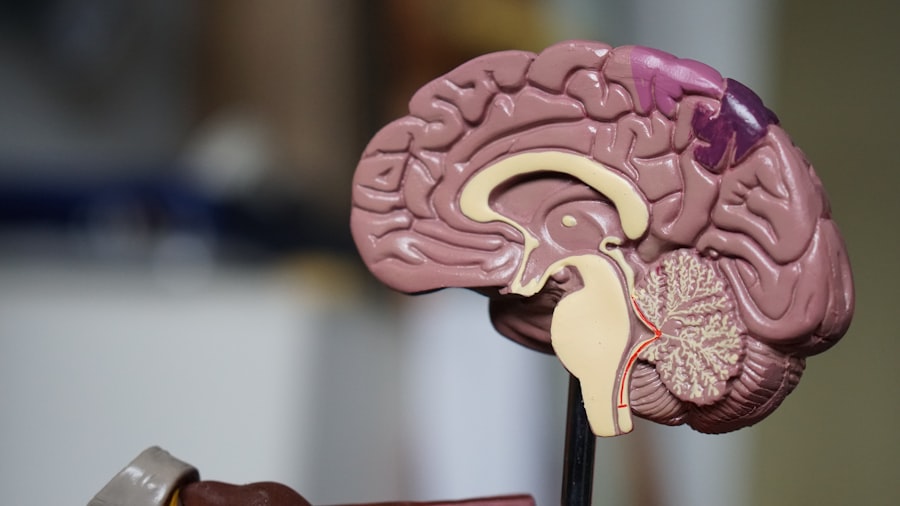
The amygdala, a pair of almond-shaped structures deep within your temporal lobes, acts as your brain’s alarm system. It constantly scans your environment for potential dangers, both physical and psychological. When faced with a situation that triggers a past negative experience or evokes uncertainty, the amygdala can trigger a cascade of stress responses, including the release of cortisol and adrenaline. This physiological arousal, while useful for escaping immediate danger, can manifest as anxiety, fear, and avoidance when you’re on the cusp of a breakthrough. It’s like having a smoke detector that constantly blares at the slightest hint of steam from your morning coffee, preventing you from enjoying the beverage.
The Prefrontal Cortex’s Struggle for Control
The prefrontal cortex (PFC), located at the front of your brain, is your executive control center. It’s responsible for planning, decision-making, impulse control, and rational thought. However, the amygdala’s rapid-fire threat alerts can often overpower the PFC’s more deliberate reasoning. In a self-sabotaging scenario, the amygdala might flag a promotion as “too much responsibility, potential for failure,” and the PFC, instead of weighing the opportunities, gets commandeered by the urgent message of threat. This can lead to procrastination, indecisiveness, or even outright avoidance of the very opportunities you’ve been working towards, as your brain prioritizes the perceived “safety” of inaction.
Understanding why your brain sabotages your success can be a complex journey, often rooted in deep-seated beliefs and habits. For a deeper exploration of this topic, you might find the article on Productive Patty particularly insightful. It delves into the psychological mechanisms that can hinder your progress and offers practical strategies to overcome these mental barriers. To read more, visit Productive Patty.
The Power of Habits: Neural Highways to Repetition
Your brain is a master of efficiency, constantly seeking to automate recurring tasks to conserve energy. This is where habits come into play. Habits are essentially neural pathways that become so well-worn through repetition that they require little conscious effort to traverse. While beneficial for tasks like brushing your teeth or driving a familiar route, this same mechanism can solidify self-sabotaging behaviors. When you engage in patterns of procrastination, negative self-talk, or unhealthy coping mechanisms, you are essentially paving deeper and deeper neural highways for these actions, making them increasingly automatic and difficult to disrupt.
The Basal Ganglia and Routine Formation
The basal ganglia, a group of subcortical nuclei, are central to habit formation. They play a critical role in learning and automating motor functions and, by extension, learned behaviors. When you repeat a self-sabotaging action, like resorting to comfort eating when stressed, the basal ganglia reinforce that connection, making it the default response. Over time, this behavior becomes ingrained, and breaking free requires conscious effort to reroute your neural traffic, creating new, more constructive pathways. It’s like trying to navigate a dense forest where the familiar path, however unhelpful, is always easier to follow than forging a new one.
The Role of Dopamine in Reinforcement
Dopamine, often mistakenly called the “pleasure chemical,” is more accurately described as a motivation and reward neurotransmitter. It plays a crucial role in reinforcing behaviors that lead to perceived rewards. In self-sabotage, even the temporary relief or distraction offered by a destructive habit can release a small surge of dopamine, which signals to your brain that this behavior is “worth repeating.” For instance, procrastinating might offer a fleeting sense of freedom from immediate pressure, and the associated dopamine release can create a cycle of reinforcement, making it harder to resist the urge to delay.
Limiting Beliefs: The Internalized Narratives of Failure

Limiting beliefs are deeply ingrained assumptions about yourself, the world, and your capabilities that restrict your potential. These beliefs often stem from early life experiences, societal conditioning, or past failures. They act as internal scripts, dictating what you believe is possible for you and, consequently, what you unconsciously strive to achieve. If you hold a limiting belief such as “I’m not good enough” or “Success is not for people like me,” your brain will actively, albeit unconsciously, seek evidence to confirm these beliefs, thereby sabotaging any efforts you make towards success.
Childhood Experiences and Schema Formation
Your early childhood is a critical period for schema formation. Schemas are mental frameworks that organize information and guide your understanding of the world. Negative experiences, such as criticism, neglect, or significant failures during childhood, can lead to the development of maladaptive schemas that fuel limiting beliefs. For example, consistently being told you’re not smart enough could lead to a “low self-worth” schema, which will then color your perception of future challenges and opportunities. You might see a difficult project not as a learning opportunity, but as yet another confirmation of your intellectual inadequacy.
Cognitive Distortions: The Mind’s Warped Mirrors
Cognitive distortions are irrational and often habitual patterns of thinking that magnify negatives and minimize positives. These distortions act like warped mirrors, presenting a distorted reflection of reality and reinforcing limiting beliefs. Common distortions include:
- All-or-Nothing Thinking: Viewing situations in black and white terms. If you don’t achieve perfect success, you believe you’ve failed completely.
- Overgeneralization: Drawing a broad, negative conclusion based on a single event. One setback becomes evidence that you’ll always fail.
- Mental Filter: Focusing solely on the negative aspects of a situation while ignoring the positives.
- Catastrophizing: Expecting the worst-case scenario to occur.
These distortions, fueled by limiting beliefs, can create a self-fulfilling prophecy of failure, as your internal narrative consistently steers you away from success.
The Fear of the Unknown: Comfort in the Familiar Crucible
Humans are inherently risk-averse creatures. The unknown, by its very nature, is filled with uncertainties, and your brain is wired to seek predictability and control. When you contemplate a significant leap towards success, whether it’s starting a new business, pursuing a challenging career change, or even just speaking up in a meeting, you are stepping into uncharted territory. This can trigger an array of anxieties related to potential failure, judgment, and the loss of the familiar. This fear, amplified by your brain’s threat-detection system, can lead to a retreat into the comfort of the known, even if the known is suboptimal.
The Neurobiology of Anxiety and Avoidance
Anxiety and avoidance are intricately linked. When your brain perceives a situation as threatening, it triggers the fight-or-flight response. If you perceive the threat as insurmountable or the escape route as too perilous, avoidance becomes the preferred strategy. This isn’t a conscious choice made from a place of weakness; it’s a complex neurological interplay designed to protect you from perceived harm. The anticipation of negative outcomes can be so potent that it paralyzes action, trapping you in a cycle of inaction. You become a ship anchored in a safe harbor, unwilling to set sail into potentially richer waters for fear of storms you cannot see.
The Illusion of Safety in Stagnation
Staying in your comfort zone, even when it’s unfulfilling, can feel safe. The known, however dissatisfying, offers a predictable outcome. Your brain, in its pursuit of minimizing risk, can interpret stagnation as a form of safety. This illusion is a powerful force in self-sabotage. You might tell yourself, “At least I know where I stand here,” while the opportunities for growth and fulfillment lie just beyond the horizon, obscured by the fog of your fear. The comfort of the familiar becomes a gilded cage, preventing you from discovering your true potential.
Many people find themselves struggling to achieve their goals, often feeling as though their own mind is working against them. This phenomenon can be attributed to various psychological factors, including fear of failure and self-doubt. To explore this topic further, you might find it insightful to read an article that delves into the reasons behind these mental barriers and offers strategies to overcome them. For more information, check out this related article that discusses how your brain can sabotage your success and ways to rewire your thinking for a more positive outcome.
The Quest for Certainty: A Double-Edged Sword
| Reason for Brain Sabotage | Description | Impact on Success | Possible Solution |
|---|---|---|---|
| Fear of Failure | The brain triggers anxiety to avoid potential failure. | Leads to procrastination and avoidance of challenges. | Reframe failure as a learning opportunity. |
| Comfort Zone Bias | Preference for familiar routines over new experiences. | Limits growth and innovation. | Gradually introduce new habits and challenges. |
| Negative Self-Talk | Internal dialogue that undermines confidence. | Reduces motivation and increases self-doubt. | Practice positive affirmations and mindfulness. |
| Imposter Syndrome | Feeling undeserving of success despite evidence. | Prevents taking credit and pursuing opportunities. | Recognize achievements and seek support. |
| Overthinking | Excessive analysis leading to decision paralysis. | Delays action and reduces productivity. | Set time limits for decisions and focus on priorities. |
The human desire for certainty is a fundamental drive. We crave predictability, order, and a clear understanding of what lies ahead. This pursuit of certainty, while valuable for planning and decision-making, can become a significant obstacle in the path of success. Success often requires embracing ambiguity, adapting to change, and making decisions with incomplete information. When your need for absolute certainty becomes paramount, you may find yourself paralyzed by indecision, waiting for all the variables to align perfectly – a state that rarely, if ever, occurs in the real world.
The Brain’s Preference for Control
Your brain thrives on a sense of control. When faced with uncertainty, this sense of control erodes, leading to discomfort and anxiety. To regain a sense of control, you might resort to self-sabotaging behaviors that offer a predictable, albeit negative, outcome. For instance, deliberately failing a project by not putting in sufficient effort provides a clear, albeit unwanted, outcome: failure. This is perceived, on a subconscious level, as more controllable than the uncertain outcome of giving your best effort and potentially still not succeeding.
The Paradox of Perfectionism
Perfectionism, while often lauded as a virtue, is frequently a manifestation of the intense need for certainty and control. The perfectionist believes that by meticulously controlling every detail and striving for flawless execution, they can eliminate the possibility of failure. However, this pursuit of perfection can become a self-sabotaging trap. It can lead to chronic procrastination, fear of starting, excessive self-criticism, and an inability to recognize when “good enough” is truly sufficient. The quest for an unattainable ideal becomes a barricade to progress, preventing you from ever reaching the finish line. You are so busy polishing the engine of your car that you never actually start the journey.
FAQs
Why does the brain sometimes sabotage success?
The brain can sabotage success due to evolutionary survival mechanisms, such as fear of failure or change, which trigger self-doubt and avoidance behaviors to protect against perceived threats.
What role does the subconscious mind play in self-sabotage?
The subconscious mind stores deep-seated beliefs and past experiences that influence behavior. Negative or limiting beliefs can cause the brain to unconsciously undermine efforts toward success.
How does fear impact the brain’s ability to achieve success?
Fear activates the amygdala, the brain’s threat detection center, which can lead to stress responses like anxiety and hesitation, preventing individuals from taking necessary risks or pursuing goals confidently.
Can habits contribute to the brain sabotaging success?
Yes, habitual thought patterns and behaviors can reinforce self-sabotaging actions. The brain prefers familiar routines, even if they are counterproductive, making it difficult to adopt new, success-oriented habits.
What strategies can help overcome the brain’s self-sabotaging tendencies?
Techniques such as mindfulness, cognitive-behavioral therapy, goal setting, and positive affirmations can reprogram negative thought patterns, reduce fear responses, and promote healthier, success-driven behaviors.