You experience it instinctively. A sudden quiet, a cessation of familiar sounds, a void where activity should be. It’s not just an absence of noise; it’s a prickle of unease, a tightening in your chest, a subtle alarm that whispers of something amiss. This isn’t a personal failing or an overactive imagination. Your brain, in its relentless pursuit of survival, perceives stillness not as peaceful absence, but as potential peril.
Your ancestral brain, honed by millennia of precarious existence, developed sophisticated mechanisms to detect threats. Prey animals in the savanna, for instance, relied on a constant barrage of sensory input: rustling leaves, the chirping of insects, the calls of birds, the distant rumble of a predator’s movement. This cacophony of everyday noise served a vital purpose: it masked the subtle sounds of danger. A sudden, unnatural silence, therefore, signaled a disruption in this natural order. It meant that the usual noisy environment, which offered a degree of camouflage, had gone quiet.
The Predator’s Advantage
Consider the mechanics of predation. A lion stalking its prey doesn’t announce its approach with a trumpet blast. It moves with cunning silence, its senses attuned to the slightest deviation in the natural soundscape. If the birds stop singing, if the insects fall silent, if the rustling of undergrowth ceases, an alert prey animal would immediately recognize this as a red flag. It implies a predator has moved into the vicinity, silencing the smaller creatures around it. Your brain, wired for such contingencies, still retains this ancient warning system. The absence of expected sound, particularly ambient natural sound, is interpreted as a potential sign that something larger, something more dangerous, has imposed its will upon the environment.
The Importance of Constant Monitoring
From an evolutionary standpoint, an organism that could ignore falling silent was an organism that was less likely to reproduce. The ancestors who were hyper-vigilant, who reacted with immediate caution to a sudden hush, were more likely to escape danger, to find mates, and to pass on their genes. This constant, low-level monitoring for deviations from the norm became an ingrained part of your neural architecture. Even in the safety of your modern dwelling, this primal response can be triggered by seemingly innocuous silences.
The Brain’s Predictive Nature
Your brain isn’t just a passive receiver of sensory information; it’s an active predictor. It constantly builds models of the world and anticipates what should happen next. When you’re in a familiar environment, your brain has a robust model of its typical soundscape. The hum of the refrigerator, the distant traffic, the creak of the floorboards – these are all part of its expected data stream. When this stream is abruptly cut off, the predictive model is violated, and your brain flags this as an anomaly, a potential error in its understanding of reality, which can be interpreted as a threat.
The perception of stillness as a threat can be traced back to our evolutionary history, where sudden changes in the environment often signaled danger. This instinctual response is explored in detail in an insightful article that discusses how our brains are wired to detect movement and change, leading to heightened anxiety in situations of stillness. For more information on this topic, you can read the article at Productive Patty. Understanding this connection can help us navigate our feelings and reactions in various situations, ultimately fostering a greater sense of awareness and control.
The Biological Mechanisms of Alarm: How Your Brain Reacts
The physiological manifestations of your unease in stillness are not mere psychosomatic quirks. They are the direct result of your brain initiating its threat-detection and response protocols. This intricate cascade of neural and hormonal activity is designed to prepare you for action, whether that action is fight, flight, or freeze.
The Amygdala’s Role
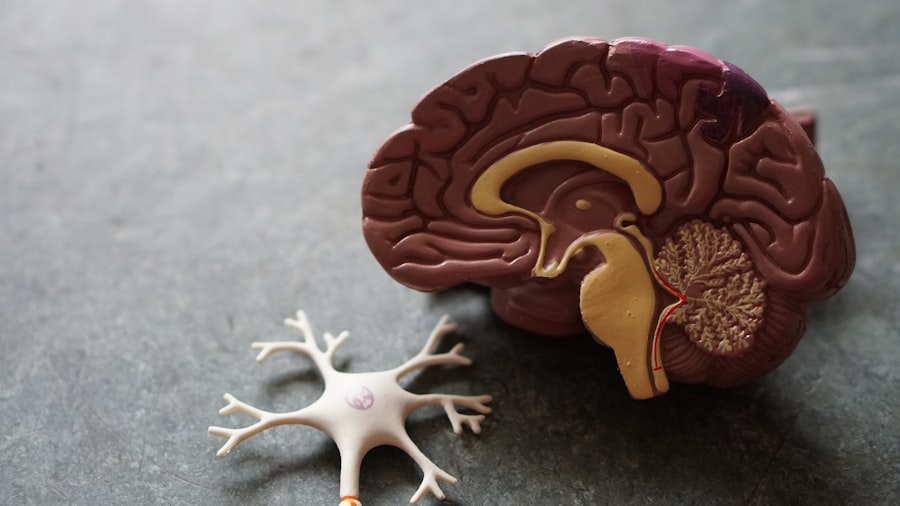
At the heart of your brain’s fear circuitry lies the amygdala, a small, almond-shaped structure deeply embedded in your temporal lobe. The amygdala acts as your brain’s primary alarm system. When it detects a potential threat – in this case, the sudden absence of expected stimuli – it rapidly activates a network of other brain regions. It doesn’t wait for conscious deliberation; it bypasses higher cognitive centers to trigger an immediate, primal response.
The Sympathetic Nervous System Activation
The amygdala’s activation directly triggers the sympathetic nervous system, initiating the “fight-or-flight” response. This leads to a surge of adrenaline and cortisol, hormones that prepare your body for strenuous activity. Your heart rate increases, your breathing becomes shallow and rapid, your pupils dilate to improve vision, and blood is shunted away from non-essential functions like digestion towards your muscles. This physiological readiness is a direct consequence of your brain interpreting stillness as a precursor to danger.
Sensory Gating and Heightened Awareness
In the face of perceived threat, your brain also engages in a process called sensory gating. This means that the threshold for perceiving stimuli is lowered. You become more sensitive to subtle sounds, faint smells, and even changes in air pressure. This heightened awareness is an attempt to gather more information about the potentially dangerous environment. The stillness itself might be the absence of one type of sensory input, but it primes you to be exquisitely aware of any new input that might signal the nature of the threat.
The Prefrontal Cortex’s Role in Interpretation
While the amygdala initiates the rapid alarm, your prefrontal cortex is responsible for more complex interpretation and decision-making. In a situation of stillness, the prefrontal cortex attempts to rationalize the amygdala’s distress signal. It searches for logical explanations for the silence. Is it merely a temporary lull? Has a power outage occurred? Or is something more sinister at play? The perceived danger can be exacerbated if the prefrontal cortex struggles to find a satisfactory explanation for the anomaly.
The Psychological Impact of Unexpected Quiet
Beyond the immediate biological alarm, prolonged or unexpected stillness can have significant psychological ramifications. It can erode your sense of security and leave you feeling exposed and vulnerable. The familiar comfort of a predictable soundscape is replaced by an unsettling ambiguity.
Erosion of Familiarity and Predictability
Your daily life is structured by a symphony of predictable sounds. The alarm clock, the morning commute, the chatter of colleagues, the drone of the television – these are all elements that contribute to your sense of normalcy and control. When these familiar auditory cues disappear abruptly, it disrupts your established routines and creates a vacuum of predictability. Your brain struggles to create a coherent narrative of your environment without these anchor points, leading to a feeling of disorientation.
The Anxiogenic Effect of Ambiguity
Stillness, particularly when it is unexplained, breeds ambiguity. Your brain abhors uncertainty, especially when it relates to potential threats. Without clear sensory information to guide it, it begins to fill the void with worst-case scenarios. This constant rumination on potential dangers can lead to heightened anxiety, a subjective feeling of dread and unease that can persist long after the initial silence has passed.
The Feeling of Isolation and Vulnerability
Even in the presence of others, profound stillness can induce a sense of isolation. Imagine being in a large building where all activity suddenly ceases. The shared rhythm of human life is broken, and each individual might feel acutely alone with their own internal processing of the silence. This isolation can amplify feelings of vulnerability, as you perceive yourself as more exposed and less supported without the usual auditory affirmations of collective presence and activity.
The Role of Learned Associations
Your individual experiences also shape how you perceive silence. If you have encountered dangerous situations in environments that were previously quiet, your brain will develop a learned association between stillness and peril. A childhood fear of the dark, for instance, might be intertwined with the terrifying silence that preceded a perceived threat. These learned associations can make you more predisposed to interpreting stillness as a warning sign, even if the current circumstances are benign.
The Social and Environmental Context of Stillness
The impact of stillness on your perception of danger is not solely an individualistic phenomenon. It is also influenced by the environment you find yourself in and your understanding of the social dynamics at play.
The Anomaly of Urban Silence
In densely populated urban environments, complete stillness is a rarity. The constant hum of machinery, the distant sirens, the murmur of human activity – these are the expected auditory components of city life. A sudden, pervasive silence in such a context is highly anomalous. It suggests a significant disruption, be it a technological failure, an environmental event, or something more profound. Your brain, accustomed to the usual sonic chaos, will interpret this deviation with amplified alarm.
The Naturalistic Context: What is “Normal” Sound?
Within natural environments, the definition of “normal” sound is somewhat more fluid. A forest can be remarkably quiet at times, punctuated by the rustling of leaves or the distant call of a bird. However, even in nature, there are expected sound thresholds. The sudden absence of insect chirps, the stillness of the wind, the lack of animal movement – these are cues that your primitive brain still monitors. You are more likely to feel safe in a quiet forest if you understand the natural rhythms of that ecosystem. It is the unnatural or unexplained stillness that triggers the deepest unease.
The Influence of Media and Narrative
Your perception of stillness is also shaped by shared narratives and cultural representations of danger. Horror films and thrillers frequently employ sudden silence as a cinematic device to build suspense and signal imminent threat. This constant exposure to such depictions can reinforce the association between silence and danger in your subconscious, making you more susceptible to experiencing fear in its presence, even in ostensibly safe situations.
The Social Contagion of Fear
If others around you are exhibiting signs of unease in response to stillness, this can amplify your own fear response. Humans are social creatures, and we often look to the reactions of others for cues on how to interpret our environment. If a group’s collective anxiety is palpable, your brain is more likely to interpret the stillness as a threat, even if you initially felt no particular concern. This social contagion of fear can turn a minor anomaly into a significant source of collective distress.
The perception of stillness as a threat can be traced back to our evolutionary history, where sudden changes in the environment often signaled danger. This instinctive response is explored in greater detail in a related article that discusses how our brains are wired to react to perceived threats, even in seemingly calm situations. Understanding this connection can help us navigate our modern lives more effectively. For more insights on this topic, you can read the article here.
Overcoming the Primal Fear of Stillness
| Reasons Why Your Brain Perceives Stillness as a Threat |
|---|
| 1. Evolutionary response to potential danger |
| 2. Heightened sensitivity to changes in environment |
| 3. Fear of missing out on important information |
| 4. Overactive stress response |
| 5. Cultural and societal pressure to constantly be productive |
While your brain’s predisposition to view stillness as a potential danger is deeply ingrained, it is not an immutable fate. Through conscious effort and a deeper understanding of its mechanisms, you can learn to mitigate this primal reaction.
Cultivating Mindfulness and Present Moment Awareness
Mindfulness practices, such as meditation, train your brain to focus on the present moment without judgment. By intentionally observing your internal states, including the physical sensations of anxiety that arise in stillness, you can begin to decouple the stimulus (silence) from the automatic fear response. You learn to recognize the physical sensations without immediately labeling them as indicators of imminent danger.
Reframing and Rationalizing the Silence
When you experience unexpected stillness, actively engage your prefrontal cortex to rationalize the situation. Ask yourself concrete questions: What are the logical reasons for this silence? Is there a practical explanation? By consciously seeking rational interpretations, you can help to override the amygdala’s alarm signals. Instead of assuming the worst, try to find the mundane reality. Perhaps the power has flickered, the ambient machinery has simply stopped for a scheduled maintenance cycle, or you’ve entered a particularly sound-proofed area.
Gradual Exposure and Desensitization
Similar to overcoming other phobias, gradual exposure can help to desensitize you to the perceived threat of stillness. This doesn’t mean plunging yourself into terrifying silences, but rather intentionally creating moments of controlled quietude. Spend short periods in a quiet room, gradually increasing the duration. Focus on the sensations within your body and the subtle ambient sounds that might still be present. The goal is to build a new association: stillness with calm, rather than stillness with threat.
Building a New Sensory Narrative
Actively cultivate a richer sensory experience beyond just auditory input. When you find yourself in a period of stillness, engage other senses. Notice the textures of surfaces, the subtle changes in light, the feel of the air on your skin, or the faint scents that might be present. By consciously focusing on these other sensory channels, you can reframe the experience of stillness not as an absence, but as a shift in the dominant sensory input, allowing you to gather a more comprehensive understanding of your environment.
Your brain’s apprehension of stillness is a testament to its efficacy as a survival tool throughout evolutionary history. It’s a whisper from your ancestors, a reminder of the dangers they faced. While this instinctual alert system can still serve a purpose, in your modern context, with its reduced direct threats, it can also create unnecessary anxiety. By understanding the biological basis of this fear and employing conscious strategies, you can begin to re-wire this ancient response, transforming the perceived threat of stillness into an opportunity for heightened awareness and a more nuanced experience of your world.
FAQs
1. Why does the brain perceive stillness as a threat?
The brain perceives stillness as a threat due to its evolutionary response to potential danger. When the environment is quiet and still, the brain becomes hyper-vigilant in order to detect any potential threats or dangers.
2. What are the physiological responses to perceiving stillness as a threat?
Physiological responses to perceiving stillness as a threat include increased heart rate, heightened alertness, and the release of stress hormones such as cortisol and adrenaline. These responses prepare the body to react to potential danger.
3. How does the perception of stillness as a threat impact mental health?
The perception of stillness as a threat can contribute to feelings of anxiety, stress, and hypervigilance. It can also lead to difficulty in relaxing, sleeping, and focusing, which can negatively impact mental health over time.
4. Can the perception of stillness as a threat be unlearned or managed?
Yes, the perception of stillness as a threat can be unlearned or managed through various techniques such as mindfulness, meditation, deep breathing exercises, and cognitive behavioral therapy. These approaches can help retrain the brain’s response to stillness and reduce feelings of threat.
5. How can understanding the brain’s perception of stillness as a threat be beneficial?
Understanding the brain’s perception of stillness as a threat can be beneficial in developing strategies to manage stress, anxiety, and hypervigilance. It can also lead to a greater awareness of how environmental cues can impact mental and emotional well-being.