
You’re navigating a complex world, a constant influx of information bombarding your senses. Yet, despite this deluge, your brain manages to select what’s crucial, to dedicate its processing power to a specific task at hand. This ability to choose and maintain focus is foundational to your cognitive functioning. However, understanding how this is achieved, and what happens when it’s disrupted, delves into the fascinating realm of attentional residue and its implications for your brain.
Attentional residue, a term coined in the academic literature, describes the lingerings of your attention on a past or future task, even as you attempt to engage with your current one. It’s the subtle, often unconscious, mental chatter that persists, impacting your ability to be fully present.
The Nature of Cognitive Load
Your brain operates with finite resources. When you engage in a task, you’re not just performing actions; you’re allocating cognitive bandwidth.
Working Memory Demands
Every action, every piece of information you process, places a demand on your working memory. This is your temporary storage system, where you hold and manipulate information. When tasks are complex or require significant mental effort, your working memory is heavily taxed.
Executive Functions at Play
Your executive functions—planning, problem-solving, decision-making, and impulse control—are deeply intertwined with attention. These higher-level cognitive processes orchestrate your behavior and thought patterns, and they are particularly susceptible to the interference of attentional residue.
The Psychological Precursors
Attentional residue isn’t solely a neurological phenomenon; it’s also rooted in your psychological state. Your emotions, motivations, and even your perception of time play significant roles.
Unresolved Tasks and Future Worries
The unfinished nature of a preceding task, or the anticipation of an upcoming one, can create a persistent mental pull. This rumination, whether it’s about what you should be doing or what you will have to do, occupies cognitive resources.
Emotional Salience of Past Events
Events that carry a strong emotional charge, whether positive or negative, are more likely to leave a lasting imprint on your attention. The lingering emotional echo can resurface, intruding on your current focus, even if the event itself has passed.
In exploring the intricacies of the neuroscience of attentional residue and focus, a related article that delves into the cognitive mechanisms behind multitasking and its impact on productivity can be found at Productive Patty. This resource provides valuable insights into how our attention can be fragmented and the implications this has for maintaining concentration in a world filled with distractions. Understanding these concepts is crucial for enhancing our ability to focus and manage our cognitive resources effectively.
The Neuroscience of Distraction: Brain Regions Involved
The brain’s intricate network of interconnected regions is responsible for both maintaining focus and succumbing to distractions. Neuroimaging studies have illuminated the neural correlates of attentional residue.
The Role of the Prefrontal Cortex
The prefrontal cortex (PFC) is your brain’s executive control center. It plays a crucial role in goal-directed behavior, working memory, and inhibiting irrelevant information. Disruptions to its functioning are directly linked to attentional residue.
Dorsolateral Prefrontal Cortex (DLPFC) and Executive Control
The DLPFC is particularly involved in maintaining task goals and inhibiting distractions. When your attention is split, the DLPFC may struggle to effectively suppress intrusive thoughts or task-unrelated stimuli.
Ventromedial Prefrontal Cortex (VMPFC) and Emotional Regulation
The VMPFC is heavily involved in processing emotions and regulating emotional responses. Emotional salience, as mentioned earlier, can emanate from this region, influencing your attentional state and contributing to residue.
The Default Mode Network (DMN) and Mind-Wandering
The DMN is a network of brain regions that is active when your mind is at rest, not consciously engaged in a task. It’s often associated with self-referential thought, rumination, and mind-wandering, all key components of attentional residue.
Interactions Between DMN and Task-Positive Networks
When you’re trying to focus on a task, the DMN typically deactivates, allowing task-positive networks to take precedence. However, attentional residue can manifest as an antagonistic relationship, where the DMN remains excessively active, interfering with your focused state.
The “Task Irrelevant Thinking” Phenomenon
The DMN is the powerhouse behind “task irrelevant thinking.” This is when your thoughts drift to personal concerns, memories, or future plans, pulling your attention away from the present activity.
The Parietal Cortex and Attention Shifting
The parietal cortex is involved in spatial awareness, attention, and sensory integration. Its role in shifting your attention between different stimuli makes it a critical player in how you react to and are affected by attentional residue.
Posterior Parietal Cortex (PPC) and Attentional Control
The PPC is crucial for directing your attention to relevant stimuli and filtering out distractions. When attentional residue is present, the PPC might struggle to maintain this selective focus, allowing intrusive thoughts to capture your attention.
Intraparietal Sulcus (IPS) and Attentional Orienting
The IPS is involved in reorienting your attention to unexpected or salient stimuli. This can be a double-edged sword: it’s vital for responding to important external cues, but it can also be easily hijacked by internal distractions.
Consequences of Attentional Residue: Impacting Performance
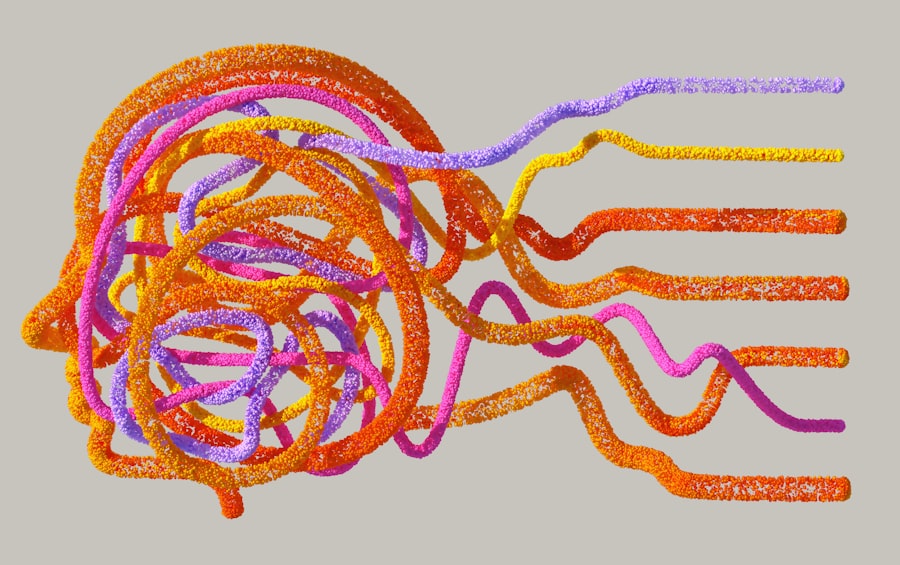
The persistent presence of attentional residue has tangible consequences for your daily life, affecting not only your productivity but also your cognitive well-being.
Reduced Task Performance and Increased Errors
When your attention is divided, your ability to perform tasks efficiently and accurately diminishes. This isn’t simply about working slower; it’s about a fundamental impairment in processing capacity.
Decreased Speed and Efficiency
The mental effort required to constantly re-engage with your primary task after being pulled away by residue slows down your progress. Each interruption necessitates a relearning curve, however brief, for your brain to return to the task at hand.
Higher Error Rates and Poorer Decision-Making
When cognitive resources are fragmented, the likelihood of making mistakes increases. This can range from simple oversights to more significant lapses in judgment, particularly in tasks requiring sustained concentration.
Impaired Learning and Memory Consolidation
The ability to learn new information and consolidate it into long-term memory is heavily dependent on focused attention. Attentional residue can act as a significant impediment.
Difficulty Acquiring New Information
If your mind is preoccupied with other matters, you’re less likely to effectively encode new information presented to you. The information might enter your sensory buffer, but it won’t be processed deeply enough for meaningful learning.
Hindered Memory Recall
Even if you manage to learn something, the presence of attentional residue can make it harder to retrieve that information later. The neural pathways responsible for accessing that memory may be disrupted or overshadowed by the lingering mental distractions.
Affecting Emotional Well-being and Stress Levels
The constant struggle to maintain focus, coupled with the frustration of being easily distracted, can contribute to heightened stress and anxiety.
Increased Frustration and Cognitive Strain
The feeling of being unable to concentrate, of your own mind working against you, can be deeply frustrating. This ongoing cognitive strain can impact your mood and overall sense of well-being.
Long-Term Stress and Burnout
Chronic exposure to situations that demand focus but are consistently undermined by attentional residue can contribute to long-term stress and, in more extreme cases, burnout. The persistent mental effort to combat these intrusions is exhausting.
Strategies for Mitigation and Enhancing Focus

Fortunately, you’re not entirely at the mercy of attentional residue. Neuroscience and psychology offer a range of strategies that can help you mitigate its effects and cultivate a stronger ability to focus.
Mindfulness and Present Moment Awareness
Mindfulness practices, which focus on bringing your attention to the present moment without judgment, are exceptionally effective in combating attentional residue.
Developing Attentional Control
By repeatedly practicing bringing your attention back to your breath, body sensations, or immediate environment, you are essentially training your attentional muscles. This strengthens your ability to disengage from distracting thoughts.
Reducing Cognitive Reactivity
Mindfulness helps you observe your thoughts and feelings without automatically getting caught up in them. This reduced reactivity means that when a distracting thought arises, you’re less likely to be swept away by it.
Time Management and Prioritization Techniques
Effective organization of your time and tasks can preemptively reduce the opportunities for attentional residue to take hold.
The Pomodoro Technique
This popular time management method involves working in focused bursts (typically 25 minutes) followed by short breaks. The structured nature of the technique helps break down tasks and provides dedicated periods for focused work.
Task Batching and Single-Tasking
Instead of constantly switching between different types of tasks, batching similar activities together can reduce the cognitive overhead of context switching. Prioritizing and focusing on one task at a time, rather than attempting to multitask, is also crucial.
Environmental Control and Reducing External Distractions
The environment in which you work or engage in activities plays a significant role in how susceptible you are to external distractions, which can exacerbate attentional residue.
Creating a Focused Workspace
Minimizing visual clutter, noise, and other potential disruptions in your immediate surroundings signals to your brain that this is a space for concentration.
Digital Hygiene and Notification Management
The constant barrage of notifications from digital devices is a major contributor to attentional fragmentation. Implementing strategies like turning off non-essential notifications, setting specific times for checking email or social media, and using website blockers can create a more focused digital environment.
Cognitive Training and Brain Exercises
Targeted cognitive training exercises can help strengthen the neural networks involved in attention and executive control, making you more resilient to attentional residue.
Working Memory Training
Exercises that challenge your working memory, such as n-back tasks or memory span tests, can improve your ability to hold and manipulate information, which is essential for sustained focus.
Executive Function Games and Activities
Engaging in activities that require planning, problem-solving, and impulse control can bolster your executive functions. This includes certain video games, strategy puzzles, and even learning a new skill that demands significant mental effort.
Recent studies in the neuroscience of attentional residue have shed light on how our focus can be fragmented by multitasking and constant distractions. This phenomenon can significantly impact our productivity and cognitive performance. For a deeper understanding of these concepts, you might find the article on productivity strategies particularly insightful, as it explores how to minimize attentional residue and enhance focus. To read more about this, visit this article for practical tips and insights.
Future Directions in Attentional Research
| Study | Findings |
|---|---|
| Neuroscience of Attentional Residue | Increased activity in the default mode network during attentional residue |
| Impact on Focus | Attentional residue can impair subsequent focus and task performance |
| Brain Regions | Pre-frontal cortex and parietal cortex involved in attentional residue and focus |
The study of attentional residue is an evolving field, with ongoing research exploring its nuances and developing more sophisticated interventions.
Neuromodulation Techniques
Emerging technologies are exploring direct interventions to influence brain activity and improve attentional control.
Transcranial Magnetic Stimulation (TMS) and Transcranial Direct Current Stimulation (tDCS)
These non-invasive brain stimulation techniques are being investigated for their potential to enhance or modulate the activity of specific brain regions involved in attention, such as the prefrontal cortex. The goal is to create a more conducive neural environment for focus and reduce the impact of distracting neural networks.
Personalized Interventions Based on Neural Signatures
As our understanding of individual differences in attentional processing grows, interventions are becoming more tailored.
Neurofeedback and Brain Training Programs
Neurofeedback involves training individuals to self-regulate their brainwave activity. By providing real-time feedback on specific EEG patterns associated with focus, individuals can learn to promote brain states conducive to sustained attention and reduce instances of mind-wandering.
Developing Biomarkers for Attentional Residue
Researchers are working to identify neural or physiological markers that can reliably indicate the presence and severity of attentional residue in individuals. This would enable earlier detection and more targeted interventions.
The Interplay Between Attention and Other Cognitive Processes
Future research will likely delve deeper into how attentional residue interacts with other vital cognitive functions, such as motivation, emotion, and creativity, offering a more holistic view of cognitive performance. Understanding these intricate connections will be crucial for developing comprehensive strategies to optimize your cognitive abilities and navigate the information-dense world you inhabit with greater focus and efficiency.
FAQs
What is attentional residue in the context of neuroscience?
Attentional residue refers to the lingering effects of a previous task or distraction on an individual’s ability to focus on their current task. In the context of neuroscience, attentional residue is studied to understand how the brain processes and manages attentional resources.
How does attentional residue affect focus and productivity?
Attentional residue can lead to reduced focus and productivity as it can interfere with the individual’s ability to fully engage in their current task. This can result in decreased performance and efficiency, as well as increased mental fatigue.
What are some strategies to reduce attentional residue and improve focus?
Strategies to reduce attentional residue and improve focus include mindfulness practices, such as meditation and deep breathing exercises, as well as implementing time management techniques, such as the Pomodoro Technique. Additionally, creating a conducive work environment and minimizing distractions can also help reduce attentional residue.
How does the brain process attentional residue?
The brain processes attentional residue through various neural mechanisms, including the default mode network and the executive control network. These networks play a role in regulating attention, task switching, and managing competing cognitive demands, which are all relevant to attentional residue.
What are the implications of understanding the neuroscience of attentional residue?
Understanding the neuroscience of attentional residue can have implications for various fields, including education, workplace productivity, and mental health. By understanding how attentional residue affects focus and performance, strategies can be developed to optimize attentional resources and improve overall cognitive functioning.